iFeeling Daily
Daily curated AI insights you can't miss.
Project Fetch Phase Two: Claude Opus 4.7 Outpaces Humans on Robot Tasks

Anthropic's follow-up to Project Fetch shows Claude Opus 4.7 completing robotics tasks up to 37 times faster than human teams from eight months earlier — without any human assistance. While closed-loop physical control remains a challenge, the rapid general scaling of LLMs is closing the gap between helpful assistant and autonomous physical agent.
Teaching Claude Why: Anthropic’s Approach to Fixing Agentic Misalignment

Anthropic explains how they reduced agentic misalignment from 96% to 0% by teaching Claude the principles behind aligned behavior rather than just demonstrating correct actions. The key innovation is using out-of-distribution training data where the AI gives ethical advice to users, combined with constitutional documents and fictional stories of aligned AIs.
Anthropic Economic Index: Cadences in AI Usage and Perceptions

Anthropic's latest Economic Index report analyzes real-time usage data and user surveys to reveal how Claude's role is shifting from chat to autonomous agents. The report shows that compute scales with task value, that user perceptions of AI capabilities are surprisingly uniform across occupations, and that heavy delegators remain optimistic about their careers.
Natural Language Autoencoders: Reading Claude’s Hidden Thoughts
Anthropic's Natural Language Autoencoders translate opaque internal model activations into readable text explanations, revealing that Claude often suspects it is being tested more than it says aloud. This is a promising but expensive auditing tool with hallucination risks, now open-sourced for researchers to explore.
Fable 5’s Cyber Safeguards and Proposed Jailbreak Severity Framework
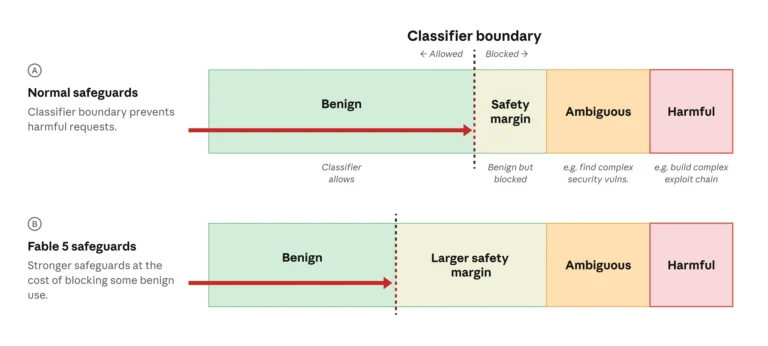
Anthropic re-deploys Fable 5 with detailed cyber safeguard classifiers that categorize dual-use activities, and proposes a four-axis jailbreak severity framework (CJS) to standardize how the industry describes and scores the risk of different jailbreak techniques.
Harnessing Claude’s Intelligence: Patterns for Evolving Agents

Anthropic shares concrete patterns for building agent harnesses that keep pace with Claude's rapid capability growth—focusing on leveraging familiar tools, letting Claude orchestrate its own actions, and carefully pruning assumptions that become stale as the model evolves.
Claude Managed Agents get built-in memory in public beta

Anthropic launches public beta of built-in memory for Claude Managed Agents. Agents store memories as files on the filesystem, using existing bash and code tools to read and write. Supports scoped permissions, audit logs, version rollback, and concurrent multi-agent access. Rakuten reports 97% fewer first-pass errors; Wisedocs speeds up verification by 30%.
Core dump epidemiology: fixing an 18-year-old bug
A fascinating debugging story from OpenAI's infrastructure team that reveals how building high-quality population-level data turned two seemingly impossible crashes—hardware corruption and an 18-year-old libunwind race condition—into solvable problems, with lessons for any engineer operating complex systems.
Async Inference: Why the Future of AI Agents Runs on Queues, Not Real-Time
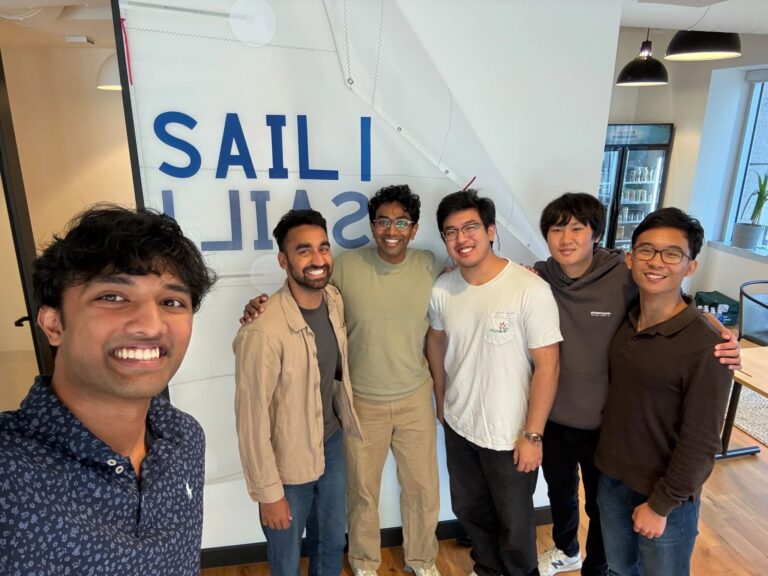
The article argues that as AI agents shift from real-time chat to background batch work, inference infrastructure must follow. Sail Research builds an async inference stack that queues requests, routes to the cheapest capable open model, and uses spot capacity to cut costs dramatically—GLM-5.1 on Sail costs 6x less per token than Anthropic's Haiku.