iFeeling Daily
Daily curated AI insights you can't miss.
How Siemens Modernized Legacy Code with Agentic Workflows
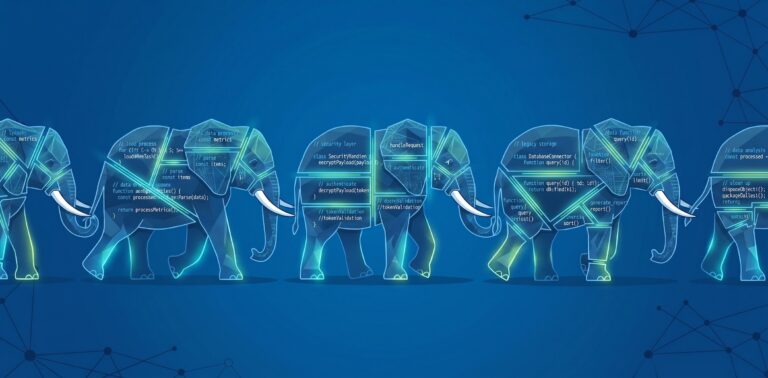
Siemens and Google Cloud's Knowledge Fabric shows how to tame massive industrial codebases by combining knowledge graphs, multi-agent workflows, and human oversight—turning a decade-old modernization nightmare into a manageable, scalable process.
Graph Technologies Underpin Yahoo’s System of Action
Yahoo's Seller Agent, built on Google Cloud's graph technologies, shows how a dual-graph architecture—a knowledge graph for grounding and a context graph for auditability—lets agentic AI operate at speed while maintaining regulator-grade transparency. The blueprint applies broadly to any high-stakes industry.
Anthropic disputes US government suspension of Fable 5 over minor jailbreak
Anthropic’s statement reveals a critical clash between rapid AI deployment and government oversight: a minor, narrow jailbreak found in Fable 5 led to an abrupt export control suspension, even though similar capabilities exist in other models. The company argues that applying this standard across the industry would halt all new frontier model deployments, underscoring the need for transparent, technically-grounded regulation.
ShinyHunters Zero-Day Oracle PeopleSoft Campaign
Mandiant's detailed breakdown of ShinyHunters' zero-day exploit against Oracle PeopleSoft reveals how attackers used MeshCentral agents and SSH credential spraying to breach educational institutions. Immediate endpoint blocking and log auditing are critical defenses.
Profiling in PyTorch (Part 2): From nn.Linear to a Fused MLP
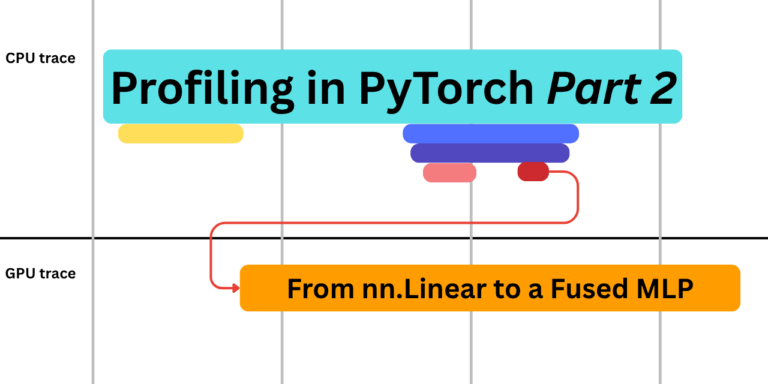
The article traces the journey from a single nn.Linear to a fused MLP, showing that torch.compile fuses GeLU and multiplication into one Triton kernel while leaving the three cuBLAS GEMMs untouched. It then introduces hand-tuned Liger kernels that achieve the same fusion without compile latency or shape specialization, trading a few microseconds of peak performance for robustness across changing input sizes.
Scaling Past Informal AI: Formal Verification as the Path to Math AGI

Carina Hong argues that reaching math AGI requires formal verification in the training loop, not just bigger models. Axiom Math's system scored a perfect 120/120 on the 2024 Putnam exam using Lean-verified proofs as RL reward signals. The big insight: verification is a scaling property, not a bug fix.
Chinese-Language PhaaS: Real-Time Interception and Digital Wallet Exploitation
Chinese-language PhaaS operators have moved from static password harvesting to real-time interception of OTPs and digital wallet tokenization, enabling direct financial control. Using encrypted channels like RCS and iMessage, along with AI-generated pages, they bypass traditional defenses. Defenders must adopt FIDO2/WebAuthn and risk-based verification during wallet provisioning.
Running Reachy Mini’s voice pipeline fully offline with speech-to-speech

This article walks through running a full speech-to-speech pipeline locally for the Reachy Mini robot, replacing cloud dependencies with a cascaded stack of Silero VAD, Parakeet STT, a local LLM via llama.cpp or vLLM, and Qwen3 TTS. It covers the practical tradeoffs between latency, privacy, and model quality that matter when deploying a voice agent on your own hardware.
Google Cloud’s Autonomous SDLC Security with AI Agents
Google Cloud embeds AI agents across the SDLC—from design review to code scanning and patching—to enable autonomous, machine-speed security defense with a self-reflection loop.