iFeeling Daily
Daily curated AI insights you can't miss.
OpenAI and Broadcom unveil LLM-optimized inference chip Jalapeño

OpenAI and Broadcom unveiled Jalapeño, a custom LLM inference chip designed from scratch with substantially better performance per watt than current accelerators. Taped out in nine months using OpenAI's own models to accelerate chip design, it will deploy at gigawatt scale starting in 2026 as part of a multi-generation platform.
Zero-Day Exploit in Cisco SD-WAN Manager: Attack Chain and Defenses

Mandiant details how a threat actor exploited CVE-2026-20245 in Cisco Catalyst SD-WAN Manager, using rogue peering and credential manipulation to escalate privileges to root and then cover tracks with anti-forensic techniques. The attack chain and detection guidance are essential for any organization running SD-WAN.
NVIDIA NeMo AutoModel: 3.7x Faster MoE Fine-Tuning with One Import Change

NVIDIA NeMo AutoModel delivers 3.4-3.7x higher training throughput and 29-32% less GPU memory for MoE fine-tuning through a single import line change. By adding Expert Parallelism as a dedicated dimension, DeepEP fused dispatch, and TransformerEngine kernels on top of Transformers v5, it makes 550B-scale full fine-tuning feasible and produces standard HF checkpoints for downstream deployment.
How GPT-5 solved an immunologist’s 3-year T cell mystery
Immunologist Derya Unutmaz used GPT-5 Pro to solve a three-year-old puzzle about glucose and T cells, discovering that the model identified a mechanism—IL-2 protein disruption—that his lab had missed. It then correctly predicted results from an unpublished experiment, convincing him these models truly understand biology.
Local Model Triage for OpenClaw: Real-Time, Cost-Free PR Classification
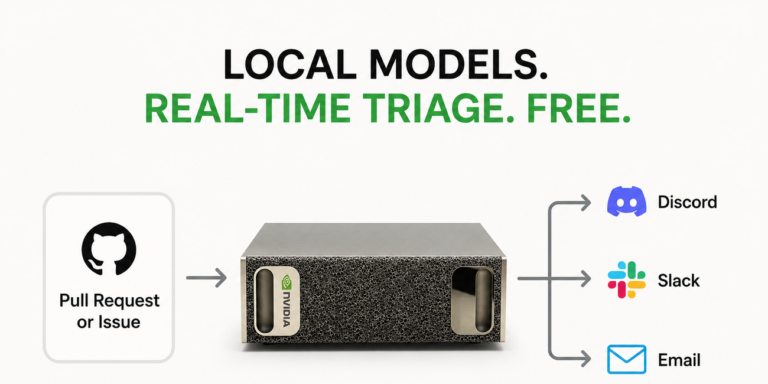
If you own a powerful local machine like the NVIDIA GB10, using models like gemma-4-26b-a4b or qwen3.6-35b-a3b in an agent harness can give you real-time, cost-free triage of open-source contributions. The article provides concrete numbers on precision, recall, and throughput tradeoffs, plus a practical hybrid architecture that uses a cheap cloud audit loop ($9/month) to catch misses.
Shipping weekly releases with AI, open tools, and a human in the loop

Hugging Face cut their release effort from half a day to 15 minutes by using an open-weight AI to draft changelogs, wrapped in deterministic checks that verify every PR is included, and a human review before shipping. The full pipeline is open-source and costs about $0.25 per run.
AI Security After Codex and Claude Code: New Vulnerabilities and Guardrails

This episode from Gray Swan's cofounders explains why AI agents create a new class of security vulnerabilities that traditional cybersecurity cannot solve. Essential for engineers deploying Codex, Claude Code, or similar agents — prompt injection, automated red-teaming, and the lethal trifecta are must-understand concepts.
So You Want to Sell Inference: Pricing vs Value in AI
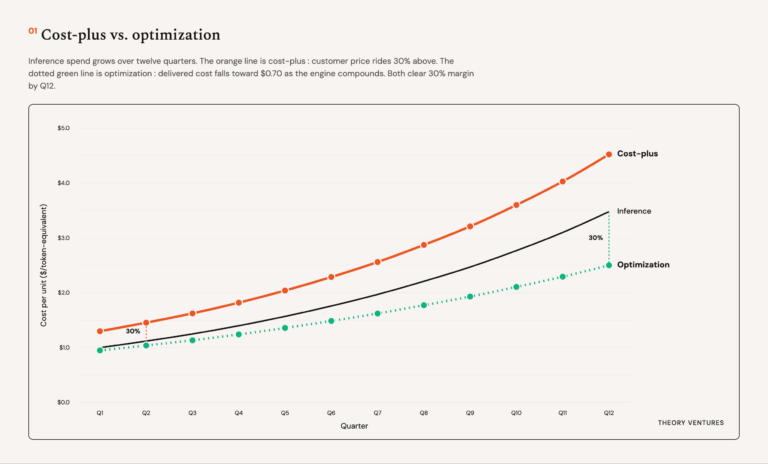
If you're reselling inference, cost-plus pricing caps your margins at zero as commodit drives prices down. The article explains how value-based pricing (charging per outcome, not per token) and optimization (distillation to proprietary small models) keep gross margin above 30%, and why bring-your-own-key kills markup entirely.
Daybreak: Tools for Securing Every Organization in the World
OpenAI's Daybreak initiative tackles the new cybersecurity bottleneck of patching at scale, with Codex Security automating fixes across 30,000 codebases, GPT-5.5-Cyber setting state-of-the-art CyberGym scores, and Patch the Planet pairing expert researchers with open-source maintainers to land fixes faster.