iFeeling Daily
Daily curated AI insights you can't miss.
Vals raises $40M for private, real-world AI benchmarking

Vals, backed by Andreessen Horowitz, builds private AI benchmarks for law, finance, and coding, and says revenue is eight times last year's.
Native BM25 hybrid search in AlloyDB and Cloud SQL
AlloyDB and Cloud SQL now preview native BM25 search via TigerData's pg_textsearch, enabling hybrid vector-keyword search in one single database.
Crusoe raises $3.9B to build data centers and modular AI factories
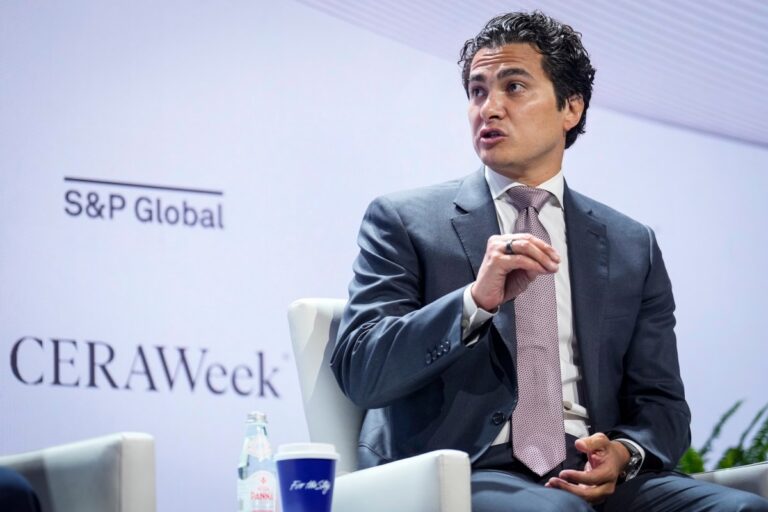
Crusoe raised $3.9 billion at a $30.9 billion valuation, aiming to fund data centers and small modular 'AI factories' for rapid compute deployment.
FAA to launch $875M AI air traffic system SMART

The FAA will spend $875M on Air Space Intelligence's SMART, an AI platform to help air traffic controllers predict flows and spot conflicts before they occur.
Base Labs partners with Hugging Face and Goodfire on open-weight AI safety

Baseten launched Base Labs, a safety infrastructure standard for open-weight models, partnering with Hugging Face and Goodfire to address abliteration.
Huawei accelerates Ascend 960DT AI chip launch to Q1 2027

Huawei moved its Ascend 960DT AI chip launch up to Q1 2027, announced at Huawei Connect, while analysts question the smaller scale of its newly revealed SuperPoD system.
Google, Nvidia, and Anthropic join Emerald AI’s grid demand-response coalition

Google, Nvidia, and Anthropic join Emerald AI's coalition to use demand response for data centers, potentially unlocking 100 GW of grid capacity.
DACA-GRPO: Denoising-Aware Credit Assignment for Diffusion LLMs

DACA-GRPO adds denoising-aware credit assignment and stratified masking likelihood to GRPO, lifting diffusion LM RL across seven benchmarks.
Glyph: Multi-Agent System for Enterprise Data Catalog Tagging

Glyph uses cooperating LLM agents to generate column descriptions and assign governed ontology tags, grounding in pipeline code and fusing three tagging strategies.