iFeeling Daily
Daily curated AI insights you can't miss.
Microsoft Resells the Frontier
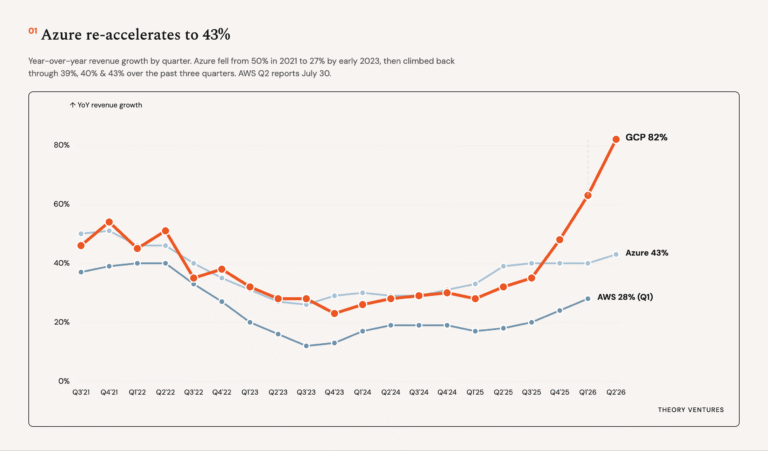
Azure grew 43% last quarter but Google Cloud grew 82%; Microsoft's $678b backlog is nearly half dependent on OpenAI, raising credit risk.
Claude Mythos Preview discovers cryptographic weaknesses in HAWK and AES

Claude Mythos Preview discovered cryptographic weaknesses: halving HAWK's effective key strength and accelerating reduced-round AES attacks by 200-800x, without affecting production systems.
How one power line failure exposed a growing AI data center grid problem

A power line failure near D.C. caused 3 GW of data centers to disconnect from the PJM grid simultaneously, flickering lights and highlighting a growing grid stability problem.
LenVM: Token-Level Value Model for Generation Length Control
LenVM models remaining generation length per token via value estimation, achieving precise length control and interpretability across LLMs and VLMs with strong empirical results.
Nonprofit Current AI builds open public AI infrastructure, free for all

Current AI CEO Ayah Bdeir says major AI systems belong to private companies, so a public alternative, free and open like the web, is necessary.
39 Agents, No Framework: Building a Digital Brain for a Manufacturing Company

Rushabh Doshi shared how he built a 39-agent AI operating system called Ira for a traditional mechanical manufacturing company without using any existing frameworks, detailing the complete architecture from document digestion, agent orchestration, immune system safeguards, to nightly dream cycles, and proposed the 'Fork My Brain' enterprise AI delivery model.
Single Neuron Is Sufficient to Bypass LLM Safety Alignment
Suppressing a single refusal neuron bypasses safety alignment across diverse harmful requests without any training or prompt engineering.
PRX Part 4: Data Strategy for Diffusion Model Training
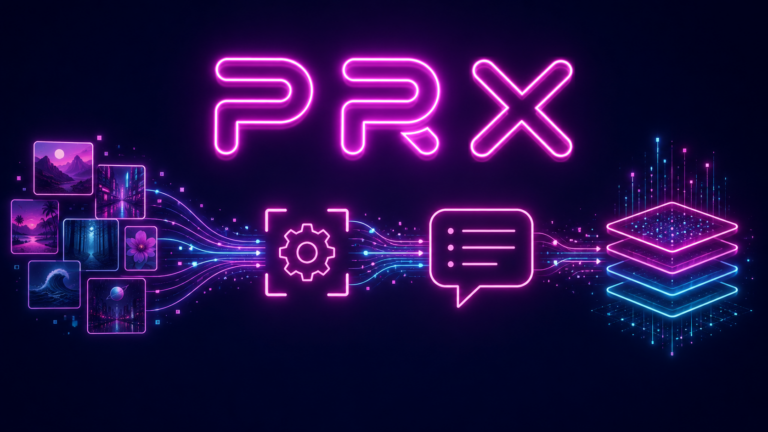
Photoroom's PRX data strategy emphasizes diverse pre-training, VLM re-captioning, and a flexible pipeline using Lance for curation and MDS for streaming.
Garry Tan: The 400x Leverage of AI-Native Organizations

Garry Tan, president of Y Combinator, explains how AI-native companies achieve massive productivity gains by treating AI as a workforce and encoding roles as markdown skill files. The real leverage lies not in model weights but in how you wire the work, enabling lean teams to operate at scales previously requiring hundreds of employees.