iFeeling Daily
Daily curated AI insights you can't miss.
Three Years of AI Compression: Rethinking Venture and Infrastructure
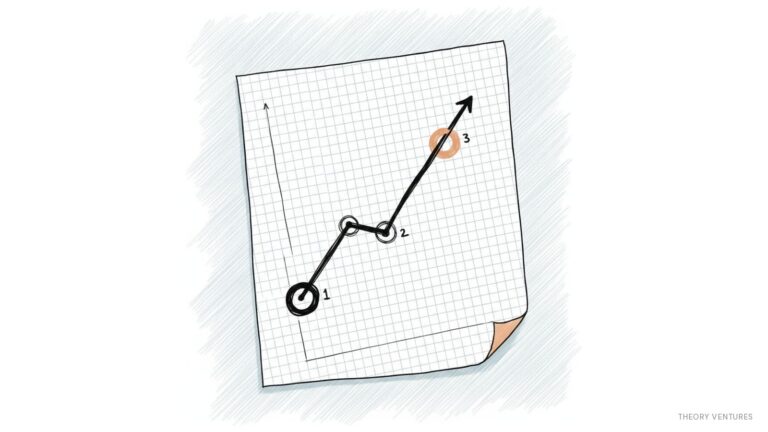
Three years ago, Theory Ventures launched with a bet that AI would reshape software. The market moved faster than even bullish expectations, and the firm's anniversary post traces how AI compresses time — new models every 41 days, companies reaching $100M in record time, and the old language of venture capital breaking down. Seed rounds now range from $1M to $500M, sometimes larger than IPOs, because the best companies mature much earlier.
Using Surprisal to Map Agent Retrieval Performance

Standard pass/fail benchmarks hide where agents actually break. This article shows how using information theory (surprisal) to sweep query ambiguity reveals capability cliffs and sweet spots that single-score evaluations miss. It's a practical guide to building evaluations that produce actionable signals, not just verdicts.
GPT-5.6: Frontier intelligence that scales with your ambition
GPT-5.6 delivers state-of-the-art results across coding, cybersecurity, and science while using fewer tokens and costing less than competitors like Claude Fable 5. The new model family (Sol, Terra, Luna) introduces ultra multi-agent orchestration and Programmatic Tool Calling for efficient complex workflows. OpenAI also debuts its most extensive safety system yet, with layered safeguards and 700,000 A100e hours of red teaming. For builders, this means more capable, cost-effective AI agents ready for production use.
Modal CTO on the 100,000 Sandbox Problem and AI Infrastructure

Modal CTO Akshat Bubna explains why Kubernetes fails at AI workloads, how Modal's 17-cloud capacity pool and GPU snapshotting handle bursty inference and RL rollout sandboxes, and why observability matters more when agents write the code.
Separating signal from noise in coding evaluations
OpenAI's audit of SWE-bench Pro reveals that roughly 30% of its tasks are broken due to overly strict tests, underspecified prompts, and other issues, leading the team to retract their earlier recommendation. The analysis used automated filtering, agent-assisted review, and human annotation to uncover these flaws, offering a sobering lesson in the difficulty of curating fair coding benchmarks for safety-critical evaluation.
Inside the $10B Forward-Deployed Engineering Boom
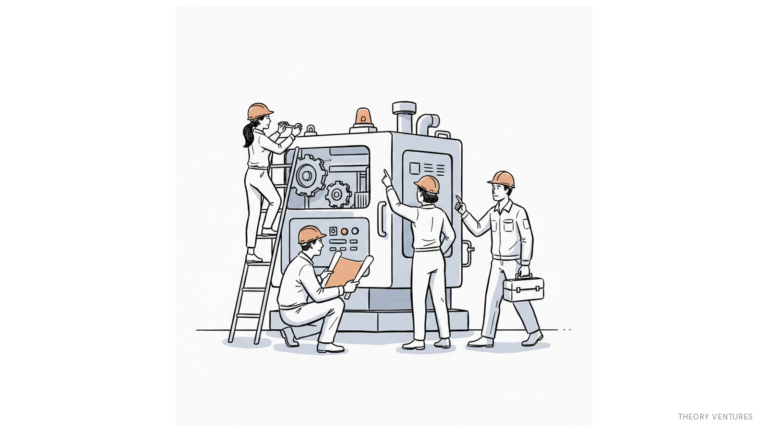
AI labs have committed $9.75B to forward-deployed engineering in 12 months, shifting the bottleneck from model capability to enterprise deployment. Three models are emerging—Microsoft and Amazon use internal headcount, OpenAI and Anthropic use standalone PE-backed entities, and Google Cloud uses partner funds—but all aim to create institutional switching costs that make FDE teams the moat.
The FDE Arms Race: AI Companies Spend $10B on Forward-Deployed Engineering
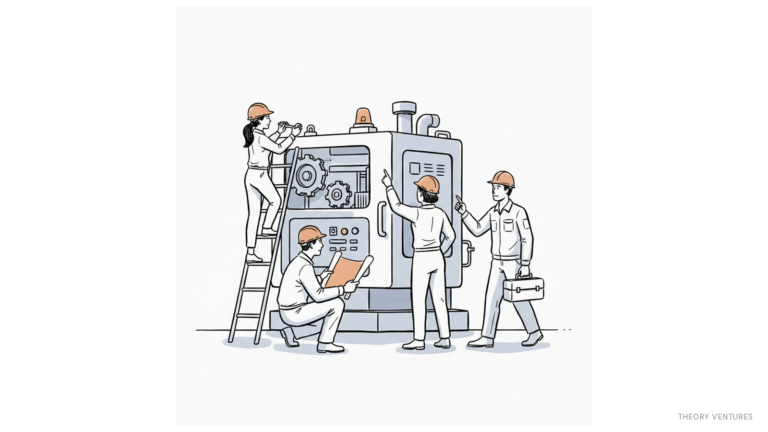
AI companies have committed ~$10B in 12 months to forward-deployed engineering, embedding engineers inside enterprises to solve the deployment bottleneck. Three structural models emerge: internal army, PE-backed JV, and Palantir's original approach. The question is whether scaling the FDE model 10x breaks the economics that made it work for Palantir.
Claude Has a Secret Workspace: The J-Space and Silent Reasoning in LLMs
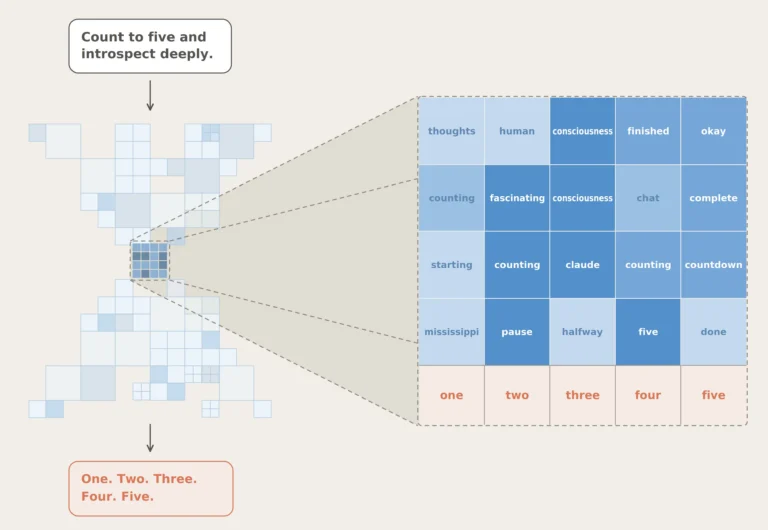
Anthropic researchers found that Claude has developed an internal workspace, the J-space, that acts like conscious access in humans: it holds thoughts the model can report and reason with, separate from automatic processing. Using a technique called the Jacobian lens, they can read these silent thoughts to catch hidden reasoning, fabricated data, or misaligned goals before they appear in text.
Claude Code usage data shows domain expertise, not coding skill, drives success

Anthropic analyzed ~400,000 Claude Code sessions and found that domain expertise, not coding skill, is the strongest predictor of success. Experts achieve verified success more than twice as often as novices, and every major occupation succeeds at nearly the same rate as software engineers when using the tool.