iFeeling Daily
Daily curated AI insights you can't miss.
Fixing tool-calling reliability for open models with a transparent repair layer
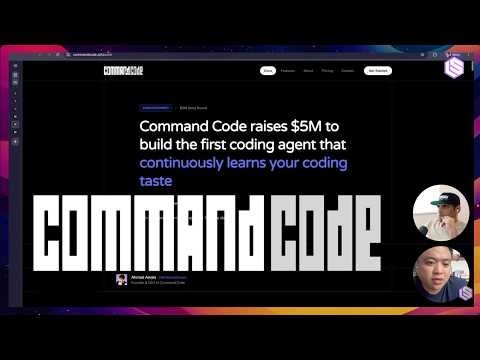
Most tool-calling failures in open models aren't capability gaps—they're harness bugs. Ahmad Awais built a transparent repair layer that fixes malformed calls without retries, letting DeepSeek V4 Pro beat Opus 4.7 on 6 of 10 benchmarks. For anyone shipping agentic code, this is a practical lesson in where to invest engineering effort.
Biggest Mysteries in Physics: Antimatter, Dark Energy & ToE – Don Lincoln
Don Lincoln, a particle physicist at Fermilab, takes you on a deep dive into the universe's greatest unsolved puzzles—antimatter, dark energy, and the quest for a theory of everything. A clear, grounded conversation that connects experimental physics with the most profound questions about reality.
Devin’s 80% Moment: Background Agents, 7x PRs, and the End of Hand-Held Coding
The engineering world is waking up to a hard tension: hand-held coding, where a developer drives every keystroke, does not scale inside an organization that ships thousands of changes per week. Walden Yan, Cognition's co-founder and CPO, frames this as the moment **background agents** go from toy to critical infrastructure. The concrete proof is that **Devin now generates 80% of commits across Cognition's own repos**, up from 16% before the December 2025 model inflection, and merged PR volume has grown 7x. The problem is not whether agents can write code—it is whether they can reliably go from a spec written in Slack to a merged, tested, properly reviewed pull request without breaking your codebase every two weeks. Cole Murray's open-source **OpenInspect** project is an attempt to replicate this pattern for teams that cannot or should not buy a proprietary system.
Choosing Your Antigravity Surface: Desktop, CLI, IDE, or SDK
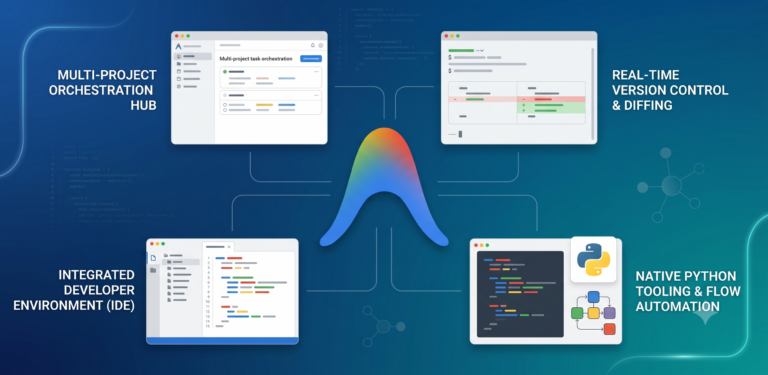
If you're building or choosing an agent platform, the article shows how Antigravity splits into four distinct surfaces—desktop, CLI, IDE, and SDK—all backed by the same shared harness. The key insight is that matching the interface to how you actually work matters more than a one-size-fits-all product.
Lightning Engine for Spark: Vectorized native execution and cloud optimizations
Lightning Engine for Managed Service for Apache Spark delivers up to 4.9x faster performance than standard open-source Spark by compiling query plans into SIMD-optimized C++ code, with a smart fallback that gracefully handles unsupported operators. It's available now with zero pipeline changes.
Cohere Releases North Mini Code: 30B MoE Model for Agentic Coding
Cohere's North Mini Code is a 30B MoE model optimized for agentic coding, featuring a novel two-stage SFT and asynchronous RLVR pipeline. It achieves 33.4 on the Artificial Analysis Coding Index, outperforming models like Qwen3.5 and Gemma 4. The technical report details cross-harness training that yields free improvements (e.g., 61.0% pass@1 on SWE-Bench with mini-SWE-agent) and online RL that cuts invalid tool calls by rewarding only valid outputs.
Claude Opus 4.8: Improved Honesty, Effort Control, and Dynamic Workflows
Claude Opus 4.8 delivers sharper judgment and proactive honesty, with effort control and dynamic workflows that let engineers tune latency vs. quality and run parallel subagents for large-scale tasks. It's a meaningful upgrade for agentic and enterprise AI workflows.
Expanding Project Glasswing
Project Glasswing has expanded from 50 to 200 partners using Claude Mythos Preview to scan codebases, finding over 10,000 critical vulnerabilities. With Mythos-class models expected from many AI companies within 6-12 months, the bottleneck is shifting from finding flaws to patching them at massive scale.
Spanner Graph Algorithms: Native Graph Mining at Scale in Google Cloud
Spanner Graph algorithms bring Google Research's graph mining directly into the database, enabling centrality, community detection, and path finding on billion-edge graphs without ETL pipelines. Ideal for fraud detection, entity resolution, and network analysis.