iFeeling Daily
Daily curated AI insights you can't miss.
Google MENA-T Accelerator: 15 AI-First Startups Tackle Geopolitical Risk
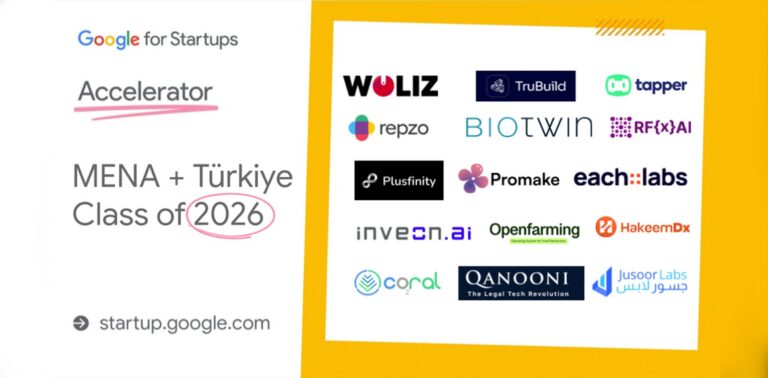
Google’s new MENA-T accelerator cohort pairs deep technical stack audits and AI security training with real cloud infrastructure. With past startups like COGNNA achieving 80% faster analyst workflows and Smart Bricks automating 99% of real estate workflows, the program shows how targeted mentorship and Google Cloud tooling can help founders scale despite geopolitical uncertainty.
A Guide to AI Cold Starts on Cloud Run
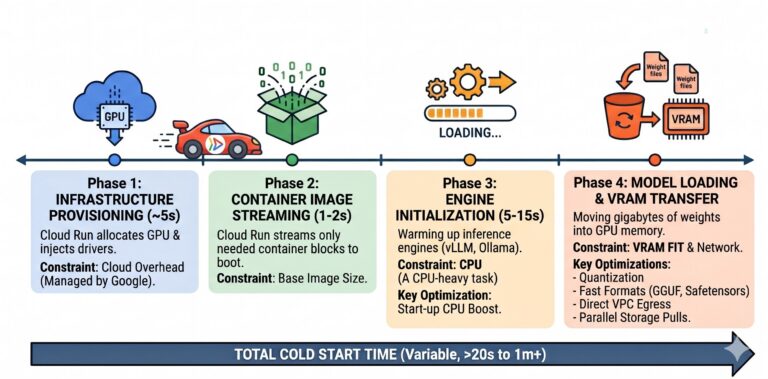
This article dives deep into the mechanics of AI cold starts on Cloud Run, breaking down the four phases and providing concrete strategies to reduce latency from 20 seconds to manageable levels, including quantization, startup CPU boost, and concurrency tuning from Google's formula.
ITBench-AA Benchmark: Frontier Models Score Below 50% on Agentic SRE Tasks
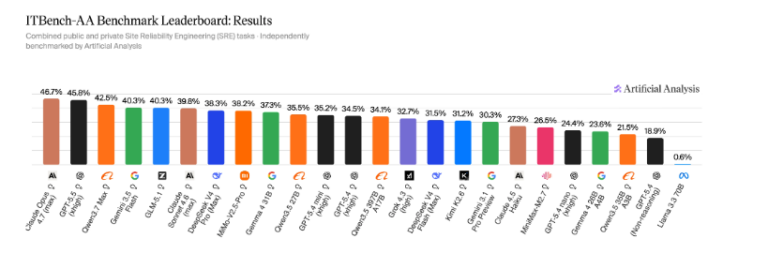
ITBench-AA reveals that frontier models, including Claude Opus 4.7 at 47%, struggle to diagnose Kubernetes incidents with recall-gated precision. Open weights models like Gemma 4 31B at 37% offer cost-effective alternatives, highlighting the need for agentic reasoning that avoids over-investigation.
The Harness Era: Seven Disciplines for Domesticating AI in Production

The software era of fixed-workflow SaaS is over; the harness era is here. If every company has access to the same AI models, the winners will be those who build the best systems for context retrieval, tool orchestration, state persistence, and observability. This is a pragmatic guide for engineers deciding where to invest their infrastructure effort.
Sparse Delta Weight Sync for Async RL: A TRL PR for Trillion-Parameter Training

Async RL has an expensive dirty secret — shipping the full model every step — but this post shows that 98-99% of bf16 weights don't actually change between steps. It lands a real TRL PR that encodes only the sparse delta as safetensors, uploads it to a Hugging Face Bucket, and lets vLLM fetch it. The result: payloads drop from 1.2 GB to 20-35 MB, and the trainer and inference server no longer need to share a network.
Chinese-Language PhaaS: Real-Time Interception and Digital Wallet Exploitation
Chinese-language PhaaS operators have moved from static password harvesting to real-time interception of OTPs and digital wallet tokenization, enabling direct financial control. Using encrypted channels like RCS and iMessage, along with AI-generated pages, they bypass traditional defenses. Defenders must adopt FIDO2/WebAuthn and risk-based verification during wallet provisioning.
Running Reachy Mini’s voice pipeline fully offline with speech-to-speech

This article walks through running a full speech-to-speech pipeline locally for the Reachy Mini robot, replacing cloud dependencies with a cascaded stack of Silero VAD, Parakeet STT, a local LLM via llama.cpp or vLLM, and Qwen3 TTS. It covers the practical tradeoffs between latency, privacy, and model quality that matter when deploying a voice agent on your own hardware.
Agent Gravity: The New Battle for AI Workloads
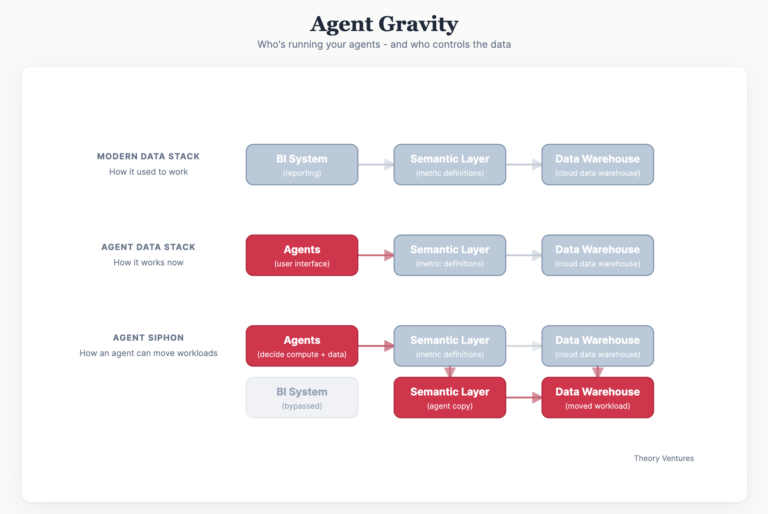
The article introduces 'agent gravity' as the new competitive force in AI, where platforms battle to keep agent workloads and data on their infrastructure. A Databricks feature on Microsoft's platform shows how easily agent workloads can migrate, threatening the incumbent's data and compute business.
Nemotron-Labs Diffusion: Fast Text Generation via Self-Speculation
Nemotron-Labs Diffusion lets developers pick AR, diffusion, or self-speculation inference from one checkpoint—self-speculation delivers up to 6.4× tokens-per-forward-pass gain over pure AR with lossless accuracy. Practical, open, and ready to test through SGLang.