iFeeling Daily
Daily curated AI insights you can't miss.
How Siemens Modernized Legacy Code with Agentic Workflows
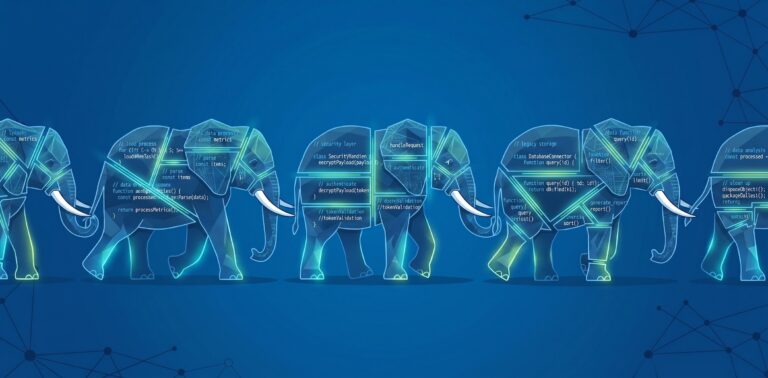
Siemens and Google Cloud's Knowledge Fabric shows how to tame massive industrial codebases by combining knowledge graphs, multi-agent workflows, and human oversight—turning a decade-old modernization nightmare into a manageable, scalable process.
Graph Technologies Underpin Yahoo’s System of Action
Yahoo's Seller Agent, built on Google Cloud's graph technologies, shows how a dual-graph architecture—a knowledge graph for grounding and a context graph for auditability—lets agentic AI operate at speed while maintaining regulator-grade transparency. The blueprint applies broadly to any high-stakes industry.
Google’s New Data Agents and Tools for the Agentic Data Cloud
Google's Agentic Data Cloud announcement tackles the core problem of grounding AI agents in enterprise data with near-100% accuracy, shipping a suite of new data agents, conversational analytics across multiple databases, and managed MCP servers—making it easier to build secure, context-aware agents without hosting your own infrastructure.
OpenAI Partner Network: $150M to Drive Enterprise AI Adoption
If you're building enterprise AI solutions, this post shows OpenAI's strategy to overcome the adoption bottleneck through a formal partner ecosystem with tiered specializations and a $150M investment — a clear signal that deployment and change management are now the critical frontier.
Olmo-eval: An Evaluation Workbench for LLM Development Loops
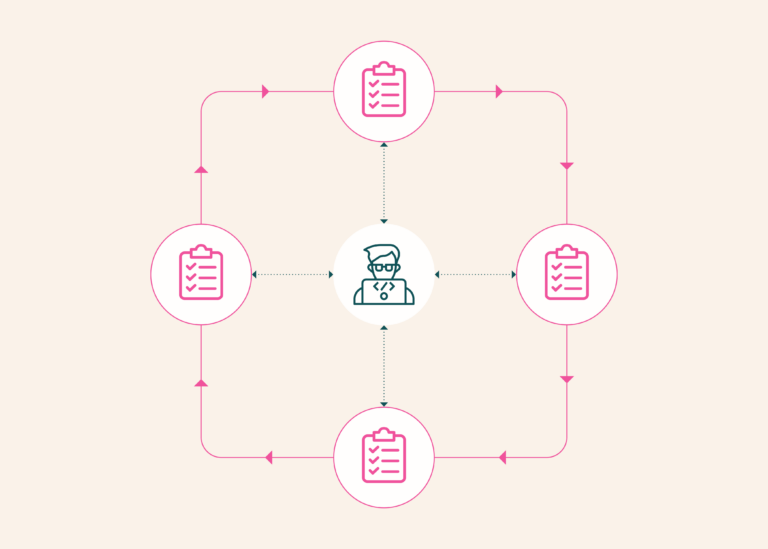
If you've ever wondered whether a 2.4pp change in your LLM's eval score is real improvement or noise, olmo-eval gives you the per-question pairwise comparison and minimum detectable effect to answer that. It's built for the iterative development loop, not just final scoring.
Open Knowledge Format: A Portable Standard for AI Context Sharing
Open Knowledge Format (OKF) is an open specification that turns scattered internal knowledge into portable markdown files with YAML frontmatter, enabling AI agents and humans to share context without vendor lock-in or complex integrations.
Apple and Google Build Verifiable Private AI Infrastructure on Cloud
This article explains how Apple's Private Cloud Compute (PCC) runs on Google Cloud using Confidential Computing, Intel TDX, and NVIDIA Blackwell GPUs to create hardware-enforced isolation for AI inference. The critical detail is that the entire host stack is open-sourced for external verification—a move that sets a new bar for trust in cloud AI infrastructure.
Profiling in PyTorch (Part 2): From nn.Linear to a Fused MLP
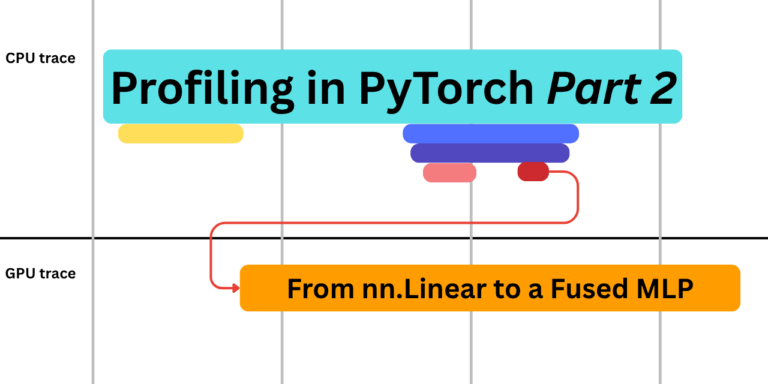
The article traces the journey from a single nn.Linear to a fused MLP, showing that torch.compile fuses GeLU and multiplication into one Triton kernel while leaving the three cuBLAS GEMMs untouched. It then introduces hand-tuned Liger kernels that achieve the same fusion without compile latency or shape specialization, trading a few microseconds of peak performance for robustness across changing input sizes.
OpenAI acquires Ona to give Codex agents persistent cloud execution
OpenAI is acquiring Ona to give Codex agents persistent, secure cloud environments where they can work for hours or days, not just minutes. For organizations moving agents into production, this means agents operate inside the org's own cloud with controlled credential scoping, logging, and review, while OpenAI provides the orchestration.