iFeeling Daily
Daily curated AI insights you can't miss.
State of AI Infrastructure: The Shift from Chatbots to Autonomous Agents
Enterprise AI has moved from chatbots to autonomous agents, but legacy infrastructure can't handle the scale or cost. A survey of 1,400 IT leaders reveals 83% need upgrades, 62% face an inference tax from egress and bloat, and 79% cite governance as the top scaling challenge. The fix lies in fluid compute, unified data layers, and centralized agent governance.
Inside the $10B Forward-Deployed Engineering Boom
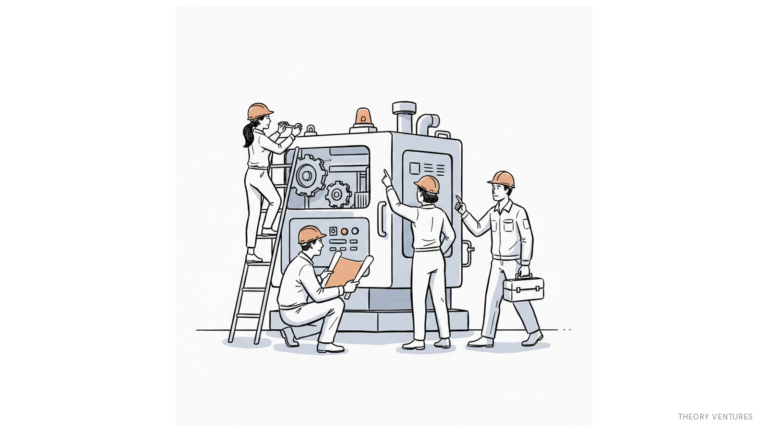
AI labs have committed $9.75B to forward-deployed engineering in 12 months, shifting the bottleneck from model capability to enterprise deployment. Three models are emerging—Microsoft and Amazon use internal headcount, OpenAI and Anthropic use standalone PE-backed entities, and Google Cloud uses partner funds—but all aim to create institutional switching costs that make FDE teams the moat.
Accelerate AI with Cloud Run: From Prototype to Production in 2026
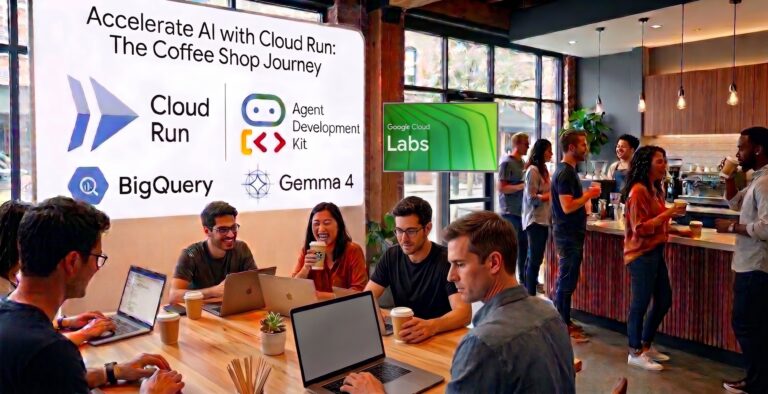
The Google Cloud Labs post tackles the 'Day 2' problem of moving AI agents from prototype to production, using a Coffee Shop Journey curriculum that spans Cloud Run basics, Google ADK with RAG, Gemma 4 with BigQuery MCP, and Antigravity 2.0 for building agents that actually survive real-world traffic.
The FDE Arms Race: AI Companies Spend $10B on Forward-Deployed Engineering
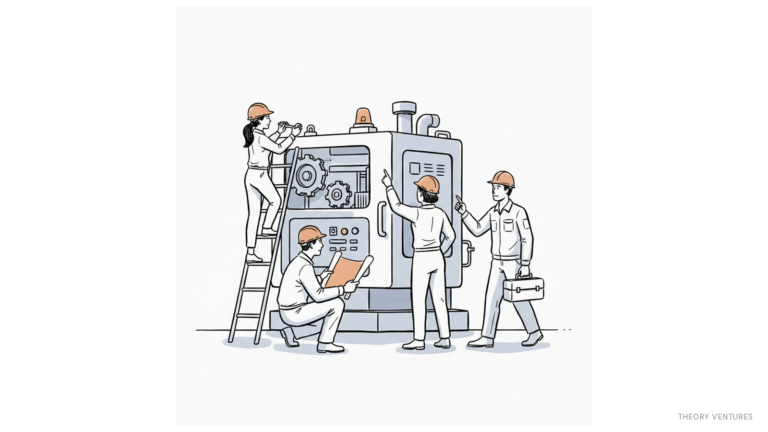
AI companies have committed ~$10B in 12 months to forward-deployed engineering, embedding engineers inside enterprises to solve the deployment bottleneck. Three structural models emerge: internal army, PE-backed JV, and Palantir's original approach. The question is whether scaling the FDE model 10x breaks the economics that made it work for Palantir.
Alberta Uses Claude to Secure 466M Lines of Code in 20 Hours

The Government of Alberta used Claude Code with autonomous agents to scan 466 million lines of code in 20 hours — a task they estimate would have taken 6.5 years manually — then fixed vulnerabilities and even rebuilt a 25-year-old Java portal in days. Their technical white papers offer a blueprint for any government agency facing similar security debt.
Nexus SDV: Securing the software-defined vehicle with AI agents

This article announces Nexus SDV, an open-source, AI-enabled connected vehicle platform built on Google Cloud in partnership with Valtech. It explains how the platform uses Arm-based compute, Bigtable-optimized storage, and Gemini models to reduce TCO while securely managing up to 100 million devices with defense-in-depth security.
Claude Has a Secret Workspace: The J-Space and Silent Reasoning in LLMs
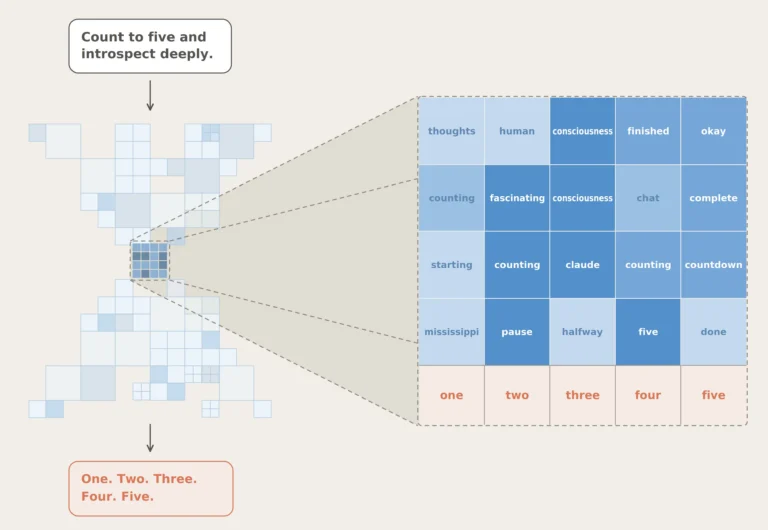
Anthropic researchers found that Claude has developed an internal workspace, the J-space, that acts like conscious access in humans: it holds thoughts the model can report and reason with, separate from automatic processing. Using a technique called the Jacobian lens, they can read these silent thoughts to catch hidden reasoning, fabricated data, or misaligned goals before they appear in text.
LeRobot v0.6.0: Closing the Robot Learning Loop
LeRobot v0.6.0 introduces world model policies, reward models, a deployment CLI with DAgger corrections, and nine simulation benchmarks to close the robot learning loop, making it easier to iterate from data collection through fine-tuning and evaluation.
Hugging Face Kernels: Security, Reproducibility, and Framework Updates
This update from Hugging Face's Kernels project details how it addresses security and reproducibility challenges for custom native kernels, with new repository types, trusted publisher verification, and code signing—critical for safe deployment of high-performance AI components.