iFeeling Daily
Daily curated AI insights you can't miss.
Meta’s New AI Chips Enter Production in September
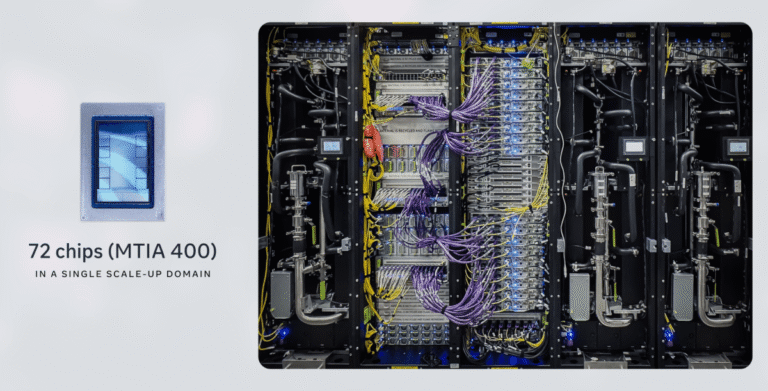
Meta is racing to reduce its dependence on Nvidia GPUs by pushing its own AI chips, developed under the MTIA program with Broadcom, into production this September. The company expects to deploy 7 gigawatts of compute this year and double that next, as it invests between $125 billion and $145 billion in capital expenditures. This is a serious move to gain leverage over GPU supply and pricing.
GPT-5.6: Frontier intelligence that scales with your ambition
GPT-5.6 delivers state-of-the-art results across coding, cybersecurity, and science while using fewer tokens and costing less than competitors like Claude Fable 5. The new model family (Sol, Terra, Luna) introduces ultra multi-agent orchestration and Programmatic Tool Calling for efficient complex workflows. OpenAI also debuts its most extensive safety system yet, with layered safeguards and 700,000 A100e hours of red teaming. For builders, this means more capable, cost-effective AI agents ready for production use.
AlphaEvolve: Google’s algorithmic discovery agent goes GA

AlphaEvolve, Google's agent for systematic algorithmic discovery, is now generally available on the Gemini Enterprise Agent Platform. Early adopters report dramatic gains across logistics, chip design, genomics, and ML training — including an 80% improvement in supply chain models and doubled training throughput — by turning optimization into a search problem that machines explore autonomously.
Google Cloud Run sandboxes are in public preview
Google Cloud Run sandboxes let you spawn isolated, near-instant runtimes for untrusted AI-generated code directly inside your existing serverless service, with no additional cost and zero-trust security that blocks network egress by default.
GKE Autopilot Clusters with Managed DRANET for GPUs and TPUs

GKE Autopilot with managed DRANET automates the painful networking configuration for GPU and TPU pods, using ComputeClass and ResourceClaimTemplate to bind accelerators directly. This removes the biggest operational friction for distributed AI training on Kubernetes.
Ollama Hits 8.9M Users, Raises $65M Series B for Open Model Platform
Ollama's 8.9 million developers and 67,000 integrations show that running open models locally is no longer a niche hobby. With a simple app that keeps data on-device, a cloud burst mode twice as fast as competitors, and partnerships with every major model lab, it's becoming the default infrastructure layer for AI development. The $65M Series B led by Theory Ventures confirms the momentum.
Ollama raises $65M, grows to 8.9M developers with Docker-like AI tool strategy
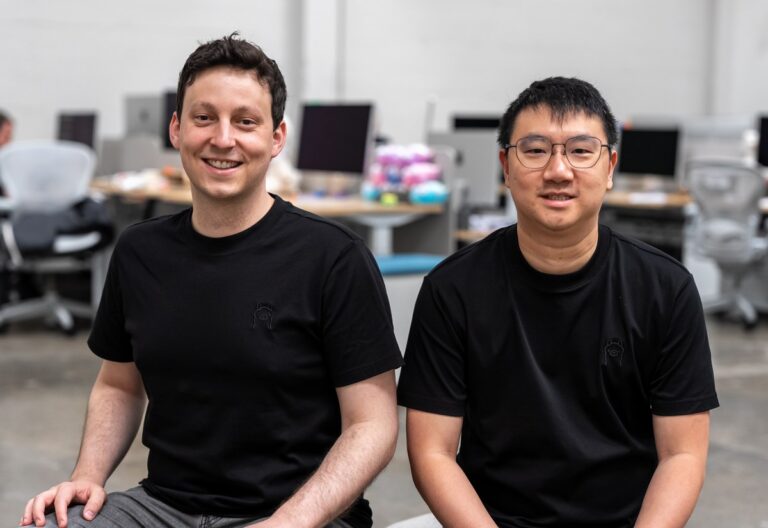
Ollama, the open source tool for running AI models locally, raised $65M after hitting 8.9M monthly developers. Its GPU-time-based pricing and smooth local-to-cloud transition mirror Docker's playbook — and signal that open-weight model infrastructure is becoming a real business, not just a hobbyist project.
Modal CTO on the 100,000 Sandbox Problem and AI Infrastructure

Modal CTO Akshat Bubna explains why Kubernetes fails at AI workloads, how Modal's 17-cloud capacity pool and GPU snapshotting handle bursty inference and RL rollout sandboxes, and why observability matters more when agents write the code.
Google Cloud Launches C4N Network-Optimized VMs with 400 Gbps
C4N instances from Google Cloud eliminate network and storage I/O bottlenecks for demanding workloads like databases, AI/ML inference, and network appliances, delivering up to 400 Gbps and 95 MPPS with Hyperdisk storage—a 2x performance boost over C4 and significant TCO savings by avoiding over-provisioning.