iFeeling Daily
Daily curated AI insights you can't miss.
PARE: A Stateful Benchmark for Proactive AI Assistants

This work exposes a core blind spot in proactive AI assistant research: benchmarks that flatten apps into stateless APIs can't test real-world anticipation and timing. The proposed PARE framework models applications as finite state machines, enabling stateful user simulation and a 143-task benchmark across communication, productivity, and scheduling domains.
2026 M-Trends: Public Sector Must Pivot to Machine-Speed Defense

Mandiant's 2026 M-Trends report reveals a 22-second hand-off from initial access to ransomware, making human-speed triage obsolete. The public sector must pivot to continuous verification, using identity as the new perimeter and agentic defense to detect adversaries at machine speed.
The Harness Is the New Battleground for Enterprise AI Data Trust
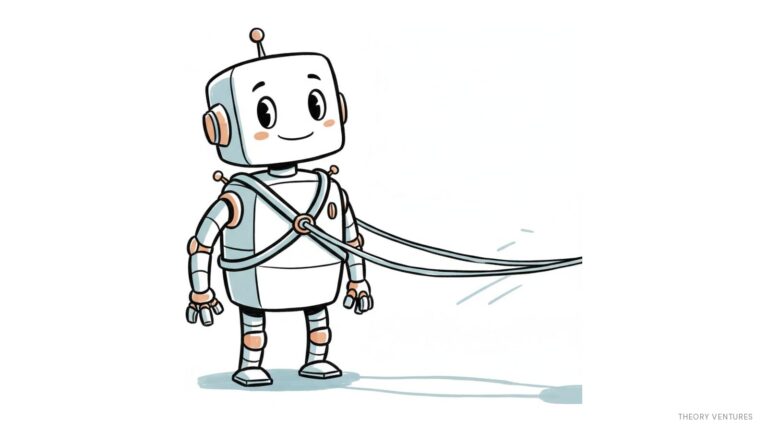
The core tension exposed here is that enterprise AI adoption forces customers to hand over their proprietary knowledge—not just pay for compute—because every user query generates a trajectory that can be fed back into the model to improve it. Unlike SaaS, where customer data stayed in isolated databases, AI vendors can legally and technically absorb that data into their own intellectual property. Satya Nadella and Alex Karp both warned publicly that companies are paying for intelligence twice: once with money, and again with the trade secrets they must reveal.
DeepMind CEO Proposes FINRA-Style AI Regulator for Frontier Models

DeepMind CEO Demis Hassabis proposes a self-regulatory organization modeled on FINRA to test frontier AI models before release, aiming to replace ad hoc government reviews with a technically rigorous, industry-funded, and politically feasible standards body.
Meta’s Mosseri: AI token budgets may be capped per engineer in 1-2 years

Adam Mosseri predicts that within a year or two, Meta will need to cap AI token budgets per engineer because the burn rate could equal their salary. The article details how companies like Meta, Uber, and Microsoft are already wrestling with runaway AI costs, forcing a shift from unlimited experimentation to managed resource allocation.
The real AI race may no longer be at the frontier

Open-weight models from Chinese labs now dominate volume-heavy AI production workloads on platforms like OpenRouter and Vercel, surpassing frontier models from U.S. labs. This shift raises practical questions about whether proprietary frontier models still matter for most real-world use cases, as enterprises increasingly prioritize cost, customization, and data control.
Reflection inks $1B compute deal with Nebius for Nvidia chips

Reflection AI signs a $1 billion compute deal with Nebius for Nvidia chips, following a similar deal with SpaceX, as open-weight model developers scramble to secure infrastructure in a supply-constrained market. The article highlights how compute procurement is becoming a strategic differentiator amid geopolitical and regulatory pressures on AI model access.
Why Long Context Isn’t Enough for AI Memory

Dan Biderman argues that long context windows and RAG are insufficient for true AI memory. Engram's approach uses knowledge cartridges and continual learning to compress experience into model weights, enabling personal AI that improves over time like a Tamagotchi.
Sam Altman’s space data center trash talk aligns with expert consensus

Sam Altman's dismissive retort about space data centers reflects what most aerospace and AI infrastructure experts already agree on: the economics of orbital compute for AI inference aren't viable until rockets are much cheaper and satellites can be mass-produced, a milestone likely a decade or more away.