iFeeling Daily
Daily curated AI insights you can't miss.
Separating signal from noise in coding evaluations
OpenAI's audit of SWE-bench Pro reveals that roughly 30% of its tasks are broken due to overly strict tests, underspecified prompts, and other issues, leading the team to retract their earlier recommendation. The analysis used automated filtering, agent-assisted review, and human annotation to uncover these flaws, offering a sobering lesson in the difficulty of curating fair coding benchmarks for safety-critical evaluation.
Why Agentic AI Needs Open Data and Synthetic Scaling
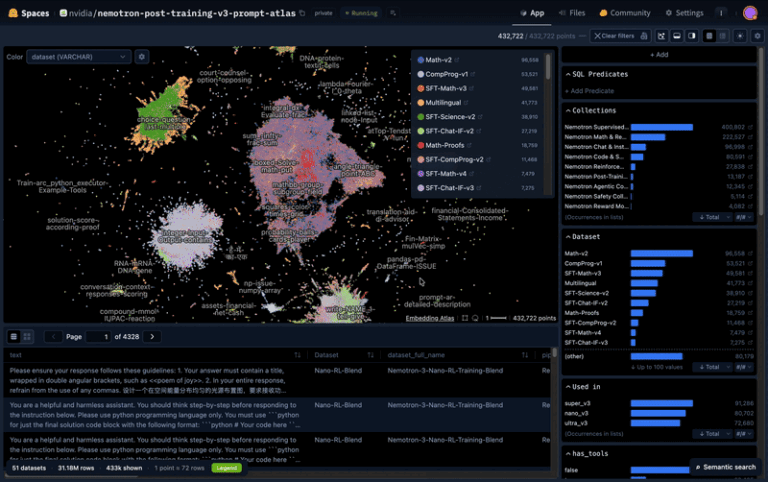
NVIDIA Nemotron's open data strategy tackles the hardest part of building agents: the real world doesn't behave like a benchmark. Instead of just releasing model weights, they release synthetic data for tool-use failures, multi-step reasoning, and agentic workflows—making agent behavior inspectable and reproducible without exposing proprietary secrets.
Google Named Leader in Gartner Magic Quadrant for AI Infrastructure

Google's AI Hypercomputer, built on co-designed TPUs and open software, aims to solve the infrastructure challenges of the agentic era. Named a Leader in Gartner's Magic Quadrant for AI Infrastructure, the stack claims up to 40% higher throughput and 30% lower serving costs, with scalability to 130,000 nodes and 97% accelerator goodput.
Transformers Backend for vLLM Matches Native Inference Speed

The transformers modeling backend for vLLM now dynamically applies inference-specific layer fusions at runtime, matching or exceeding the performance of hand-written vLLM implementations across Qwen3 models from 4B to 235B parameters. One clean implementation in transformers is enough for both training and production-grade inference, without custom ports.
SambaNova raises $1B at $11B valuation for AI inference chips, JPMorgan signs on

SambaNova raises $1B at $11B valuation, five months after a $350M Series E, to scale supply chain and deliver its SN50 inference chips. With JPMorgan as a customer and a deepened Intel partnership, the company targets the growing demand for private, on-premises AI inference in banking, government, and enterprise.
First US Autonomous Ground Vehicles Deployed in Ukraine War Zone

Forterra's deployment of over 100 autonomous ATVs in Ukraine reveals that the immediate value isn't full autonomy but rugged, teleoperated logistics vehicles. The most critical takeaway is that real combat exposes the seams between human and machine, and the path forward requires cheaper, harder vehicles and new training data for battlefield-specific scenarios.
Vercel CEO: The fight is to split models from agents, not couple them
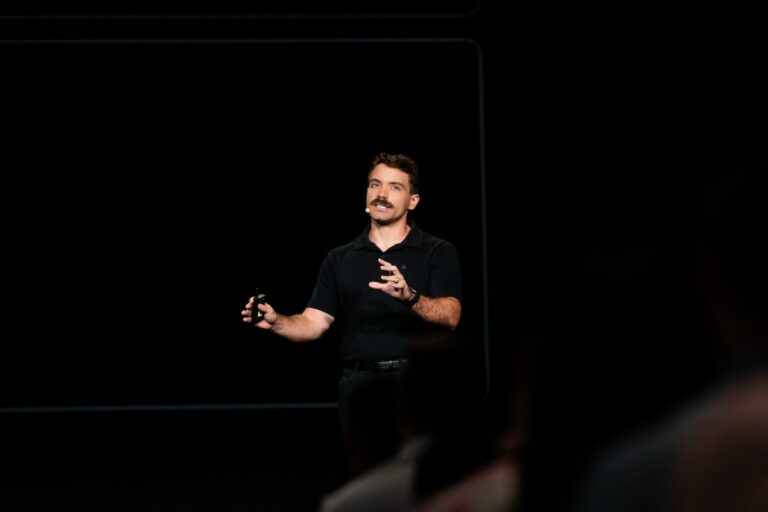
Vercel CEO Guillermo Rauch argues the AI industry has shifted from prototyping to production, where agents face real bottlenecks in secure data access and auditability. He positions Eve and Vercel Sandbox as solutions that cage agents for data safety while letting them act freely, and bets on a decoupled stack over vendor lock-in as the winning architecture.
From Hugging Face to SageMaker Studio with zero setup friction

The new deep-link integration from Hugging Face to SageMaker Studio eliminates the multi-step setup friction of creating domains, configuring IAM permissions, and requesting GPU quota by landing you directly in a pre-configured Studio environment with your chosen model pre-loaded for fine-tuning or deployment.
BGP route policies: Top 3 customer use cases for Cloud Router

Google Cloud's BGP route policies, now with policy named sets, give network engineers programmable CEL-driven control over routing without virtual appliances. Three customer-driven use cases — fail-closed filtering, MED/AS-PATH traffic steering, and BGP community-based symmetry — show how to build resilient hybrid cloud routing.