iFeeling Daily
Daily curated AI insights you can't miss.
Hugging Face CEO: Open Source AI Matters More Than Ever

Hugging Face CEO Clem Delangue argues that open source AI matters more than ever as companies shift from costly APIs to open models at scale. He warns about Chinese labs producing most U.S.-downloaded open models, and sees robotics as a critical case for transparent AI. Hugging Face turned down a large Nvidia investment to preserve capital efficiency.
Hugging Face CEO: Why companies stop renting AI and go open source
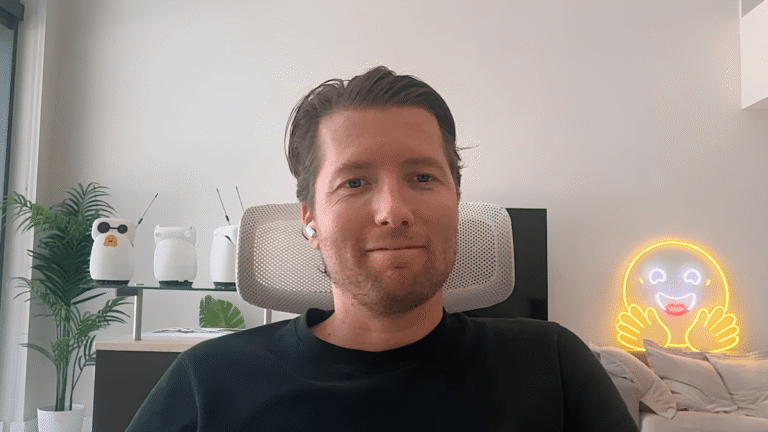
Hugging Face CEO Clem Delangue argues that companies inevitably move from rented AI APIs to open source models as inference costs climb, making open source adoption a financial inevitability rather than an ideological choice for enterprises.
SK Hynix raises $26.5B in biggest foreign IPO, faces pressure to build U.S. fabs
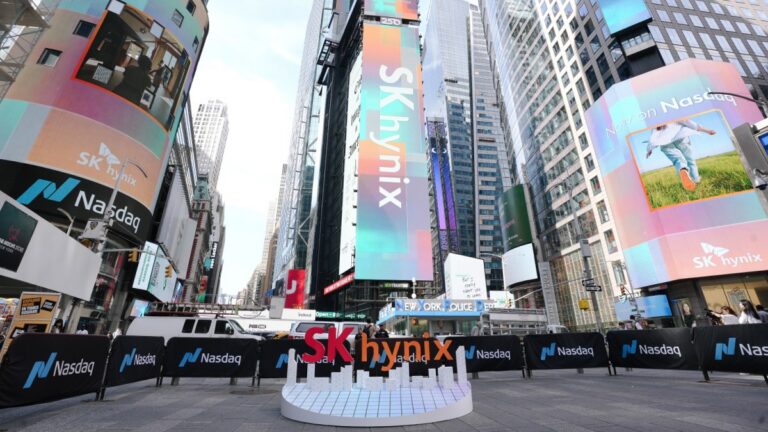
SK Hynix raised $26.5 billion in the largest foreign IPO in U.S. history, driven by its role as Nvidia's primary supplier of high-bandwidth memory (HBM) for AI GPUs. The company plans to invest in new fabs and packaging in South Korea, while the U.S. Commerce Secretary is urging it to build factories on American soil.
Three Years of AI Compression: Rethinking Venture and Infrastructure
Three years ago, Theory Ventures launched with a bet that AI would reshape software. The market moved faster than even bullish expectations, and the firm's anniversary post traces how AI compresses time — new models every 41 days, companies reaching $100M in record time, and the old language of venture capital breaking down. Seed rounds now range from $1M to $500M, sometimes larger than IPOs, because the best companies mature much earlier.
Using Surprisal to Map Agent Retrieval Performance
Standard pass/fail benchmarks hide where agents actually break. This article shows how using information theory (surprisal) to sweep query ambiguity reveals capability cliffs and sweet spots that single-score evaluations miss. It's a practical guide to building evaluations that produce actionable signals, not just verdicts.
UST brings Claude into physical AI and industrial production

UST is integrating Claude into its engineering platforms for physical AI, cutting validation cycle times by 50-70% in chip design. The partnership extends to healthcare, telecom, and banking, with 20,000 engineers trained on Claude. This is a concrete example of AI in production industrial systems with human approval and governance.
Can AI answer the $3 trillion question?

Sequoia's David Cahn now calculates AI infrastructure requires $3 trillion in revenue to justify spending by 2026, while Apollo's Torsten Slok warns that falling token prices and cheaper models threaten hyperscaler cash flow targets, risking economy-wide repercussions.
Elon Musk Praises Anthropic After It Becomes SpaceX’s Largest Customer
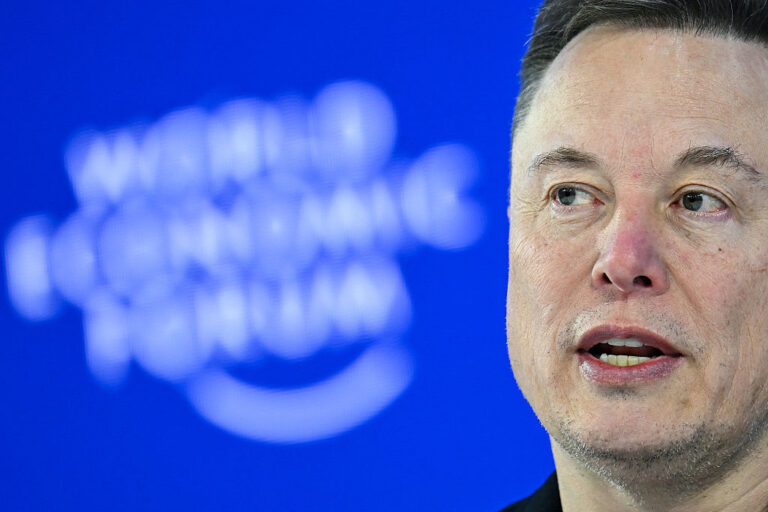
Anthropic now runs its most critical workloads on SpaceX infrastructure, paying $1.25 billion per month. Elon Musk publicly praises the rival and promises not to cut them off, but the real safeguards are contractual, not personal. The partnership raises a sharp question about hosting dependency when your infrastructure provider is also your competitor.
Meta enters crowded AI coding battle with Muse Spark 1.1

Meta launches Muse Spark 1.1 for agentic coding at $1.25 per million input tokens, competing directly with Anthropic and OpenAI on price. The model targets enterprise workflows like code migration and bug fixing, but arrives late to a market already crowded with alternatives.