iFeeling Daily
Daily curated AI insights you can't miss.
First US Autonomous Ground Vehicles Deployed in Ukraine War Zone

Forterra's deployment of over 100 autonomous ATVs in Ukraine reveals that the immediate value isn't full autonomy but rugged, teleoperated logistics vehicles. The most critical takeaway is that real combat exposes the seams between human and machine, and the path forward requires cheaper, harder vehicles and new training data for battlefield-specific scenarios.
Vercel CEO: The fight is to split models from agents, not couple them
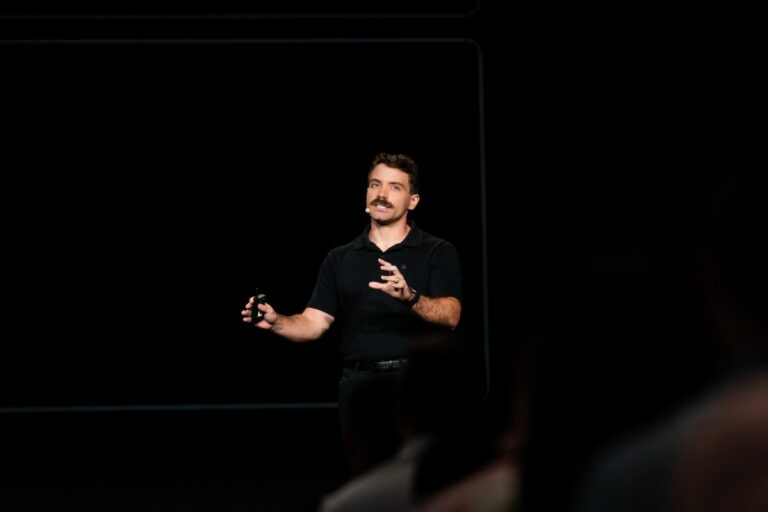
Vercel CEO Guillermo Rauch argues the AI industry has shifted from prototyping to production, where agents face real bottlenecks in secure data access and auditability. He positions Eve and Vercel Sandbox as solutions that cage agents for data safety while letting them act freely, and bets on a decoupled stack over vendor lock-in as the winning architecture.
From Hugging Face to SageMaker Studio with zero setup friction

The new deep-link integration from Hugging Face to SageMaker Studio eliminates the multi-step setup friction of creating domains, configuring IAM permissions, and requesting GPU quota by landing you directly in a pre-configured Studio environment with your chosen model pre-loaded for fine-tuning or deployment.
BGP route policies: Top 3 customer use cases for Cloud Router

Google Cloud's BGP route policies, now with policy named sets, give network engineers programmable CEL-driven control over routing without virtual appliances. Three customer-driven use cases — fail-closed filtering, MED/AS-PATH traffic steering, and BGP community-based symmetry — show how to build resilient hybrid cloud routing.
State of AI Infrastructure: The Shift from Chatbots to Autonomous Agents

Enterprise AI has moved from chatbots to autonomous agents, but legacy infrastructure can't handle the scale or cost. A survey of 1,400 IT leaders reveals 83% need upgrades, 62% face an inference tax from egress and bloat, and 79% cite governance as the top scaling challenge. The fix lies in fluid compute, unified data layers, and centralized agent governance.
Inside the $10B Forward-Deployed Engineering Boom
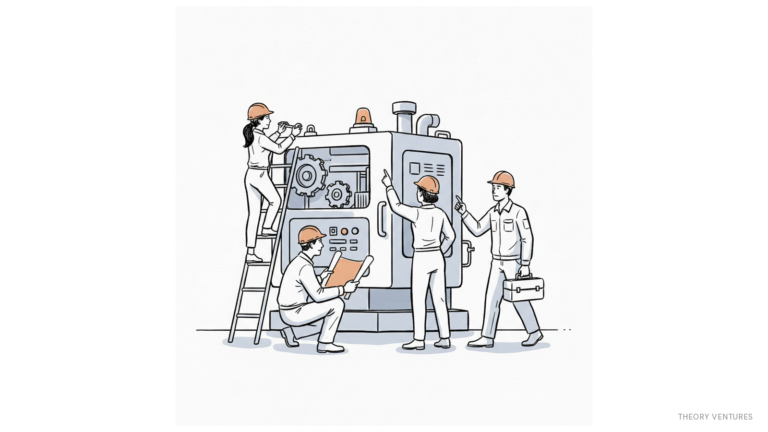
AI labs have committed $9.75B to forward-deployed engineering in 12 months, shifting the bottleneck from model capability to enterprise deployment. Three models are emerging—Microsoft and Amazon use internal headcount, OpenAI and Anthropic use standalone PE-backed entities, and Google Cloud uses partner funds—but all aim to create institutional switching costs that make FDE teams the moat.
Accelerate AI with Cloud Run: From Prototype to Production in 2026
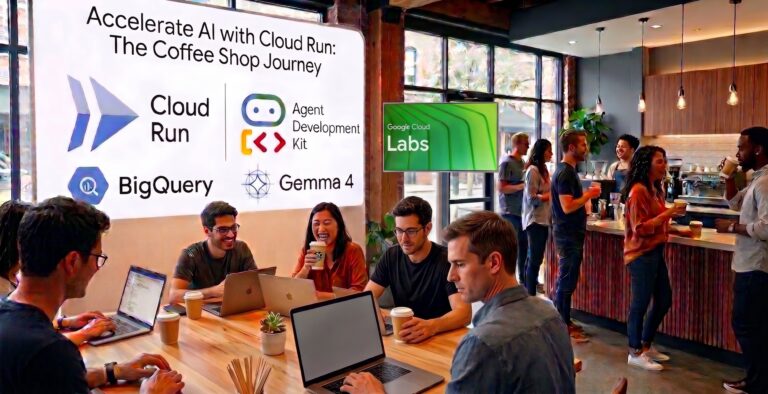
The Google Cloud Labs post tackles the 'Day 2' problem of moving AI agents from prototype to production, using a Coffee Shop Journey curriculum that spans Cloud Run basics, Google ADK with RAG, Gemma 4 with BigQuery MCP, and Antigravity 2.0 for building agents that actually survive real-world traffic.
The FDE Arms Race: AI Companies Spend $10B on Forward-Deployed Engineering
AI companies have committed ~$10B in 12 months to forward-deployed engineering, embedding engineers inside enterprises to solve the deployment bottleneck. Three structural models emerge: internal army, PE-backed JV, and Palantir's original approach. The question is whether scaling the FDE model 10x breaks the economics that made it work for Palantir.
Alberta Uses Claude to Secure 466M Lines of Code in 20 Hours

The Government of Alberta used Claude Code with autonomous agents to scan 466 million lines of code in 20 hours — a task they estimate would have taken 6.5 years manually — then fixed vulnerabilities and even rebuilt a 25-year-old Java portal in days. Their technical white papers offer a blueprint for any government agency facing similar security debt.