iFeeling Daily
Daily curated AI insights you can't miss.
Ollama Hits 8.9M Users, Raises $65M Series B for Open Model Platform
Ollama's 8.9 million developers and 67,000 integrations show that running open models locally is no longer a niche hobby. With a simple app that keeps data on-device, a cloud burst mode twice as fast as competitors, and partnerships with every major model lab, it's becoming the default infrastructure layer for AI development. The $65M Series B led by Theory Ventures confirms the momentum.
Ollama raises $65M, grows to 8.9M developers with Docker-like AI tool strategy
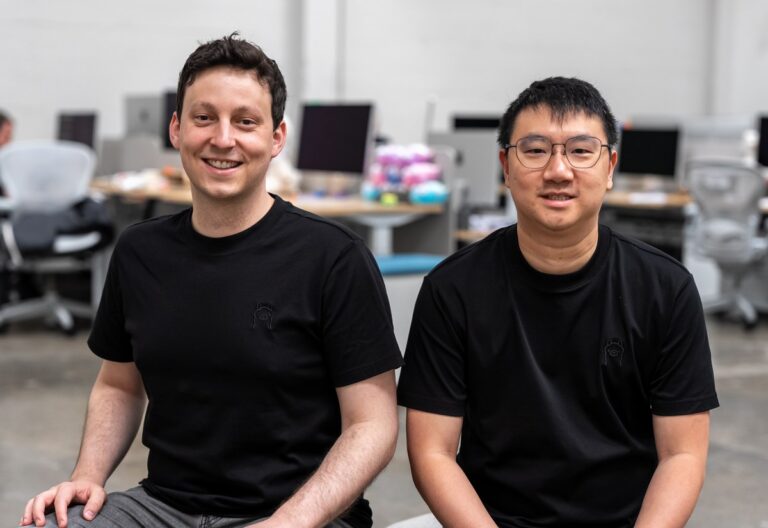
Ollama, the open source tool for running AI models locally, raised $65M after hitting 8.9M monthly developers. Its GPU-time-based pricing and smooth local-to-cloud transition mirror Docker's playbook — and signal that open-weight model infrastructure is becoming a real business, not just a hobbyist project.
Modal CTO on the 100,000 Sandbox Problem and AI Infrastructure

Modal CTO Akshat Bubna explains why Kubernetes fails at AI workloads, how Modal's 17-cloud capacity pool and GPU snapshotting handle bursty inference and RL rollout sandboxes, and why observability matters more when agents write the code.
Google Cloud Launches C4N Network-Optimized VMs with 400 Gbps
C4N instances from Google Cloud eliminate network and storage I/O bottlenecks for demanding workloads like databases, AI/ML inference, and network appliances, delivering up to 400 Gbps and 95 MPPS with Hyperdisk storage—a 2x performance boost over C4 and significant TCO savings by avoiding over-provisioning.
Separating signal from noise in coding evaluations
OpenAI's audit of SWE-bench Pro reveals that roughly 30% of its tasks are broken due to overly strict tests, underspecified prompts, and other issues, leading the team to retract their earlier recommendation. The analysis used automated filtering, agent-assisted review, and human annotation to uncover these flaws, offering a sobering lesson in the difficulty of curating fair coding benchmarks for safety-critical evaluation.
Why Agentic AI Needs Open Data and Synthetic Scaling
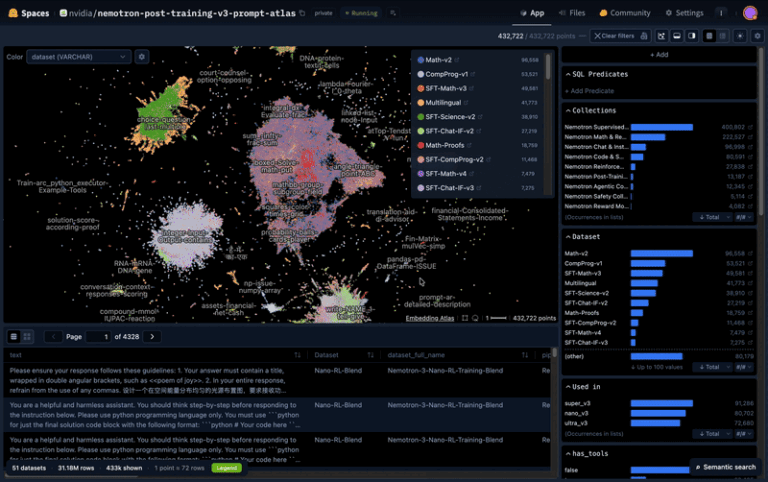
NVIDIA Nemotron's open data strategy tackles the hardest part of building agents: the real world doesn't behave like a benchmark. Instead of just releasing model weights, they release synthetic data for tool-use failures, multi-step reasoning, and agentic workflows—making agent behavior inspectable and reproducible without exposing proprietary secrets.
Google Named Leader in Gartner Magic Quadrant for AI Infrastructure

Google's AI Hypercomputer, built on co-designed TPUs and open software, aims to solve the infrastructure challenges of the agentic era. Named a Leader in Gartner's Magic Quadrant for AI Infrastructure, the stack claims up to 40% higher throughput and 30% lower serving costs, with scalability to 130,000 nodes and 97% accelerator goodput.
Transformers Backend for vLLM Matches Native Inference Speed

The transformers modeling backend for vLLM now dynamically applies inference-specific layer fusions at runtime, matching or exceeding the performance of hand-written vLLM implementations across Qwen3 models from 4B to 235B parameters. One clean implementation in transformers is enough for both training and production-grade inference, without custom ports.
SambaNova raises $1B at $11B valuation for AI inference chips, JPMorgan signs on

SambaNova raises $1B at $11B valuation, five months after a $350M Series E, to scale supply chain and deliver its SN50 inference chips. With JPMorgan as a customer and a deepened Intel partnership, the company targets the growing demand for private, on-premises AI inference in banking, government, and enterprise.