First US Autonomous Ground Vehicles Deployed in Ukraine War Zone
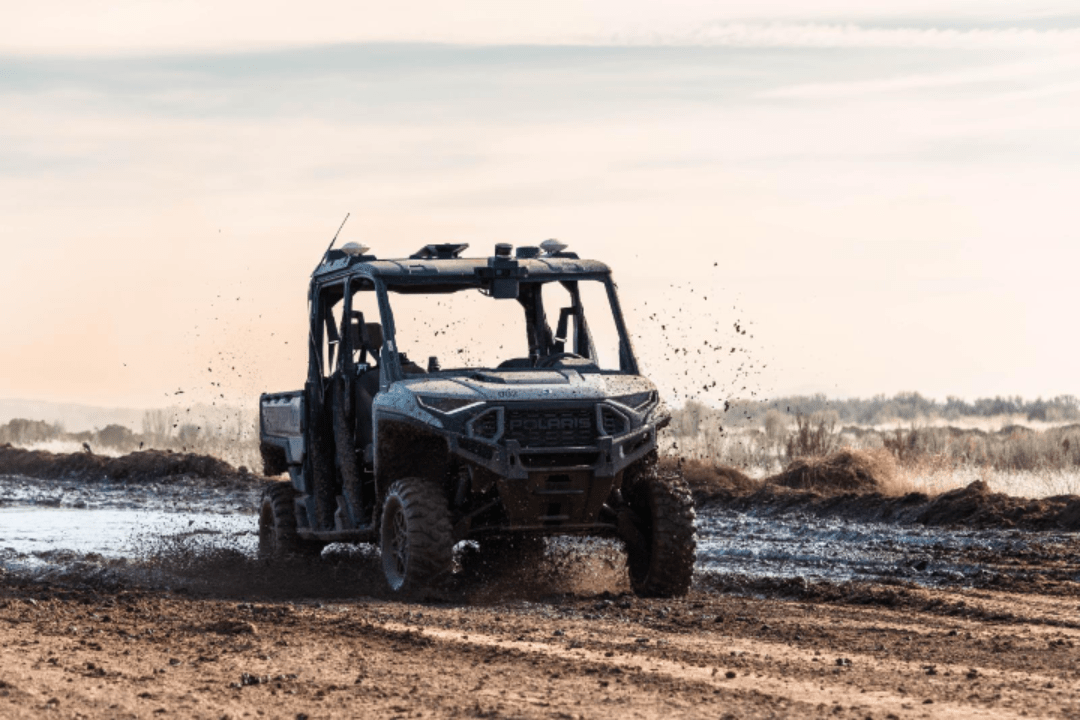
Forterra, a US autonomous vehicle company, revealed that over 100 of its self-driving ATVs have been operating in Ukraine for the past nine months. This is the largest deployment of autonomous ground vehicles in combat by any US defense tech company. The article exposes the tension between the promise of battlefield autonomy and the brutal reality of integrating unproven technology into an active war. Ukrainian forces have had mixed experiences with Western tech, and initially, Forterra‘s offerings felt too geared for the US Army’s high-end requirements rather than the immediate, dirty needs of the conflict. The fundamental problem is that while aerial drones dominate the battlefield, creating lethal no-go zones, ground vehicles are critical for logistics—moving supplies, munitions, and evacuating wounded—but they operate in an environment of constant surveillance and attack, where attrition is a fact of life.
The concrete operational insight is that Forterra‘s Lancer vehicles (gas-powered, based on Polaris ATVs, carrying 750kg) succeeded only after modification for the situation, particularly by adding a Starlink satellite internet antenna. Since arriving in October, they’ve driven 2,500 miles across 1,100 missions, carrying 777,440 pounds and completing 52 casualty evacuations. However, a critical limit has emerged: soldiers are primarily teleoperating the vehicles in combat zones, not relying on full autonomy. The autonomy can navigate terrain, but it cannot yet identify unexpected enemy forces and react appropriately in real time. The company learned hard lessons about electronic warfare, remote software updates, and maneuvering in challenging conditions. The key technical path forward is combining classical robotics approaches with generative AI for generalized reactions, but the biggest obstacle remains gathering the right data, which includes scenarios like navigating minefields—things not available in open source models.
For a serious builder, the takeaway is that the seams between human and machine in combat are where real value is found. Forterra‘s chief innovation officer noted that visiting the operations center revealed exactly which steps are still manual, where data must be re-entered, and where automation could relieve pressure. The Ukrainian soldier’s blunt challenge—”Make it cheaper”—is the decisive constraint. The vehicles are too valuable to deploy as freely as drones, and attrition is inevitable. The lesson isn’t that autonomy is failing in Ukraine; it’s that pragmatic, teleoperated, ruggedized ground vehicles with commercial supply chains (like Polaris) are filling a crucial logistics gap right now. The path to full autonomy runs through these real-world deployments, which generate the specific, non-open-source data needed to train systems that can handle the messy, lethal unpredictability of war.