iFeeling Daily
Daily curated AI insights you can't miss.
AlloyDB Omni: Hybrid Database Modernization for Finance
Financial institutions are caught between the need for strict regulatory compliance, sub-millisecond transactional speeds, and data sovereignty, and the reality of being locked into brittle, proprietary legacy databases. A global investment bank might see over **70% of its IT budget** consumed by decades-old COBOL systems and siloed ledgers, leaving no room for modern, AI-driven fraud detection. Emerging regulations like EMEA's Digital Operational Resilience Act (DORA) and national data residency laws create a tug-of-war between sovereignty and innovation, effectively preventing regional payment processors from moving sensitive data to public clouds to access modern AI tools. Meanwhile, agile fintech upstarts with cloud-native architectures are widening the insights gap, as traditional firms struggle to turn trapped data into real-time intelligence, hitting performance ceilings during peak market volatility.
Every Eval Ever and Hugging Face Community Evals Now Cross-Compatible

If you've ever been confused by conflicting benchmark scores for the same model, this article explains how Every Eval Ever and Hugging Face Community Evals now work together to standardize evaluation reporting. The cross-compatible schema and converter let you submit results once and have them appear on model pages with full reproducibility records attached.
When AI Costs More Than the Engineer
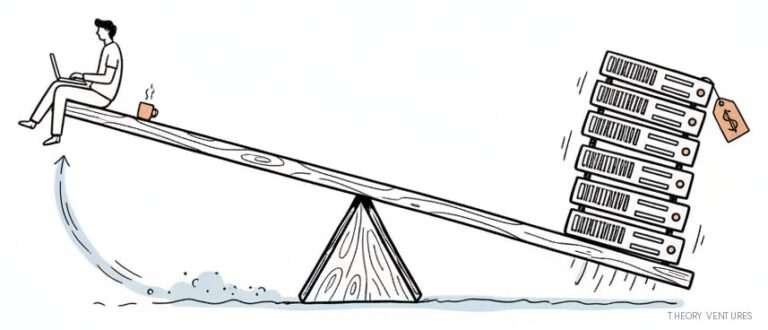
A data-driven look at how AI compute costs are outpacing engineer salaries, with three scenarios (Bear, Base, Bull) that every tech leader should model for 2027. The gap between frontier labs like Anthropic and the rest of the market is stark — and decisions about token consumption rates will determine whether AI spend becomes a strategic asset or a burden.
Core dump epidemiology: fixing an 18-year-old bug
A fascinating debugging story from OpenAI's infrastructure team that reveals how building high-quality population-level data turned two seemingly impossible crashes—hardware corruption and an 18-year-old libunwind race condition—into solvable problems, with lessons for any engineer operating complex systems.
Why Specialization Is Inevitable in AI Systems
The article draws on the No Free Lunch theorem, evolutionary biology, market dynamics, and machine learning to argue that specialization—not generality—is the structural path to outperformance under scarce resources. It distinguishes domain specialization from domain knowledge, showing that scaling compute does not dissolve the advantage of focus.
The power of multi-model Spanner for the agentic era
If you're building AI agents that need deep context from structured, semantic, and graph data, this article explains why Google Spanner's native multi-model architecture—unifying graph, vector search, full-text, and analytics in a single ACID engine—is the foundation to bet on. It backs the claim with Gartner's #1 ranking and a Forrester study showing 132% ROI.
BigQuery AI.AGG() Deep Dive: Summarize Unstructured Data at Scale with SQL

BigQuery's new AI.AGG() function lets you summarize millions of rows of logs, product descriptions, or images using natural language in a single SQL query—automatically handling batching and context windows. It's a practical bridge between LLM-powered analysis and warehouse-scale data, especially useful when paired with other AI functions like AI.CLASSIFY() for structured output.
How Curve Uses BigQuery Graph to Catch Fraud Rings at Scale

Curve shows how moving from expensive SQL self-joins to BigQuery Graph's native GQL let them detect hidden fraud rings at scale, saving ~$12M in 2025. The insight is that keeping graph analytics inside your existing warehouse avoids the migration pain of specialized graph databases.
Turner Industries’ Blueprint for a Secure, Cloud-First Infrastructure
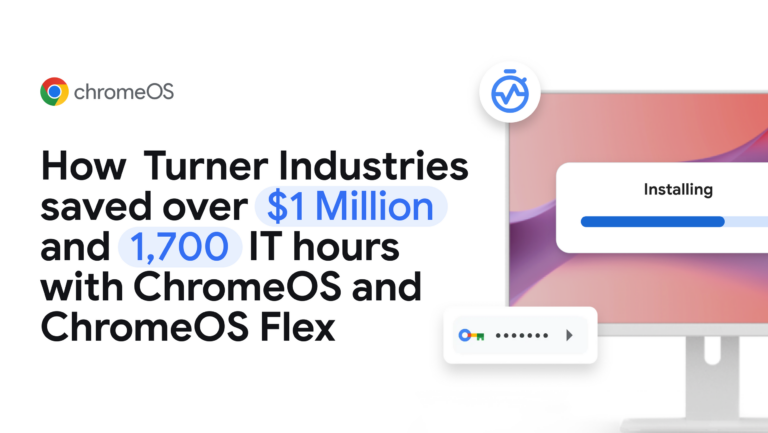
Turner Industries achieved 40-50% lower cost-per-device, 1,750 annual IT hours saved, and a simpler security model by moving to a ChromeOS, Google Workspace, and Cameyo stack. A concrete case for cloud-first infrastructure at industrial scale.