iFeeling Daily
Daily curated AI insights you can't miss.
SQL Alerting for Google Cloud Observability Analytics
Google Cloud announced SQL alerting for Observability Analytics, letting engineers write complex analytical SQL queries directly against logs and traces as alert conditions. This collapses the gap between operational monitoring and ad-hoc analysis, enabling high-cardinality alerts like per-customer error spikes or p99 latency anomalies without custom pipeline work.
Run a Private vLLM Server on Hugging Face Jobs with One Command
This article shows you exactly how to stand up a private vLLM server on Hugging Face Jobs with one command, query it from anywhere with the OpenAI client, and scale it to larger models — all without provisioning servers or touching Kubernetes. It also covers SSH debugging, tool calling for agents, and when to use Jobs versus Inference Endpoints.
Async Inference: Why the Future of AI Agents Runs on Queues, Not Real-Time
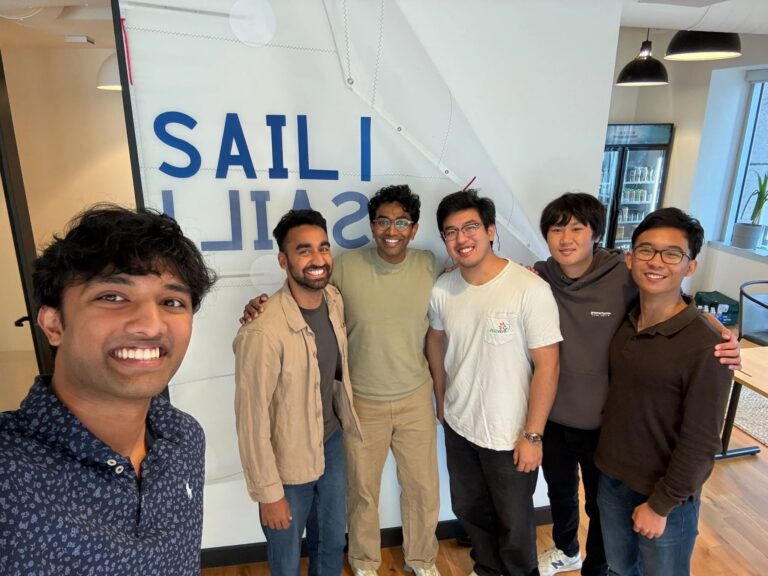
The article argues that as AI agents shift from real-time chat to background batch work, inference infrastructure must follow. Sail Research builds an async inference stack that queues requests, routes to the cheapest capable open model, and uses spot capacity to cut costs dramatically—GLM-5.1 on Sail costs 6x less per token than Anthropic's Haiku.
Databricks’ Agent Cloud: Why Open Source and LTAP Matter for AI
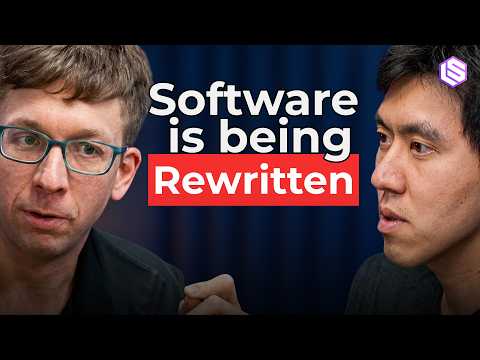
Databricks co-founders Matei Zaharia and Reynold Xin unpack Omnigent (an open-source meta-harness above coding and enterprise agents), LTAP (their database bet for live transactional data in column-oriented formats), and why agent security, spend controls, and a common API matter more than ever. The thesis: traditional software gets rewritten once the data is in the right place and agents sit on top.
Google Backup and DR adds cross-region backups for regional resilience

Google's Backup and DR Service now supports cross-region backups, letting you decouple backup destination from source region. This balances regional resilience with cost and compliance control, available for Compute Engine, Disks, and Filestore, with Cloud SQL and AlloyDB coming.
OpenAI and Broadcom unveil LLM-optimized inference chip Jalapeño

OpenAI and Broadcom unveiled Jalapeño, a custom LLM inference chip designed from scratch with substantially better performance per watt than current accelerators. Taped out in nine months using OpenAI's own models to accelerate chip design, it will deploy at gigawatt scale starting in 2026 as part of a multi-generation platform.
Zero-Day Exploit in Cisco SD-WAN Manager: Attack Chain and Defenses

Mandiant details how a threat actor exploited CVE-2026-20245 in Cisco Catalyst SD-WAN Manager, using rogue peering and credential manipulation to escalate privileges to root and then cover tracks with anti-forensic techniques. The attack chain and detection guidance are essential for any organization running SD-WAN.
NVIDIA NeMo AutoModel: 3.7x Faster MoE Fine-Tuning with One Import Change

NVIDIA NeMo AutoModel delivers 3.4-3.7x higher training throughput and 29-32% less GPU memory for MoE fine-tuning through a single import line change. By adding Expert Parallelism as a dedicated dimension, DeepEP fused dispatch, and TransformerEngine kernels on top of Transformers v5, it makes 550B-scale full fine-tuning feasible and produces standard HF checkpoints for downstream deployment.
OpenAI Helps Launch Appia Foundation for Shared AI Standards
The article explains OpenAI's involvement in founding the Appia Foundation to develop open, modular standards for evaluating advanced AI systems across the supply chain, aiming to create a shared technical language that enables trust between institutions and governments.