iFeeling Daily
Daily curated AI insights you can't miss.
Google to Disclose AI-Generated Ads via My Ad Center Panel

Google is rolling out a new consumer-facing feature in My Ad Center that will indicate when an ad has been created or edited with AI. The disclosure is automatic for ads made using Google's own generative AI tools, but for other ads, advertisers must self-report and Google will not perform its own check. This extends AI ad transparency beyond election ads, revealing both progress and the limitations of voluntary enforcement.
OpenAI Doubles Bio Bounty to $50K, Makes Program Ongoing for GPT-5.6
OpenAI doubles its Bio Bug Bounty to $50,000 for universal jailbreaks against GPT-5.6, turning the previous fixed-term program into an ongoing private effort focused on defeating their predefined biosafety challenge. Past GPT-5.5 applicants retain access without reapplying.
GPT-5.6: Frontier intelligence that scales with your ambition

GPT-5.6 delivers state-of-the-art results across coding, cybersecurity, and science while using fewer tokens and costing less than competitors like Claude Fable 5. The new model family (Sol, Terra, Luna) introduces ultra multi-agent orchestration and Programmatic Tool Calling for efficient complex workflows. OpenAI also debuts its most extensive safety system yet, with layered safeguards and 700,000 A100e hours of red teaming. For builders, this means more capable, cost-effective AI agents ready for production use.
Character.AI launches interactive microdramas with a chat-focused twist

Character.AI is launching its own microdramas, but with a twist: users can chat with and roleplay alongside the AI characters from the shows. This moves beyond passive viewing into interactive storytelling, and the company eventually plans to let users create their own series using the same tools.
Lovable reportedly doubling valuation to $13.2B in new $300M round

Lovable is reportedly doubling its valuation to $13.2 billion with a $300 million raise led by Menlo Ventures, riding the hottest trend in AI: vibe coding. The article provides a useful snapshot of a market where startups like Replit and Cursor are seeing massive valuations, suggesting the category is consolidating fast but also testing the limits of investor faith in unproven business models.
An off switch for dual use knowledge in AI models

Anthropic and AE Studio introduce GRAM, a method to surgically control dual-use knowledge in AI models by adding removable modules that encapsulate sensitive capabilities. This allows flexible access control—enabling or disabling specific knowledge domains without retraining separate models—potentially offering a more robust alternative to current safeguards like refusal training and data filtering.
Google’s SynthID used to debunk Mitch McConnell deepfake hoax
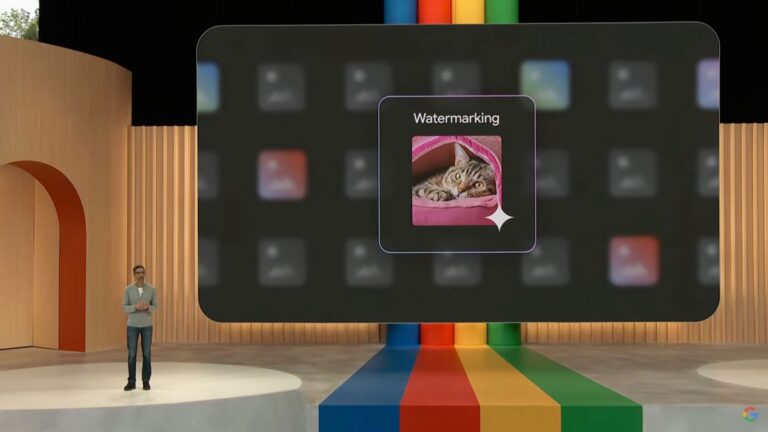
The article exposes a real-world tension: AI-generated disinformation can spread rapidly about public figures, and verification tools remain inconsistent. A hoax image of Senator Mitch McConnell, depicted in a hospital bed with tubes, circulated widely on Reddit and X, fueling speculation about his health. The revered fact-checking site Snopes debunked it by detecting the invisible watermark from Google's SynthID system, marking a rare success for anti-deepfake technology.
Separating signal from noise in coding evaluations
OpenAI's audit of SWE-bench Pro reveals that roughly 30% of its tasks are broken due to overly strict tests, underspecified prompts, and other issues, leading the team to retract their earlier recommendation. The analysis used automated filtering, agent-assisted review, and human annotation to uncover these flaws, offering a sobering lesson in the difficulty of curating fair coding benchmarks for safety-critical evaluation.
General Intuition thinks robotics is about to have its ChatGPT moment

Before foundation models, building specialized NLP models meant collecting and training on vast amounts of task-specific data. Now, most teams start with a general model like GPT or Llama and fine-tune it. Pim de Witte, CEO of General Intuition, argues embodied AI is about to follow the same trajectory. He believes the current approach of gathering enormous real-world datasets for each robot, environment, and embodiment is redundant.