iFeeling Daily
Daily curated AI insights you can't miss.
Anthropic Opens Seoul Office, Partners with Korean Government and Enterprises

Anthropic opens a Seoul office and signs an MOU with Korea's Ministry of Science and ICT to advance AI safety. Major Korean enterprises like NAVER and Samsung SDS deploy Claude at scale, while startups and researchers gain access. The move signals deep integration into Korea's AI ecosystem.
Teaching Claude Why: Anthropic’s Approach to Fixing Agentic Misalignment

Anthropic explains how they reduced agentic misalignment from 96% to 0% by teaching Claude the principles behind aligned behavior rather than just demonstrating correct actions. The key innovation is using out-of-distribution training data where the AI gives ethical advice to users, combined with constitutional documents and fictional stories of aligned AIs.
Fable 5’s Cyber Safeguards and Proposed Jailbreak Severity Framework
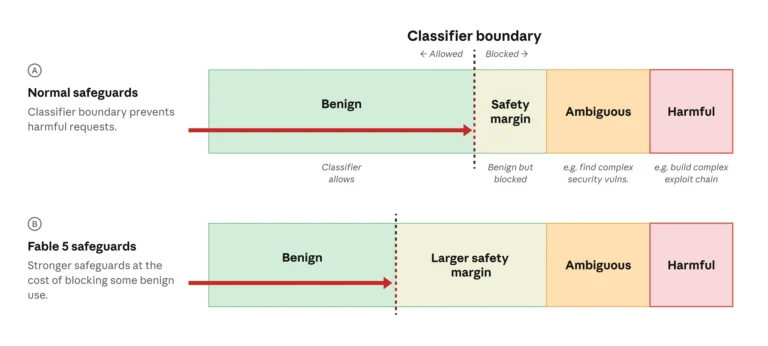
Anthropic re-deploys Fable 5 with detailed cyber safeguard classifiers that categorize dual-use activities, and proposes a four-axis jailbreak severity framework (CJS) to standardize how the industry describes and scores the risk of different jailbreak techniques.
CIO Budget Signals: AI Stack Wins, SaaS Applications Bleed
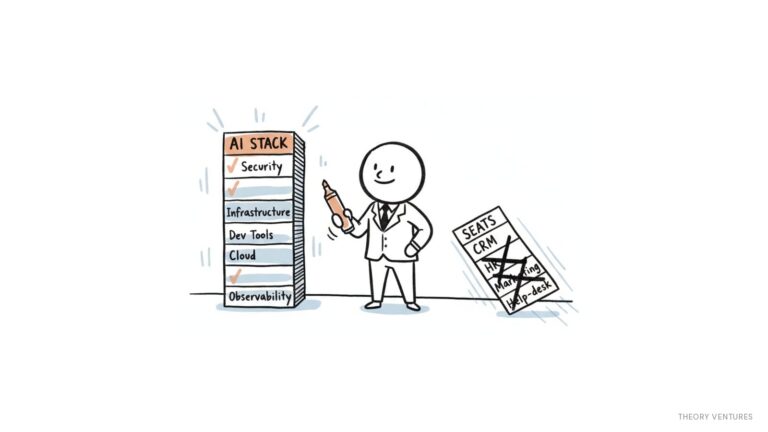
The public market is brutally clear: CIOs are funding the AI stack and cutting application software. Infrastructure and security sectors are up while business applications are down 36%, with Marc Benioff's headcount reduction from 9,000 to 5,000 as the signal. Builders need to decide if their product is on the token path or at risk of substitution.
How Schrödinger sped up molecular discovery by 4x with AlphaEvolve
Schrödinger achieved a 4x speedup in molecular dynamics MLFF training by using AlphaEvolve, an evolutionary AI coding agent from Google DeepMind, to optimize the computationally expensive Ewald summation algorithm. The agent replaced simple for-loops with parallel batch matrix multiplication, improving performance from a baseline of 7.9 to nearly 30 and raising the program success rate from under 1% to over 60%.
How ChatGPT Adoption Deepens and Diversifies Across Regions and Languages
OpenAI's Signals data reveals that ChatGPT users send 50% more messages per day after six months and double the range of tasks they try. The fastest user growth is in Africa, Asia, and lower-HDI countries, while non-English usage now accounts for over half of active users globally.
GeneBench-Pro: Benchmarking Scientific Judgment in Computational Biology

GeneBench-Pro is a new benchmark that tests whether AI models can make the kind of high-level scientific judgments real computational biology requires—handling ambiguity, revising assumptions, and knowing when a result is ready. Frontier models currently pass only 28-31% of problems, suggesting there's a large gap between automation potential and reliability.
Why Specialization Is Inevitable in AI Systems
The article draws on the No Free Lunch theorem, evolutionary biology, market dynamics, and machine learning to argue that specialization—not generality—is the structural path to outperformance under scarce resources. It distinguishes domain specialization from domain knowledge, showing that scaling compute does not dissolve the advantage of focus.
Pro-Russia Influence Ecosystem: Drivers, Dynamics, and Tactics
This report from Google Threat Intelligence Group maps the pro-Russia influence ecosystem across six core components, revealing how four years of war have hardened its tactics, expanded the use of generative AI, and created a resilient, interconnected machine now pivoting back to global strategic objectives targeting NATO and the EU. Essential reading for anyone tracking state-backed information operations.