iFeeling Daily
Daily curated AI insights you can't miss.
PQC in Plaintext: Google Cloud’s post-quantum cryptography roadmap

Google Cloud's post-quantum cryptography roadmap targets full readiness by 2029, addressing store-now-decrypt-later risks, digital signature integrity, and cryptographic agility.
Announcing Developer Device Platform (DDP) on Google Cloud
Google Cloud announces Developer Device Platform (DDP), a fully managed platform for testing and debugging apps on real devices and emulators.
ClusterNetworkPolicy in GKE: Cluster-Wide Kubernetes Network Security

ClusterNetworkPolicy (CNP) brings hierarchical, cluster-wide network security to GKE, enabling administrators to enforce non-bypassable policies while delegating namespace rules to developers.
Claude Improves Lower Bound for Zeros of the Riemann Zeta Function

Anthropic set Claude to take a serious attempt at the Riemann hypothesis. It didn't succeed, but unexpectedly increased a proven lower bound from 41.6% to 67.2%.
Making Knowledge Distillation Cheap Enough to Run at Scale
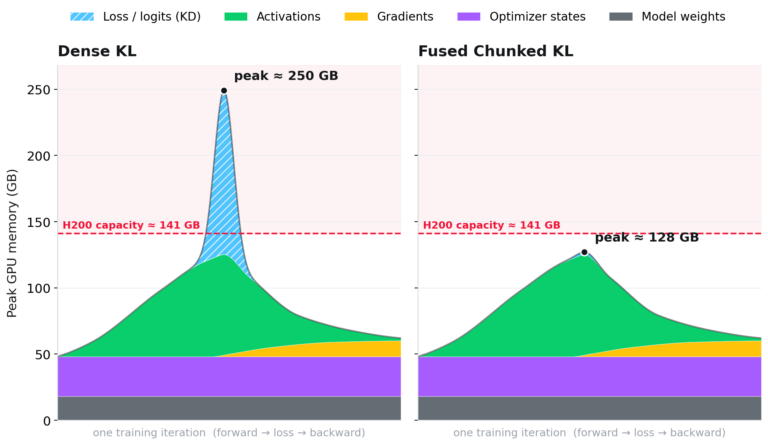
Offline caching of top-100 teacher logits plus a fused chunked KL loss cuts distillation memory enough to shrink a four-node GPT-OSS 20B setup to one GPU node.
Amazon data center plant could become largest U.S. climate polluter

Amazon's planned Texas data center includes a natural gas plant permitted to emit 33 million tons of CO2 per year, the most of any U.S. power plant.
ARBITRAGE: Advantage-Aware Step-Level Speculative Decoding
ARBITRAGE uses a lightweight router to predict when a target model produces a meaningfully better step, reducing inference latency up to ~2× on math reasoning tasks.
Scaling Categorical Flow Matching for Text Generation
Categorical flow matching is scaled to 1.7B parameters and 2.1T tokens, enabling high-quality text generation in as few as 4 steps via self-distillation.
State of AI Infrastructure: Hybrid Cloud and Google Distributed Cloud
48% of leaders stated they are prioritizing infrastructure with data residency, controls, supporting compliance, with local data security laws.