iFeeling Daily
Daily curated AI insights you can't miss.
IDC: Networking Infrastructure Is the Key Bottleneck for Agentic AI

IDC's survey reveals that networking infrastructure, not AI models, is the primary bottleneck slowing agentic AI production deployments. With 32.6% of enterprises citing security concerns and 26.8% struggling with automation, the article argues for an infrastructure-level networking approach that provides consistent policy, observability, and governance across fragmented multi-cloud environments.
Securing Exposed Cloud Functions: Attack Scenarios and Hardening Guidance
Mandiant's analysis of exposed Cloud Run services reveals common vulnerabilities like LFI and command injection, and provides practical hardening steps including Cloud Armor WAF rules, least-privilege IAM, and project segregation to prevent full environment compromise.
How Canada leads in Claude adoption per capita
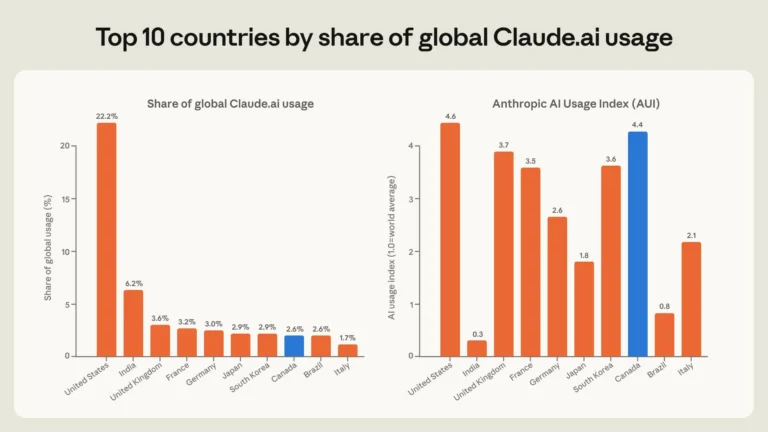
Canada is the second-largest adopter of Claude per capita among top countries, with usage 4.4x above expected from population alone. Adoption is driven by workforce composition rather than income, with professional, scientific, and technical services sectors showing the highest usage. Translation requests track public administration employment shares, reflecting Canada's bilingualism policy.
Anthropic commits $10 million CAD to Canadian AI research institutions
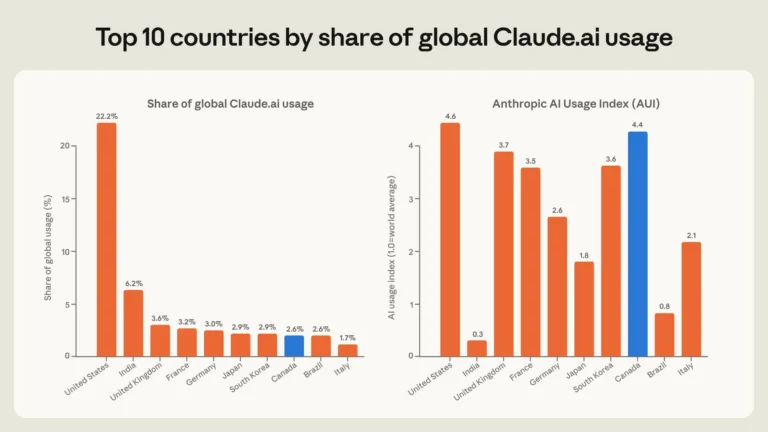
Anthropic commits $10 million CAD to eight Canadian AI research institutions via Claude API credits and startup funding, targeting areas from reinforcement learning to low-resource language modeling. The economic data reveals Canada ranks second globally in per-capita Claude.ai usage, with translation-heavy patterns tied to federal bilingualism requirements.
AI memory demand reshapes India’s smartphone market

The AI boom's demand for high-bandwidth memory is squeezing standard chip supply, sending smartphone prices up and shipments down in India—the world's second-largest market. With 60% of sales under $210, the pain is concentrated in budget phones, forcing brands to retreat and consumers to delay upgrades until at least 2027.
Nexus-SDV: Bigtable and Android Automotive for Agentic Vehicles
The article explains how Google's Android Automotive OS and Bigtable, integrated with Valtech's Nexus SDV, enable OEMs to build AI-defined vehicles with unified telemetry, agentic AI for predictive maintenance, and a standardized open-source foundation that replaces fragmented legacy architectures.
k8s-aibom: Open-Source Controller for Automated AI Bills of Materials on GKE

k8s-aibom is an open-source, unprivileged Kubernetes controller that automatically detects running AI workloads and generates CycloneDX 1.6 ML-BOMs. By providing audit-grade visibility directly from runtime execution without developer friction, it solves the shadow AI problem and helps teams safely move AI projects from pilot to production.
Patreon moves from asking to blocking AI scrapers with Cloudflare

The article reveals a growing tension between content platforms and AI companies: simple requests to not scrape, like robots.txt files, are increasingly ignored by sophisticated AI training crawlers. Patreon had already put measures in place in 2023, but newer discovery tools like a redesigned Home Feed and Quips exposed more creator content to potential scraping. The core problem is that consent-based systems fail when scrapers simply choose not to comply, leaving creators without meaningful control over how their work is used to train AI models.
Managing AI Investments in the Agentic Era
As AI transitions from chat to agentic workflows, leaders need to move beyond token price metrics. This article outlines five strategies for managing AI investments: sharpen usage visibility, evaluate models by outcome ROI, govern advanced workflows early, fund compoundable work, and match capacity to proven demand. Practical guidance for investing with confidence.