iFeeling Daily
Daily curated AI insights you can't miss.
Cars24 scales conversations and builds faster with OpenAI agents
Cars24 shows how a complex, conversation-driven marketplace can use OpenAI's voice agents and Codex to handle over a million conversation minutes per month, while letting finance, legal, and operations teams build their own workflows. The key was starting with the most friction-heavy parts of the sales funnel and letting adoption spread organically.
AI-Assisted Vulnerability Management: A Blueprint for Safe Agent Deployment
As time-to-exploit drops below zero, LLM agents promise faster vulnerability discovery but introduce new architectural risks. This article provides a practical blueprint grounded in the Secure AI Framework, covering data security, workload isolation, risk-based prioritization, and selective agent deployment against memory-unsafe code. The real insight: AI accelerates discovery but still requires human-led threat modeling and deterministic validation to avoid alert fatigue and structural regressions.
Hugging Face discloses AI-driven intrusion and AI-assisted response

Hugging Face disclosed a real AI-vs-AI intrusion where an autonomous agent breached their dataset pipeline, executing thousands of actions over a weekend. Their own AI-driven forensics—switching from blocked frontier APIs to an open-weight model on their infrastructure—revealed a critical asymmetry: attackers face no guardrails, but defenders using hosted models can be locked out by safety filters.
AlloyDB AI: Solving CJK Full-Text Search with In-Database Gemini Segmentation
AlloyDB AI uses Gemini models to segment Chinese/Japanese/Korean text directly in the database, solving the whitespace problem for full-text search. Combined with RUM indexes and ScaNN vector search, it provides hybrid search without external pipelines or data movement.
Model Routing Is Simple. Until It Isn’t.
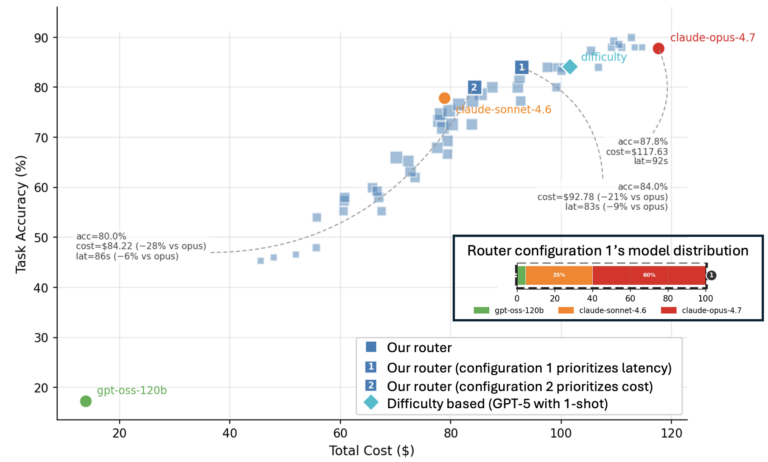
路由成本受缓存命中率影响远超定价表,Sonnet在AppWorld测试中实际成本仅为GPT-4.1一半。将路由视为系统优化问题,用轻量级多目标优化器替代分类器,才能找到成本、延迟、准确率之间的真实平衡点。
What building Shippy taught us about building agents
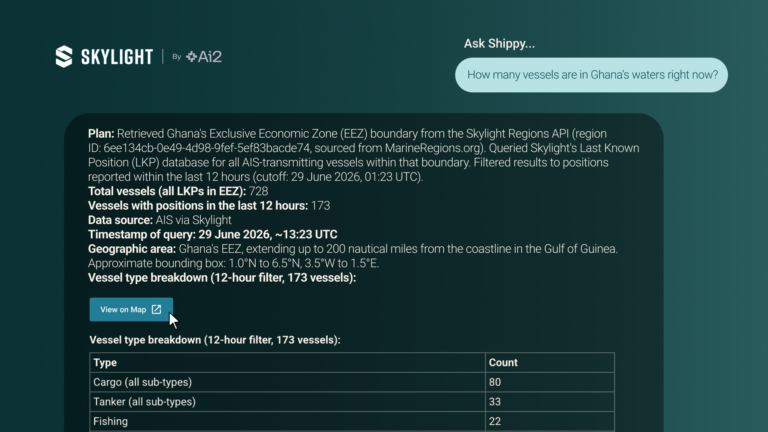
Building an AI agent for high-stakes maritime domain awareness requires more than a good model—it demands a reliable system with deterministic tools, sandboxed isolation, and rigorous evaluation against live data. The article details the architecture behind Shippy, an agent that helps analysts make decisions without overstepping into tactical recommendations.
Audit and Govern Gemini Enterprise at Scale with BigQuery

This article explains how to build a scalable observability pipeline by routing Gemini Enterprise telemetry into BigQuery, enabling IT, data, and security teams to audit grounding queries, profile adoption by department, and combine conversational logs with HR datasets to calculate real employee hours saved.
Why 95% of AI prototypes fail in production and how YouTube fixed it

The article exposes why 95% of AI prototypes die in enterprise validation loops, using YouTube's infrastructure to show a concrete fix: decouple data via read-only proxy servers, inject experiments via isolated UI wrappers, and embrace throw-away code instead of polishing AI-generated scripts for production.
IDC: Networking Infrastructure Is the Key Bottleneck for Agentic AI

IDC's survey reveals that networking infrastructure, not AI models, is the primary bottleneck slowing agentic AI production deployments. With 32.6% of enterprises citing security concerns and 26.8% struggling with automation, the article argues for an infrastructure-level networking approach that provides consistent policy, observability, and governance across fragmented multi-cloud environments.