Anthropic commits $10 million CAD to Canadian AI research institutions
Anthropic is committing $10 million CAD to Canadian AI research institutions, a move that highlights an enduring truth: Canada’s academic ecosystem has been disproportionately influential in the modern AI era, from early neural network work at the University of Toronto and Université de Montréal to pioneering reinforcement learning at the University of Alberta. The tension here is that foundational AI research has often been done in environments of resource scarcity—those early labs ran on skepticism and minimal funding. Now, as the commercial stakes have skyrocketed, Anthropic is directly reinvesting in the same network that produced many of its own safety-conscious researchers, including co-founder Chris Olah, who explicitly credits that culture.
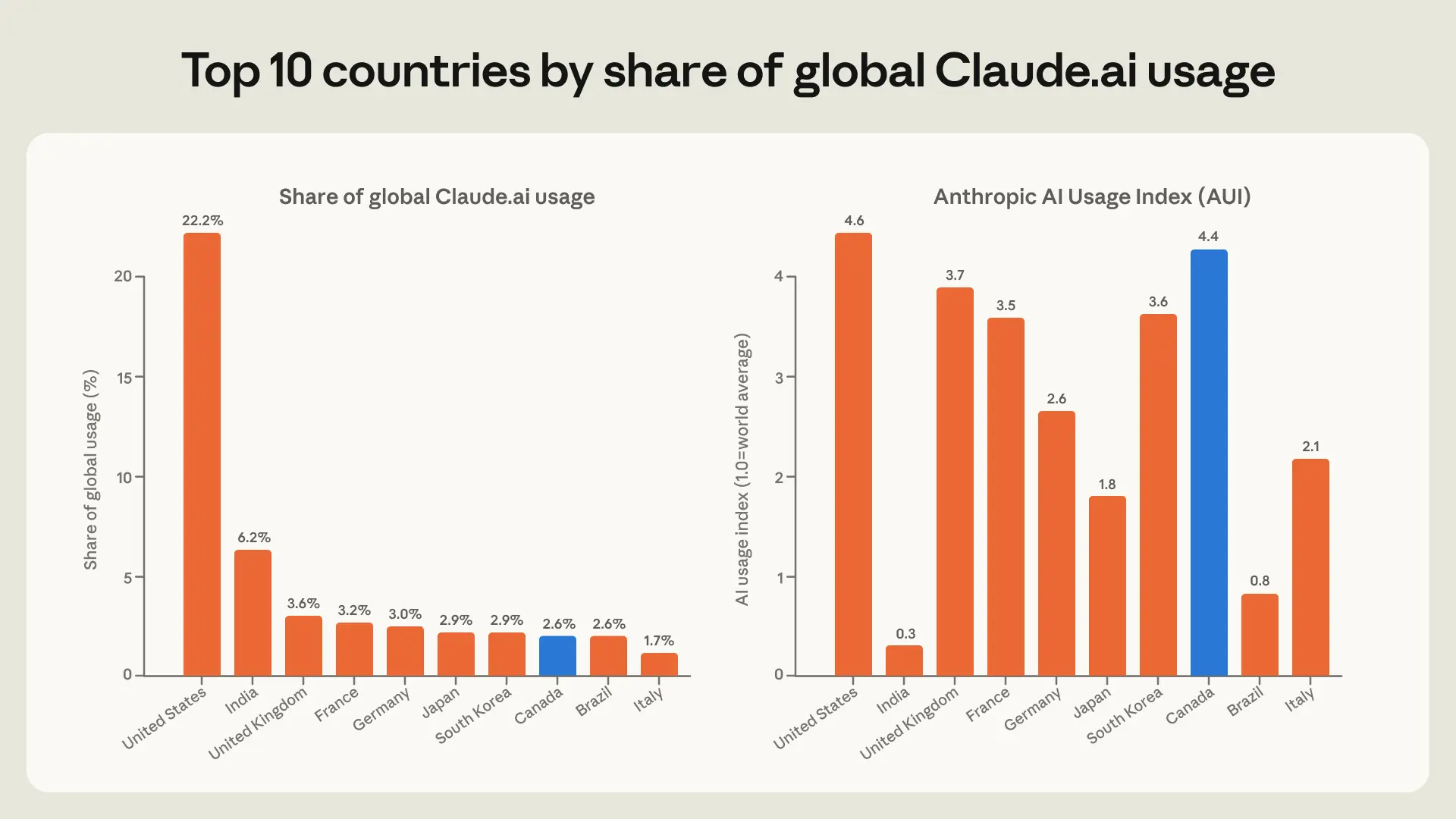
The concrete path involves distributing Claude API credits—not just cash—across eight institutions, anchored by the three national AI institutes: Amii (Edmonton), Mila (Montréal), and the Vector Institute (Toronto). The use cases span reinforcement learning and trust and safety at Amii, multi-agent systems and scientific discovery assistants at Mila, and health and fairness evaluations at CHEO and CAMH. Notably, Université Laval will use Claude to study low-resource languages and dialects, including Quebec French and Indigenous languages, while the University of Saskatchewan targets quantum computing and public health. Anthropic is also adding Amii, Mila, and Vector to its Anthropic for Startups program, giving hundreds of affiliated Canadian startups at least $5,000 USD each in API credits. Separately, the economic data shows Canada ranks second globally in per-capita Claude.ai usage, with translation requests spiking in provinces with high government employment—a direct reflection of Canada’s bilingualism regulations.
For builders and researchers, the key takeaway is that Anthropic is placing a structured, long-term bet on Canadian research infrastructure rather than just making a one-time donation. The coupling of API credits with startup incubation creates a pipeline: academic work flows into commercial products, and safety research flows back into model improvements. The March 2026 Economic Index data also provides a rare, privacy-preserving look at real-world usage patterns—translation-heavy in bilingual provinces, concentrated in professional services—which is the kind of granular signal that should inform both product decisions and public policy. If you’re building in AI, the lesson is that the next generation of capable and safe models may well emerge from the same northern research corridors that produced the first ones.