iFeeling Daily
Daily curated AI insights you can't miss.
How Schrödinger sped up molecular discovery by 4x with AlphaEvolve
Schrödinger achieved a 4x speedup in molecular dynamics MLFF training by using AlphaEvolve, an evolutionary AI coding agent from Google DeepMind, to optimize the computationally expensive Ewald summation algorithm. The agent replaced simple for-loops with parallel batch matrix multiplication, improving performance from a baseline of 7.9 to nearly 30 and raising the program success rate from under 1% to over 60%.
How Curve Uses BigQuery Graph to Catch Fraud Rings at Scale
Curve shows how moving from expensive SQL self-joins to BigQuery Graph's native GQL let them detect hidden fraud rings at scale, saving ~$12M in 2025. The insight is that keeping graph analytics inside your existing warehouse avoids the migration pain of specialized graph databases.
Pro-Russia Influence Ecosystem: Drivers, Dynamics, and Tactics
This report from Google Threat Intelligence Group maps the pro-Russia influence ecosystem across six core components, revealing how four years of war have hardened its tactics, expanded the use of generative AI, and created a resilient, interconnected machine now pivoting back to global strategic objectives targeting NATO and the EU. Essential reading for anyone tracking state-backed information operations.
Claude Tag: Persistent, Multiplayer AI Teammate for Slack
Anthropic launched Claude Tag, an AI teammate embedded directly in Slack that maintains shared context, works asynchronously, and takes initiative. The product moves beyond single-session AI interaction toward persistent, multiplayer collaboration, with Anthropic reporting 65% of its product team's code already created via this pattern.
Cross-Origin Storage API: Ending duplicate downloads for browser AI

If you've ever watched your browser re-download 177 MB of Whisper model weights just because a second site lives on a different origin, this article explains exactly why that happens—and how the proposed Cross-Origin Storage API fixes it using cryptographic hashes instead of URLs. Transformers.js already supports it experimentally, and you can test the whole thing today with a Chrome extension.
How GPT-5 solved an immunologist’s 3-year T cell mystery
Immunologist Derya Unutmaz used GPT-5 Pro to solve a three-year-old puzzle about glucose and T cells, discovering that the model identified a mechanism—IL-2 protein disruption—that his lab had missed. It then correctly predicted results from an unpublished experiment, convincing him these models truly understand biology.
PP-OCRv6: Lightweight, Multilingual OCR from 1.5M to 34.5M Parameters
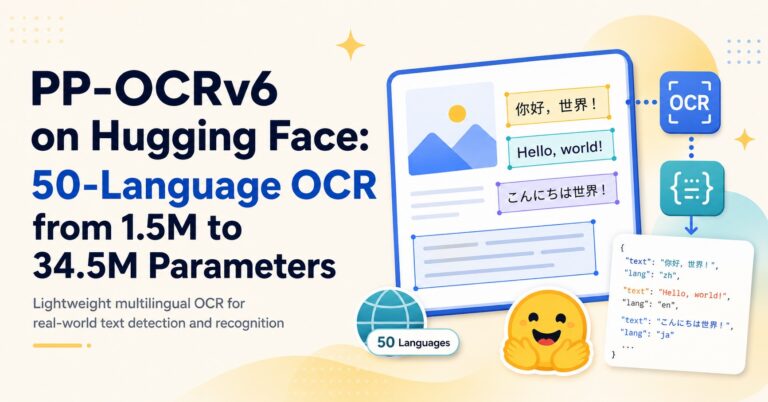
PP-OCRv6 is a practical, tiered OCR model family from 1.5M to 34.5M parameters that improves detection and recognition accuracy over its predecessor while supporting 50 languages in a single architecture. It's worth reading if you need a lightweight, deployable OCR pipeline that integrates with Paddle Inference, Transformers, or ONNX Runtime backends.
Using AI to Reanalyze Unsolved Rare Disease Cases and Find New Diagnoses
Researchers used OpenAI o3 Deep Research to reanalyze 376 unsolved rare-disease cases, yielding new diagnoses in 4.8% after experts confirmed findings—demonstrating how AI-assisted periodic reanalysis can uncover answers buried in fragmented genomic data and evolving scientific knowledge.
LifeSciBench: A Realistic Benchmark for AI in Life Science Research
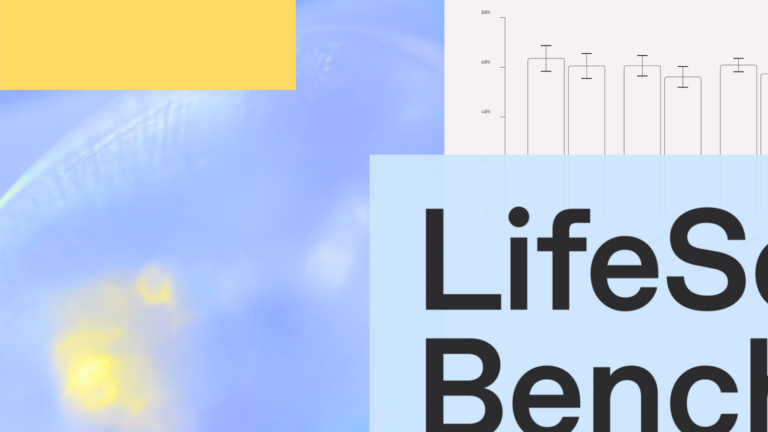
Current life science benchmarks fail to capture the messy, iterative reality of real research work. They tend to ask clean fact-recall or prediction questions with neat reference answers, but practicing scientists spend their time interpreting incomplete evidence, reconciling conflicting results, designing difficult experiments, and making decisions under uncertainty. **LifeSciBench** was built to close this gap by measuring whether AI systems can actually support the workflows that matter in applied biotech and pharmaceutical research, not just answer biology trivia. It was designed by 173 PhD-level scientists with direct drug-discovery experience, and every task reflects a realistic request a scientist might make to a knowledgeable collaborator.