iFeeling Daily
Daily curated AI insights you can't miss.
Cohere Releases North Mini Code: 30B MoE Model for Agentic Coding

Cohere's North Mini Code is a 30B MoE model optimized for agentic coding, featuring a novel two-stage SFT and asynchronous RLVR pipeline. It achieves 33.4 on the Artificial Analysis Coding Index, outperforming models like Qwen3.5 and Gemma 4. The technical report details cross-harness training that yields free improvements (e.g., 61.0% pass@1 on SWE-Bench with mini-SWE-agent) and online RL that cuts invalid tool calls by rewarding only valid outputs.
How Trustpilot built real-time data enrichment with fine-tuned Gemma
Trustpilot built a real-time streaming pipeline for review intelligence by fine-tuning Gemma-2-9b models, achieving frontier-model quality on fixed-cost infrastructure. Their approach decouples business logic from LLM inference and uses teacher model consensus for training data, but teams should plan for GPU scarcity and private networking headaches.
NVIDIA Cosmos 3: Open Omni-Model for Physical AI Reasoning and Action
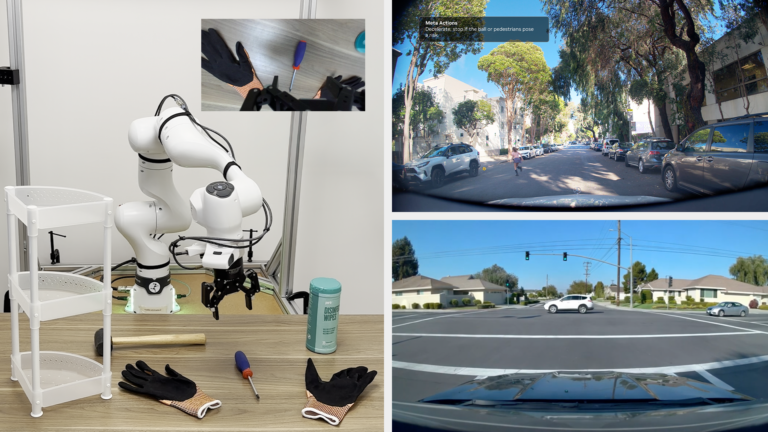
NVIDIA's Cosmos 3 unifies world generation, physical reasoning, and action generation into a single open omni-model, eliminating the need to juggle separate models for robotics, autonomous vehicles, and smart space simulations.
Guide to Gemini Enterprise and A2UI integration
A2UI is an open protocol for agent-driven UI that lets agents emit safe JSON payloads instead of text or HTML. Integrated with Gemini Enterprise, it lets you build agents that render native date pickers, maps, and choice lists inside the GE chat surface—without writing frontend code.
How Google SRE is using agentic AI to improve operations
Google SRE is deploying agentic AI across the entire software lifecycle—from reliability design to incident management—using Gemini and a transparent governance model to handle growing system complexity without sacrificing control. The approach emphasizes explainability, strong agent identity, and backup plans over black-box automation.
ITBench-AA Benchmark: Frontier Models Score Below 50% on Agentic SRE Tasks
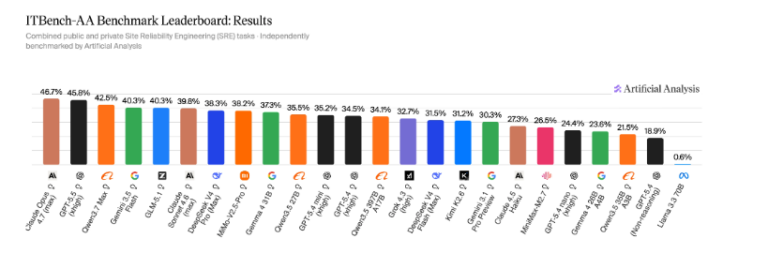
ITBench-AA reveals that frontier models, including Claude Opus 4.7 at 47%, struggle to diagnose Kubernetes incidents with recall-gated precision. Open weights models like Gemma 4 31B at 37% offer cost-effective alternatives, highlighting the need for agentic reasoning that avoids over-investigation.
Plastic User Interfaces: Why AI Makes UIs More Important, Not Less

The article reframes the headless UI debate: AI won't eliminate interfaces but will make them plastic, dynamically generating the right format — HTML, audio, spreadsheets — for each context, while the hard problem becomes managing correctness and knowledge across these ephemeral artifacts.
SpaceX S-1: AI Conglomerate Eyes $1.75 Trillion IPO
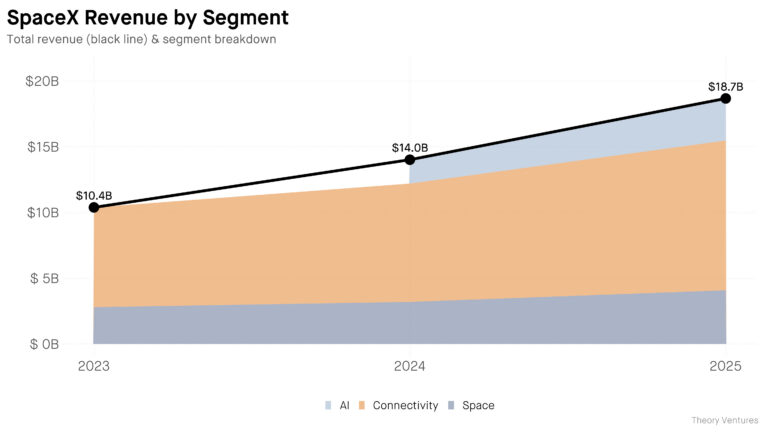
SpaceX filed its S-1 for an IPO on June 12, 2026, revealing a three-segment conglomerate with Starlink as the cash engine ($11.4B revenue, 39% margin), Space dominating launches, and AI burning $6.4B on infrastructure. The filing targets a $1.75 trillion valuation and outlines plans for orbital AI compute satellites starting in 2028.
Claude Expands Connectors to Everyday Life Apps

Claude now connects to everyday apps like AllTrails, Instacart, and Uber, suggesting relevant tools based on conversation context while keeping user data private and requiring confirmation before actions.