iFeeling Daily
Daily curated AI insights you can't miss.
Vint Cerf on a plan to give AI agents open internet identities

Vint Cerf is advising Innovation Labs on DNSid, a standard that ties AI agents to existing domain names so they can identify themselves across the open internet. Without this, agents stay locked inside proprietary systems and cannot interoperate. The real test will be whether users demand a shared standard, just as they did for TCP/IP.
PARE: A Stateful Benchmark for Proactive AI Assistants
This work exposes a core blind spot in proactive AI assistant research: benchmarks that flatten apps into stateless APIs can't test real-world anticipation and timing. The proposed PARE framework models applications as finite state machines, enabling stateful user simulation and a 143-task benchmark across communication, productivity, and scheduling domains.
Spotify expands AI push with conversational music assistant for Premium users
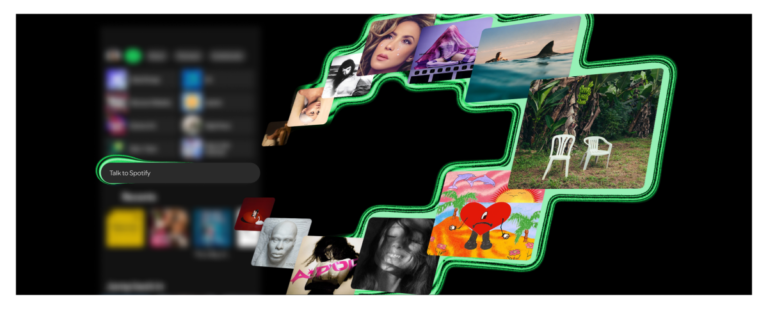
Spotify is testing a ChatGPT-style music assistant for Premium users, letting them chat about listening history, refine playlists with natural language, and discover songs conversationally. It blends Spotify’s own AI with multiple model providers, betting that conversational interfaces will outpace search and recommendations in a catalog with millions of tracks.
Nous Research in talks for $1.5B valuation after Hermes agent success
Nous Research is raising a new round at a $1.5 billion valuation, backed by Robot Ventures and USV, just months after its Series A. The open-source Hermes agent competes with OpenClaw by offering built-in skills, auto-learning, and a cloud-hosted tier. The funding will likely accelerate product expansion.
Why Long Context Isn’t Enough for AI Memory
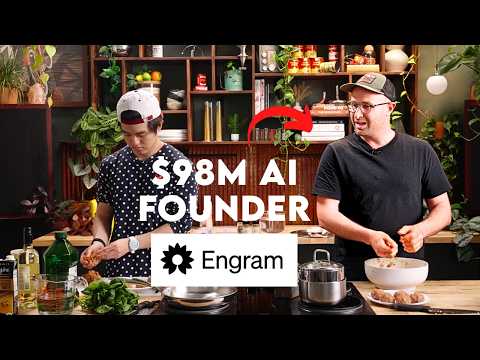
Dan Biderman argues that long context windows and RAG are insufficient for true AI memory. Engram's approach uses knowledge cartridges and continual learning to compress experience into model weights, enabling personal AI that improves over time like a Tamagotchi.
Hotz’s AI Freedom vs. Safety: Should AI Help You Kill Someone?
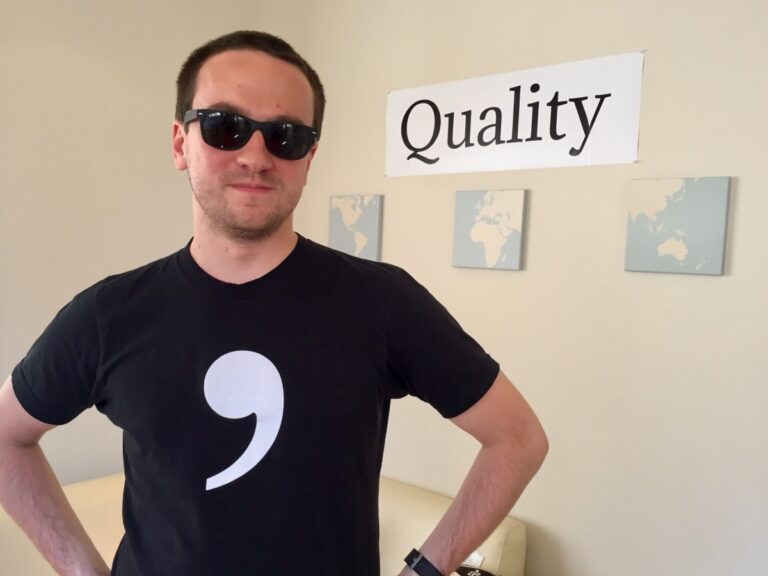
George Hotz argues for locally controlled AI that never refuses a user's request, even for murder, while the article pushes back by highlighting the societal risks of such total freedom—a must-read tension for anyone building or thinking about AI alignment.
Behavioral Privacy Leakage in Agentic Negotiation
Autonomous negotiation agents are increasingly deployed in high-stakes settings like insurance and procurement, where cryptographic techniques protect explicitly disclosed constraints. However, this paper exposes a subtler threat: behavioral privacy leakage, where an adversary infers private constraints from observable negotiation dynamics—concession trajectories, timing, and convergence patterns. The tension is that even if the agent never reveals its reservation price directly, its behavior during rounds of bargaining leaks enough information for inference attacks.
Using Surprisal to Map Agent Retrieval Performance
Standard pass/fail benchmarks hide where agents actually break. This article shows how using information theory (surprisal) to sweep query ambiguity reveals capability cliffs and sweet spots that single-score evaluations miss. It's a practical guide to building evaluations that produce actionable signals, not just verdicts.
UST brings Claude into physical AI and industrial production

UST is integrating Claude into its engineering platforms for physical AI, cutting validation cycle times by 50-70% in chip design. The partnership extends to healthcare, telecom, and banking, with 20,000 engineers trained on Claude. This is a concrete example of AI in production industrial systems with human approval and governance.