iFeeling Daily
Daily curated AI insights you can't miss.
Harnessing Claude’s Intelligence: Patterns for Evolving Agents

Anthropic shares concrete patterns for building agent harnesses that keep pace with Claude's rapid capability growth—focusing on leveraging familiar tools, letting Claude orchestrate its own actions, and carefully pruning assumptions that become stale as the model evolves.
Claude Managed Agents: 10x Faster Production Agent Deployment

Claude Managed Agents removes months of infrastructure overhead for production agents by providing a built-in orchestration harness, long-running sessions, and scoped governance—letting teams ship 10x faster. Available in public beta, it already powers agents at Notion, Rakuten, Asana, and Sentry.
Claude Code desktop gets parallel sessions and integrated tools

Anthropic's redesigned Claude Code desktop app shifts from single-session tabs to a parallel sidebar for managing multiple concurrent coding tasks across repos, with an integrated terminal, file editor, and side chats that don't pollute the main thread. For engineers running multi-repo agentic workflows, it's a serious UX upgrade.
Claude Managed Agents get built-in memory in public beta
Anthropic launches public beta of built-in memory for Claude Managed Agents. Agents store memories as files on the filesystem, using existing bash and code tools to read and write. Supports scoped permissions, audit logs, version rollback, and concurrent multi-agent access. Rakuten reports 97% fewer first-pass errors; Wisedocs speeds up verification by 30%.
Google’s Agent Platform remote MCP server bridges IDEs and cloud governance
Google introduces a remote MCP server for the Gemini Enterprise Agent Platform that lets external agents in tools like Claude Code securely interact with Google Cloud resources such as Model Garden, prompt templates, and Colab notebooks—without leaving the IDE, and with Cloud IAM policies enforced by default.
Claude Sonnet 5: More Agentic, Lower Cost

Claude Sonnet 5 offers agentic performance close to Opus 4.8 at a much lower price, with improved safety and reliability. It's ideal for multi-step tasks like coding, tool use, and knowledge work.
The power of multi-model Spanner for the agentic era
If you're building AI agents that need deep context from structured, semantic, and graph data, this article explains why Google Spanner's native multi-model architecture—unifying graph, vector search, full-text, and analytics in a single ACID engine—is the foundation to bet on. It backs the claim with Gartner's #1 ranking and a Forrester study showing 132% ROI.
Async Inference: Why the Future of AI Agents Runs on Queues, Not Real-Time
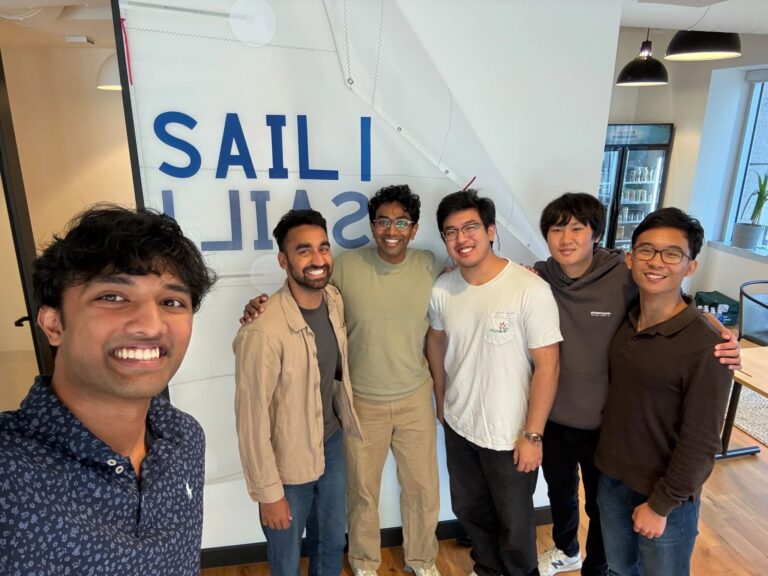
The article argues that as AI agents shift from real-time chat to background batch work, inference infrastructure must follow. Sail Research builds an async inference stack that queues requests, routes to the cheapest capable open model, and uses spot capacity to cut costs dramatically—GLM-5.1 on Sail costs 6x less per token than Anthropic's Haiku.
Databricks’ Agent Cloud: Why Open Source and LTAP Matter for AI
Databricks co-founders Matei Zaharia and Reynold Xin unpack Omnigent (an open-source meta-harness above coding and enterprise agents), LTAP (their database bet for live transactional data in column-oriented formats), and why agent security, spend controls, and a common API matter more than ever. The thesis: traditional software gets rewritten once the data is in the right place and agents sit on top.