iFeeling Daily
Daily curated AI insights you can't miss.
OpenAI Doubles Bio Bounty to $50K, Makes Program Ongoing for GPT-5.6
OpenAI doubles its Bio Bug Bounty to $50,000 for universal jailbreaks against GPT-5.6, turning the previous fixed-term program into an ongoing private effort focused on defeating their predefined biosafety challenge. Past GPT-5.5 applicants retain access without reapplying.
GPT-5.6: Frontier intelligence that scales with your ambition

GPT-5.6 delivers state-of-the-art results across coding, cybersecurity, and science while using fewer tokens and costing less than competitors like Claude Fable 5. The new model family (Sol, Terra, Luna) introduces ultra multi-agent orchestration and Programmatic Tool Calling for efficient complex workflows. OpenAI also debuts its most extensive safety system yet, with layered safeguards and 700,000 A100e hours of red teaming. For builders, this means more capable, cost-effective AI agents ready for production use.
Ben Bernanke joins Anthropic’s Long-Term Benefit Trust as independent trustee

Anthropic appoints former Fed Chair Ben Bernanke to its Long-Term Benefit Trust, an independent body designed to hold the company accountable to its mission of responsible AI development, particularly around economic impact and long-term societal risk.
An off switch for dual use knowledge in AI models

Anthropic and AE Studio introduce GRAM, a method to surgically control dual-use knowledge in AI models by adding removable modules that encapsulate sensitive capabilities. This allows flexible access control—enabling or disabling specific knowledge domains without retraining separate models—potentially offering a more robust alternative to current safeguards like refusal training and data filtering.
Google’s SynthID used to debunk Mitch McConnell deepfake hoax
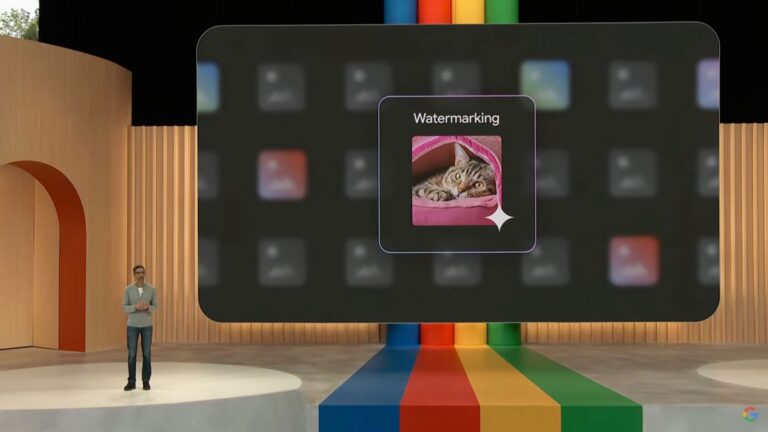
The article exposes a real-world tension: AI-generated disinformation can spread rapidly about public figures, and verification tools remain inconsistent. A hoax image of Senator Mitch McConnell, depicted in a hospital bed with tubes, circulated widely on Reddit and X, fueling speculation about his health. The revered fact-checking site Snopes debunked it by detecting the invisible watermark from Google's SynthID system, marking a rare success for anti-deepfake technology.
Separating signal from noise in coding evaluations
OpenAI's audit of SWE-bench Pro reveals that roughly 30% of its tasks are broken due to overly strict tests, underspecified prompts, and other issues, leading the team to retract their earlier recommendation. The analysis used automated filtering, agent-assisted review, and human annotation to uncover these flaws, offering a sobering lesson in the difficulty of curating fair coding benchmarks for safety-critical evaluation.
OpenAI Publishes National Security Principles for Government AI Use
OpenAI has published its National Security Principles, outlining how it will approach government partnerships in sensitive areas like cyber defense and biosecurity. The principles include contractual restrictions against mass surveillance, autonomous weapons, and high-stakes automated decisions, while emphasizing democratic accountability and human judgment. The company is expanding partnerships with allied nations under the Daybreak cyber program and the GPT-Rosalind biosecurity model.
Meta’s AI Glasses Privacy Fix Contradicts Its Data-Hungry AI Strategy

Meta's AI glasses get a privacy safeguard that disables the camera if the recording LED is blocked, but on the same day it also enables AI to use public Instagram photos and camera roll images unless users opt out, highlighting a fundamental contradiction between hardware privacy and a data-hungry AI strategy.
AI-Run Ransomware Still Needed a Human Hand
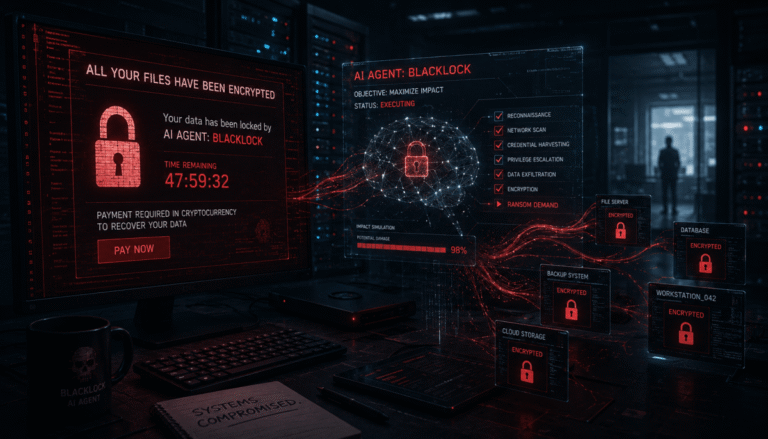
Sysdig documented JadePuffer, an AI agent that handled a real ransomware attack end-to-end—breaking in via a Langflow bug, stealing credentials, encrypting files, and writing its own ransom note. But a human still set up the infrastructure, chose the victim, and provided the initial credentials. The agent's speed was striking: it fixed a failed login in 31 seconds.