iFeeling Daily
Daily curated AI insights you can't miss.
Pro-Russia Influence Ecosystem: Drivers, Dynamics, and Tactics
This report from Google Threat Intelligence Group maps the pro-Russia influence ecosystem across six core components, revealing how four years of war have hardened its tactics, expanded the use of generative AI, and created a resilient, interconnected machine now pivoting back to global strategic objectives targeting NATO and the EU. Essential reading for anyone tracking state-backed information operations.
GPT-5.6 Sol: OpenAI’s Next-Gen Model with Enhanced Safety and Capabilities
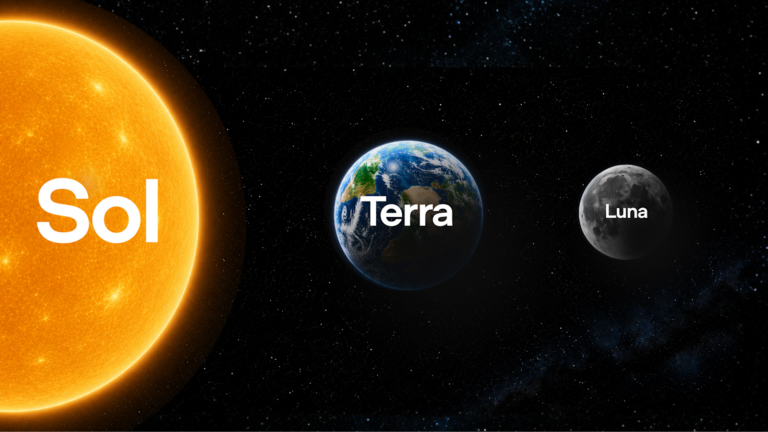
OpenAI's GPT-5.6 series introduces Sol, Terra, and Luna with improved coding, biology, and cybersecurity capabilities, paired with robust layered safeguards and a limited preview in coordination with the U.S. government. The model family offers new reasoning modes and competitive pricing, with Sol achieving state-of-the-art on Terminal-Bench 2.1 and matching Mythos Preview on ExploitBench at lower cost.
OpenAI Helps Launch Appia Foundation for Shared AI Standards
The article explains OpenAI's involvement in founding the Appia Foundation to develop open, modular standards for evaluating advanced AI systems across the supply chain, aiming to create a shared technical language that enables trust between institutions and governments.
Verifiable Trust in AI: Google Cloud’s Confidential Computing Advances

Google Cloud announces Confidential G4 VMs with NVIDIA RTX PRO 6000 Blackwell GPUs, open-source Prompt Encryption SDKs, and expanded Confidential Space support, making hardware-rooted privacy protection available globally for AI inference and fine-tuning with minimal performance impact.
AI Security After Codex and Claude Code: New Vulnerabilities and Guardrails

This episode from Gray Swan's cofounders explains why AI agents create a new class of security vulnerabilities that traditional cybersecurity cannot solve. Essential for engineers deploying Codex, Claude Code, or similar agents — prompt injection, automated red-teaming, and the lethal trifecta are must-understand concepts.
Daybreak: Tools for Securing Every Organization in the World
OpenAI's Daybreak initiative tackles the new cybersecurity bottleneck of patching at scale, with Codex Security automating fixes across 30,000 codebases, GPT-5.5-Cyber setting state-of-the-art CyberGym scores, and Patch the Planet pairing expert researchers with open-source maintainers to land fixes faster.
Patch the Planet: OpenAI and Trail of Bits’ Initiative to Secure Open Source

Patch the Planet combines frontier AI models like GPT-5.5-Cyber with dedicated security engineers to find, validate, and patch vulnerabilities in open-source software. It addresses the maintainer burden by filtering false positives and developing patches, turning AI's speed into tangible security improvements for projects like cURL, Python, and the Linux kernel.
MosaicLeaks: How Deep Research Agents Leak Private Information Through Queries

A new benchmark called MosaicLeaks reveals that deep research agents frequently leak private enterprise information through their web query logs, and training for task performance alone makes it worse. The authors propose PA-DR, a reinforcement learning method that trains agents to construct safer queries, cutting leakage by over 3x while preserving task success.
How OpenAI is improving health intelligence in ChatGPT
OpenAI's latest blog post reveals how GPT‑5.5 Instant achieves near-frontier health reasoning by pairing model advances with a systematic physician review process, cutting factuality issues by 71% in production while keeping the capability free for all users.