iFeeling Daily
Daily curated AI insights you can't miss.
Open Knowledge Format: A Portable Standard for AI Context Sharing
Open Knowledge Format (OKF) is an open specification that turns scattered internal knowledge into portable markdown files with YAML frontmatter, enabling AI agents and humans to share context without vendor lock-in or complex integrations.
Apple and Google Build Verifiable Private AI Infrastructure on Cloud
This article explains how Apple's Private Cloud Compute (PCC) runs on Google Cloud using Confidential Computing, Intel TDX, and NVIDIA Blackwell GPUs to create hardware-enforced isolation for AI inference. The critical detail is that the entire host stack is open-sourced for external verification—a move that sets a new bar for trust in cloud AI infrastructure.
Profiling in PyTorch (Part 2): From nn.Linear to a Fused MLP
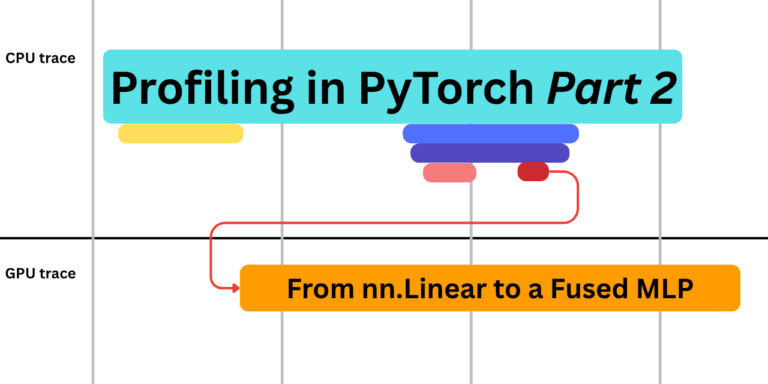
The article traces the journey from a single nn.Linear to a fused MLP, showing that torch.compile fuses GeLU and multiplication into one Triton kernel while leaving the three cuBLAS GEMMs untouched. It then introduces hand-tuned Liger kernels that achieve the same fusion without compile latency or shape specialization, trading a few microseconds of peak performance for robustness across changing input sizes.
OpenAI acquires Ona to give Codex agents persistent cloud execution
OpenAI is acquiring Ona to give Codex agents persistent, secure cloud environments where they can work for hours or days, not just minutes. For organizations moving agents into production, this means agents operate inside the org's own cloud with controlled credential scoping, logging, and review, while OpenAI provides the orchestration.
Fixing tool-calling reliability for open models with a transparent repair layer
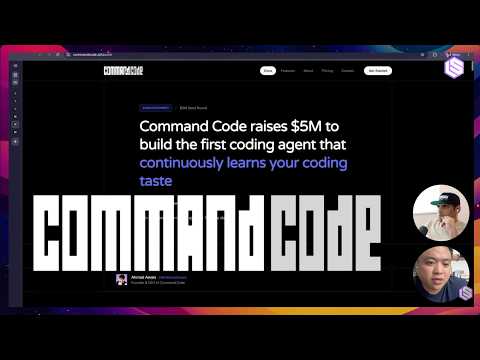
Most tool-calling failures in open models aren't capability gaps—they're harness bugs. Ahmad Awais built a transparent repair layer that fixes malformed calls without retries, letting DeepSeek V4 Pro beat Opus 4.7 on 6 of 10 benchmarks. For anyone shipping agentic code, this is a practical lesson in where to invest engineering effort.
Biggest Mysteries in Physics: Antimatter, Dark Energy & ToE – Don Lincoln
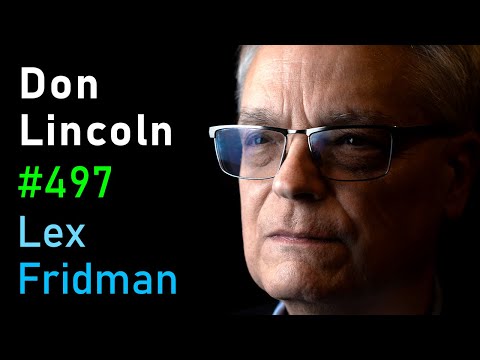
Don Lincoln, a particle physicist at Fermilab, takes you on a deep dive into the universe's greatest unsolved puzzles—antimatter, dark energy, and the quest for a theory of everything. A clear, grounded conversation that connects experimental physics with the most profound questions about reality.
Devin’s 80% Moment: Background Agents, 7x PRs, and the End of Hand-Held Coding
The engineering world is waking up to a hard tension: hand-held coding, where a developer drives every keystroke, does not scale inside an organization that ships thousands of changes per week. Walden Yan, Cognition's co-founder and CPO, frames this as the moment **background agents** go from toy to critical infrastructure. The concrete proof is that **Devin now generates 80% of commits across Cognition's own repos**, up from 16% before the December 2025 model inflection, and merged PR volume has grown 7x. The problem is not whether agents can write code—it is whether they can reliably go from a spec written in Slack to a merged, tested, properly reviewed pull request without breaking your codebase every two weeks. Cole Murray's open-source **OpenInspect** project is an attempt to replicate this pattern for teams that cannot or should not buy a proprietary system.
Choosing Your Antigravity Surface: Desktop, CLI, IDE, or SDK
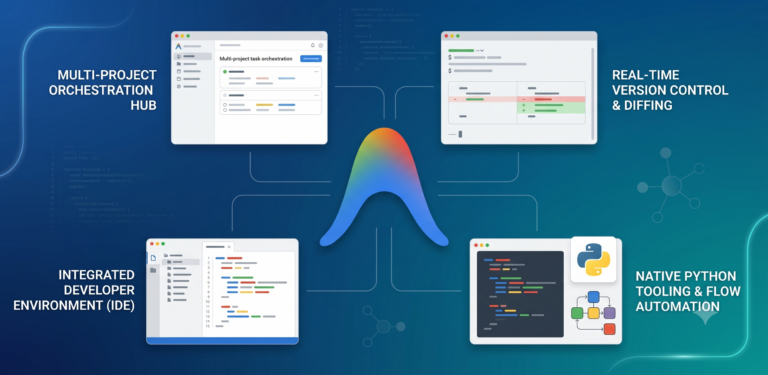
If you're building or choosing an agent platform, the article shows how Antigravity splits into four distinct surfaces—desktop, CLI, IDE, and SDK—all backed by the same shared harness. The key insight is that matching the interface to how you actually work matters more than a one-size-fits-all product.
Lightning Engine for Spark: Vectorized native execution and cloud optimizations
Lightning Engine for Managed Service for Apache Spark delivers up to 4.9x faster performance than standard open-source Spark by compiling query plans into SIMD-optimized C++ code, with a smart fallback that gracefully handles unsupported operators. It's available now with zero pipeline changes.