iFeeling Daily
Daily curated AI insights you can't miss.
Google’s Agent Platform remote MCP server bridges IDEs and cloud governance
Google introduces a remote MCP server for the Gemini Enterprise Agent Platform that lets external agents in tools like Claude Code securely interact with Google Cloud resources such as Model Garden, prompt templates, and Colab notebooks—without leaving the IDE, and with Cloud IAM policies enforced by default.
Claude Sonnet 5: More Agentic, Lower Cost
Claude Sonnet 5 offers agentic performance close to Opus 4.8 at a much lower price, with improved safety and reliability. It's ideal for multi-step tasks like coding, tool use, and knowledge work.
The power of multi-model Spanner for the agentic era
If you're building AI agents that need deep context from structured, semantic, and graph data, this article explains why Google Spanner's native multi-model architecture—unifying graph, vector search, full-text, and analytics in a single ACID engine—is the foundation to bet on. It backs the claim with Gartner's #1 ranking and a Forrester study showing 132% ROI.
Async Inference: Why the Future of AI Agents Runs on Queues, Not Real-Time
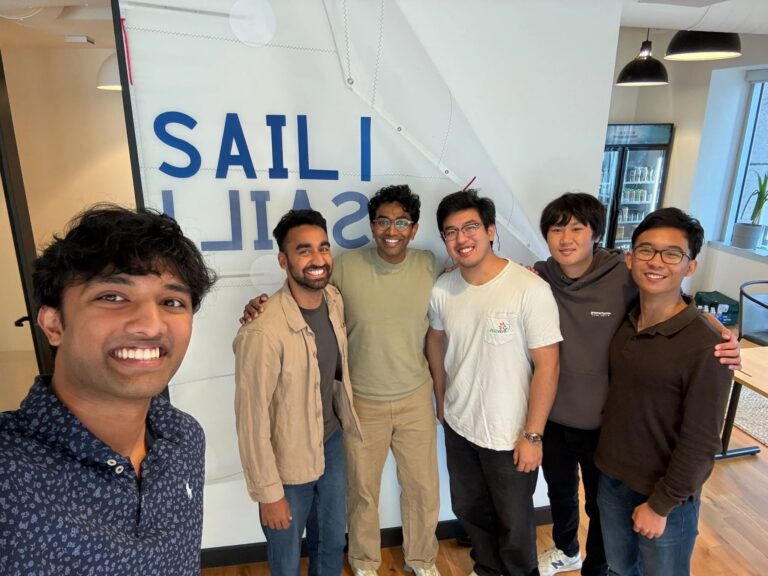
The article argues that as AI agents shift from real-time chat to background batch work, inference infrastructure must follow. Sail Research builds an async inference stack that queues requests, routes to the cheapest capable open model, and uses spot capacity to cut costs dramatically—GLM-5.1 on Sail costs 6x less per token than Anthropic's Haiku.
Databricks’ Agent Cloud: Why Open Source and LTAP Matter for AI
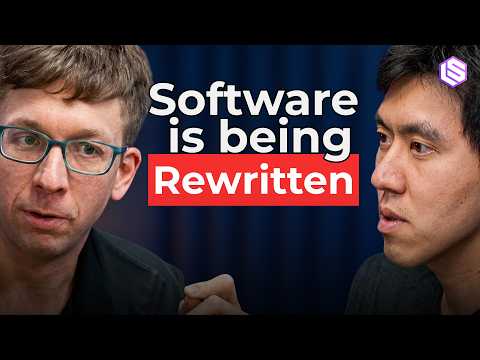
Databricks co-founders Matei Zaharia and Reynold Xin unpack Omnigent (an open-source meta-harness above coding and enterprise agents), LTAP (their database bet for live transactional data in column-oriented formats), and why agent security, spend controls, and a common API matter more than ever. The thesis: traditional software gets rewritten once the data is in the right place and agents sit on top.
Claude Tag: Persistent, Multiplayer AI Teammate for Slack
Anthropic launched Claude Tag, an AI teammate embedded directly in Slack that maintains shared context, works asynchronously, and takes initiative. The product moves beyond single-session AI interaction toward persistent, multiplayer collaboration, with Anthropic reporting 65% of its product team's code already created via this pattern.
Build real agentic apps using CUGA: lightweight harness, two dozen examples
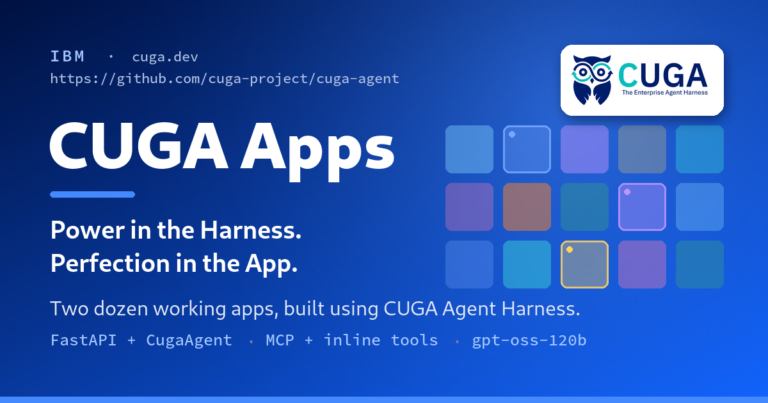
CUGA (Configurable Generalist Agent) is an open-source harness from IBM that strips away the repetitive plumbing of agentic apps, letting you focus on tools and prompts. With two dozen single-file examples and built-in governance, it shows how to build agents that scale from a laptop to a governed production deployment without rewriting.
Shipping weekly releases with AI, open tools, and a human in the loop
Hugging Face cut their release effort from half a day to 15 minutes by using an open-weight AI to draft changelogs, wrapped in deterministic checks that verify every PR is included, and a human review before shipping. The full pipeline is open-source and costs about $0.25 per run.
AI Security After Codex and Claude Code: New Vulnerabilities and Guardrails

This episode from Gray Swan's cofounders explains why AI agents create a new class of security vulnerabilities that traditional cybersecurity cannot solve. Essential for engineers deploying Codex, Claude Code, or similar agents — prompt injection, automated red-teaming, and the lethal trifecta are must-understand concepts.