iFeeling Daily
Daily curated AI insights you can't miss.
Why Long Context Isn’t Enough for AI Memory
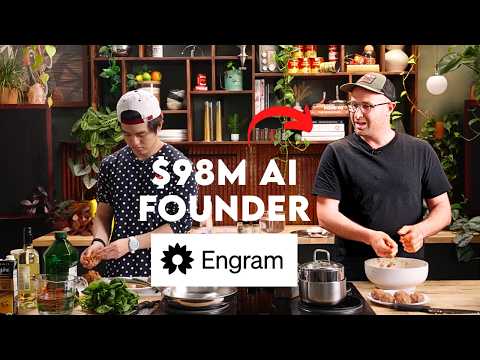
Dan Biderman argues that long context windows and RAG are insufficient for true AI memory. Engram's approach uses knowledge cartridges and continual learning to compress experience into model weights, enabling personal AI that improves over time like a Tamagotchi.
Hotz’s AI Freedom vs. Safety: Should AI Help You Kill Someone?
George Hotz argues for locally controlled AI that never refuses a user's request, even for murder, while the article pushes back by highlighting the societal risks of such total freedom—a must-read tension for anyone building or thinking about AI alignment.
Behavioral Privacy Leakage in Agentic Negotiation
Autonomous negotiation agents are increasingly deployed in high-stakes settings like insurance and procurement, where cryptographic techniques protect explicitly disclosed constraints. However, this paper exposes a subtler threat: behavioral privacy leakage, where an adversary infers private constraints from observable negotiation dynamics—concession trajectories, timing, and convergence patterns. The tension is that even if the agent never reveals its reservation price directly, its behavior during rounds of bargaining leaks enough information for inference attacks.
Using Surprisal to Map Agent Retrieval Performance
Standard pass/fail benchmarks hide where agents actually break. This article shows how using information theory (surprisal) to sweep query ambiguity reveals capability cliffs and sweet spots that single-score evaluations miss. It's a practical guide to building evaluations that produce actionable signals, not just verdicts.
UST brings Claude into physical AI and industrial production

UST is integrating Claude into its engineering platforms for physical AI, cutting validation cycle times by 50-70% in chip design. The partnership extends to healthcare, telecom, and banking, with 20,000 engineers trained on Claude. This is a concrete example of AI in production industrial systems with human approval and governance.
An AI agent startup let its agent run its $100 million fundraise

Lyzr used its own AI agent, SivaClaw, to run its $100 million Series B fundraise—fielding investor questions, drafting memos, and tracking slide engagement. The story shows how AI agents can handle high-stakes business development when capital is abundant and traction is proven.
ChatGPT Work: Agent for Ambitious Tasks with Codex and GPT-5.6

OpenAI launches ChatGPT Work, an agent that turns multi-step tasks—like building slides from Slack messages or closing a month-end budget—into autonomous workflows. Powered by Codex and GPT-5.6, it connects to apps via plugins, runs on schedules, and includes enterprise-grade controls. Internal teams report weeks of work compressed into hours.
Modal CTO on the 100,000 Sandbox Problem and AI Infrastructure

Modal CTO Akshat Bubna explains why Kubernetes fails at AI workloads, how Modal's 17-cloud capacity pool and GPU snapshotting handle bursty inference and RL rollout sandboxes, and why observability matters more when agents write the code.
Claude Cowork Expands to Mobile and Web: The Agentic Coworker Arrives

Anthropic expands Claude Cowork to mobile and web, letting Max subscribers run background tasks across devices. New usage data shows business process ops (33.4%) and content creation (16.4%) dominate, while coding is only 8.7% — a strong signal that the real value of AI agents is in the administrative work that keeps companies running, not just software development.