iFeeling Daily
Daily curated AI insights you can't miss.
AT&T and GSMA build open telco AI on Gemma, hitting 91.7% accuracy

AT&T and GSMA built 30 open telco models on Gemma to solve the fundamental problem that general AI lacks telecom domain knowledge. Gemma-4-E4B-it hit 91.74% accuracy, and smaller fine-tuned models are outperforming frontier models several times larger. Over 18 million downloads later, this is a case study in why domain-specific fine-tuning beats general scale.
Local Model Triage for OpenClaw: Real-Time, Cost-Free PR Classification
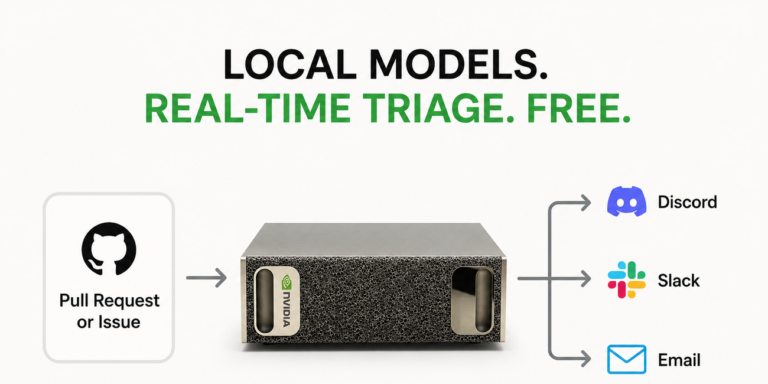
If you own a powerful local machine like the NVIDIA GB10, using models like gemma-4-26b-a4b or qwen3.6-35b-a3b in an agent harness can give you real-time, cost-free triage of open-source contributions. The article provides concrete numbers on precision, recall, and throughput tradeoffs, plus a practical hybrid architecture that uses a cheap cloud audit loop ($9/month) to catch misses.
So You Want to Sell Inference: Pricing vs Value in AI
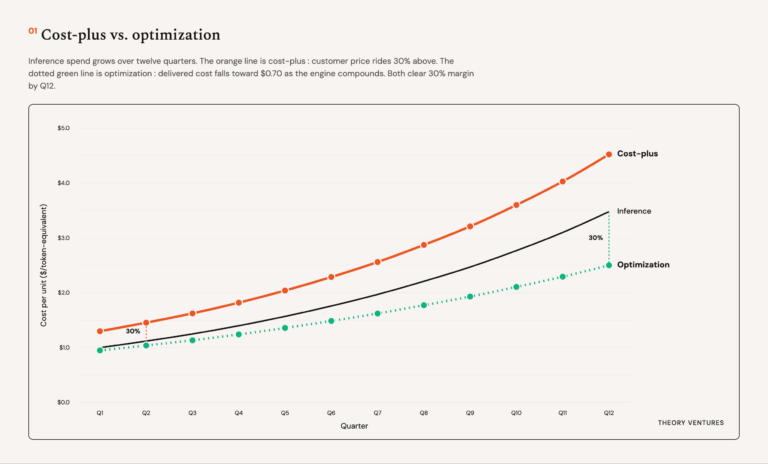
If you're reselling inference, cost-plus pricing caps your margins at zero as commodit drives prices down. The article explains how value-based pricing (charging per outcome, not per token) and optimization (distillation to proprietary small models) keep gross margin above 30%, and why bring-your-own-key kills markup entirely.
Every Future Product Will Be a Living System: Ronak Malde on Continual Learning
Ronak Malde, CEO of Trajectory.ai, argues that static AI models are insufficient for enterprise use cases like legal or finance—every future product must be a living system that learns continuously. He details how they achieve this with concurrent training jobs, Self-Distillation Policy Optimization, and open-sourced infrastructure.
PP-OCRv6: Lightweight, Multilingual OCR from 1.5M to 34.5M Parameters
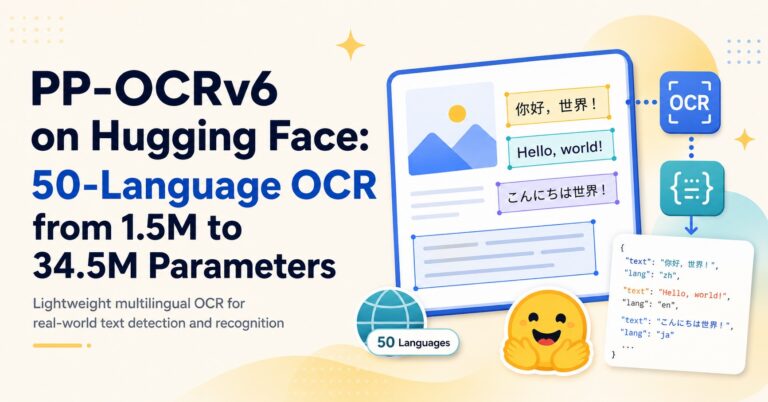
PP-OCRv6 is a practical, tiered OCR model family from 1.5M to 34.5M parameters that improves detection and recognition accuracy over its predecessor while supporting 50 languages in a single architecture. It's worth reading if you need a lightweight, deployable OCR pipeline that integrates with Paddle Inference, Transformers, or ONNX Runtime backends.
The AI Frontier: from FLOPs to Megawatts — Anjney Midha, AMP
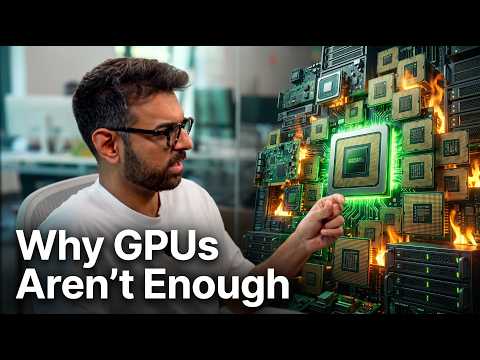
Anjney Midha argues the AI race is shifting from buying more GPUs to building a compute grid that makes FLOPs flow like megawatts, modeled on independent system operators rather than hyperscaler monopolies.
Claude Code artifacts turn terminal sessions into live, shareable pages

Claude Code now captures session output—incident timelines, PR walkthroughs, dependency audits—as live, shareable web pages that update in place as your session progresses. No more screen-sharing agent output; teammates open the same link and see the same evolving context.
New credit usage analytics and spend controls for ChatGPT Enterprise

OpenAI introduces credit usage analytics and updated spend controls for ChatGPT Enterprise, giving admins a unified view of ChatGPT and Codex consumption plus flexible limits at the workspace, group, and individual level. The Cost API also enables deeper integration with existing financial systems.
Improving Ray Serve LLM on GKE: 5x Throughput, 8x Latency
If you've ever struggled with the performance tax of using Ray Serve for LLM inference on Kubernetes, this article details three concrete architectural fixes—HAProxy integration, direct token streaming, and a v2 vLLM executor—that deliver up to 5x higher throughput and 8x lower latency on GKE, closing the gap with native vLLM without sacrificing developer experience.