iFeeling Daily
Daily curated AI insights you can't miss.
Google Cloud Network Insights: Active monitoring for cross-cloud visibility

Google Cloud has launched Cloud Network Insights in partnership with Broadcom AppNeta, a native observability tool that uses active synthetic probing to monitor network performance and digital experience across multi-cloud and hybrid environments. It integrates directly with Cloud Monitoring and Gemini Cloud Assist, helping teams pinpoint bottlenecks rapidly.
Chinese Threat Actor UNC6508 Targets Medical REDCap Servers for Espionage
A sophisticated PRC-linked espionage campaign compromised medical research REDCap servers for over a year, using a custom malware called INFINITERED to harvest credentials and then abusing enterprise email compliance rules for silent data exfiltration. A detailed breakdown of the attack chain, malware mechanics, and defensive takeaways for any organization running shared research platforms.
Google’s Brazos: Rack-Mounted Liquid Cooling for Air-Cooled Data Centers

Google's Brazos is a rack-mounted, closed-loop liquid-to-air cooling system that lets you deploy high-density liquid-cooled equipment in existing air-cooled data centers without facility-wide retrofits. It supports 60 kW per rack, uses DI water or PG25, and will be open-sourced through the Open Compute Project — a practical path for operators to cool next-gen AI chips.
OpenAI Partner Network: $150M to Drive Enterprise AI Adoption
If you're building enterprise AI solutions, this post shows OpenAI's strategy to overcome the adoption bottleneck through a formal partner ecosystem with tiered specializations and a $150M investment — a clear signal that deployment and change management are now the critical frontier.
Olmo-eval: An Evaluation Workbench for LLM Development Loops
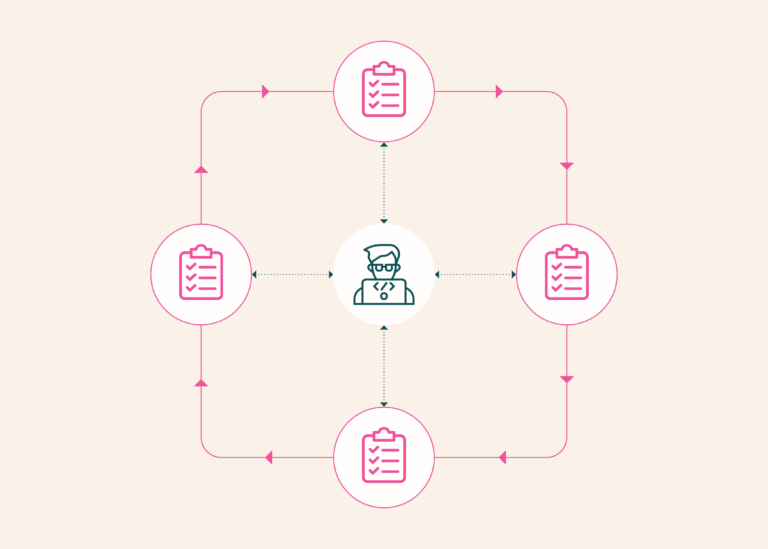
If you've ever wondered whether a 2.4pp change in your LLM's eval score is real improvement or noise, olmo-eval gives you the per-question pairwise comparison and minimum detectable effect to answer that. It's built for the iterative development loop, not just final scoring.
ShinyHunters Zero-Day Oracle PeopleSoft Campaign
Mandiant's detailed breakdown of ShinyHunters' zero-day exploit against Oracle PeopleSoft reveals how attackers used MeshCentral agents and SSH credential spraying to breach educational institutions. Immediate endpoint blocking and log auditing are critical defenses.
Profiling in PyTorch (Part 2): From nn.Linear to a Fused MLP
The article traces the journey from a single nn.Linear to a fused MLP, showing that torch.compile fuses GeLU and multiplication into one Triton kernel while leaving the three cuBLAS GEMMs untouched. It then introduces hand-tuned Liger kernels that achieve the same fusion without compile latency or shape specialization, trading a few microseconds of peak performance for robustness across changing input sizes.
Scaling Past Informal AI: Formal Verification as the Path to Math AGI

Carina Hong argues that reaching math AGI requires formal verification in the training loop, not just bigger models. Axiom Math's system scored a perfect 120/120 on the 2024 Putnam exam using Lean-verified proofs as RL reward signals. The big insight: verification is a scaling property, not a bug fix.
FFmpeg and VLC: The Open-Source Backbone of Internet Video

Lex Fridman sits down with Jean-Baptiste Kempf (VLC lead) and Kieran Kunhya (FFmpeg contributor) to discuss the mechanics of video playback, the history of FFmpeg, and the ethical and technical challenges of keeping video software open-source and ad-free.