iFeeling Daily
Daily curated AI insights you can't miss.
Introducing Google Cloud Developer Plugin for AI Coding Agents
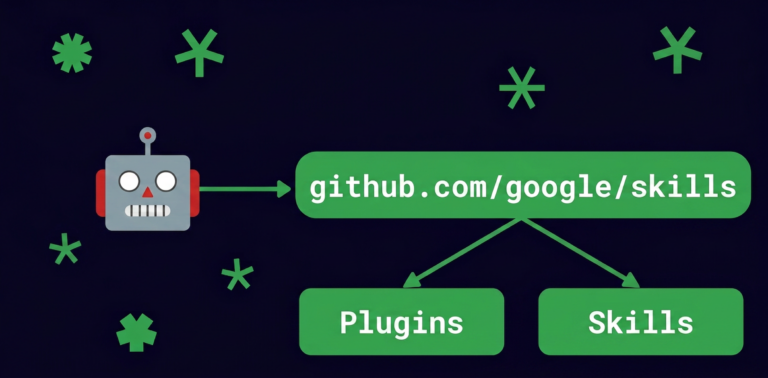
Google Cloud announced an agent plugin packaged as installable bundles, using the Agent Plugins standard to combine skills and MCP servers for AI coding agents.
Data agent in ChatGPT Work lets employees analyze company data directly

OpenAI's Data agent in ChatGPT Work lets employees connect to company data, investigate changes, and build shareable dashboards without writing queries.
Instinct AI assistant introduces dedicated email addresses for autonomous tasks

Instinct, the AI assistant valued at $2.5 billion, is giving every user an Instinct email address so the agent can create and manage its own accounts and communicate with businesses on the user's behalf.
Sequoia backs Cymphony’s $30M round for AI agent security
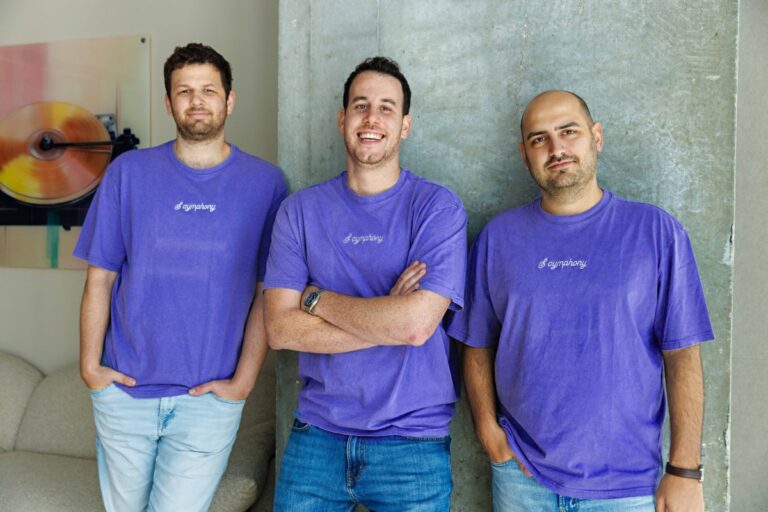
Sequoia Capital doubled down on Cymphony with a $30M funding round to help enterprises govern AI agents' access to sensitive corporate data.
How GPT-5.6 Sol and Codex Automate Superconducting Qubit Experiments
MIT researcher Beatriz Yankelevich used GPT-5.6 Sol with Codex to automate superconducting qubit calibration, doing routine measurements autonomously when signals were clear.
Meta debuts its Muse AI agent. Will consumers trust it?
Meta's new AI agent Muse promises to handle daily tasks, but its success hinges on whether users trust Meta with their data given its troubled privacy history.
OpenAI: AI Agents Prove Finite-Time Singularity for Navier-Stokes
OpenAI reports that an internal agentic system produced a proof of finite-time singularity for Navier-Stokes, with Lean verification; the result is not claimed for the Millennium Prize.
Power agent hubs or custom harnesses with the Antigravity SDK

The Antigravity SDK embeds the Antigravity 2.0 runtime into custom agent hubs, adding safety policies, real-time telemetry, and session persistence.
OpenAI Details Research Acceleration from Coding Agents
OpenAI says coding agents have accelerated research, with agent runtime exceeding human labor by 3.1x, and they have achieved their automated research intern goal by September 2026.