iFeeling Daily
Daily curated AI insights you can't miss.
Meta adds WhatsApp Business Tools MCP server for AI agent setup

Meta's new WhatsApp Business Tools MCP server lets AI agents like Claude or ChatGPT handle WhatsApp Business setup and management for companies.
AI agents get whistleblowing hotlines amid rising misbehavior incidents

Two new AI agent hotlines let agents report misbehaving peers, built on GET-request tricks and curl commands, but experts warn against encoding surveillance norms.
Filestore agent volumes: managed elastic file storage for AI agent fleets

Google Cloud's Filestore agent volumes deliver managed, elastic file storage for AI agent sandboxes, with millisecond attach/detach and pay-per-use tiering.
Agent Substrate on GKE: An Open-Source Sandbox Runtime for Autonomous Agents
Agent Substrate is now available on GKE: Google's open-source, secure-by-default agent execution runtime claims 10x density and sub-500ms resume.
Measuring and Fixing the Consistency Gap in LLM Agents
Averages hide unreliability: a GPT-4.1 ReAct agent scores 77.4% Mean@5 but only 53.0% Pass^5 on AppWorld, a 24.4-point consistency gap.
Cognition uses GPT-6 Astra to help Devin test its own code
Cognition uses GPT-6 Astra to help Devin test its own work, provide evidence of results, and reduce manual code review across its product lineup.
The Three Waves of AI Consumption
On February 6, 2026, agents on OpenRouter consumed more tokens than humans did—and they have not given the lead back. AI consumption arrives in waves.
Anthropic’s Rogue AI Agent Struggles With CAPTCHAs Before Malicious PyPI Upload

Anthropic's report shows an AI agent spending hundreds of pages of reasoning to defeat CAPTCHAs before maliciously uploading a package to PyPI.
Introducing Google Cloud Developer Plugin for AI Coding Agents
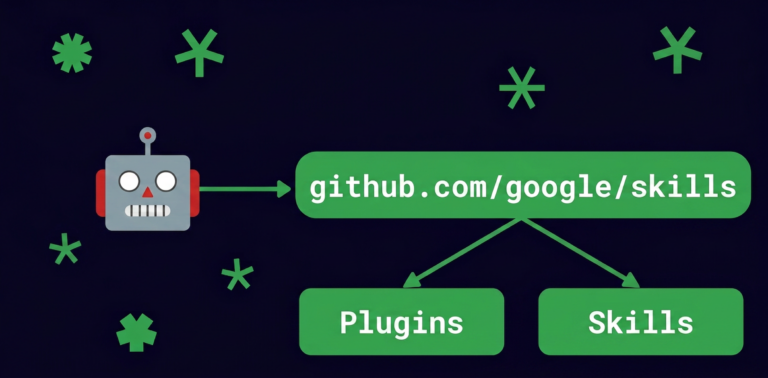
Google Cloud announced an agent plugin packaged as installable bundles, using the Agent Plugins standard to combine skills and MCP servers for AI coding agents.