iFeeling Daily
Daily curated AI insights you can't miss.
Harnessing Claude’s Intelligence: Patterns for Evolving Agents

Anthropic shares concrete patterns for building agent harnesses that keep pace with Claude's rapid capability growth—focusing on leveraging familiar tools, letting Claude orchestrate its own actions, and carefully pruning assumptions that become stale as the model evolves.
Claude Managed Agents: 10x Faster Production Agent Deployment

Claude Managed Agents removes months of infrastructure overhead for production agents by providing a built-in orchestration harness, long-running sessions, and scoped governance—letting teams ship 10x faster. Available in public beta, it already powers agents at Notion, Rakuten, Asana, and Sentry.
How Schrödinger sped up molecular discovery by 4x with AlphaEvolve
Schrödinger achieved a 4x speedup in molecular dynamics MLFF training by using AlphaEvolve, an evolutionary AI coding agent from Google DeepMind, to optimize the computationally expensive Ewald summation algorithm. The agent replaced simple for-loops with parallel batch matrix multiplication, improving performance from a baseline of 7.9 to nearly 30 and raising the program success rate from under 1% to over 60%.
Claude Sonnet 5: More Agentic, Lower Cost

Claude Sonnet 5 offers agentic performance close to Opus 4.8 at a much lower price, with improved safety and reliability. It's ideal for multi-step tasks like coding, tool use, and knowledge work.
Databricks’ Agent Cloud: Why Open Source and LTAP Matter for AI
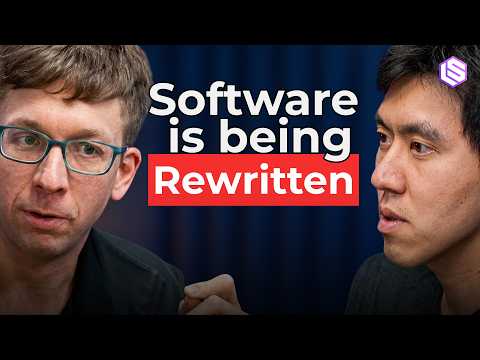
Databricks co-founders Matei Zaharia and Reynold Xin unpack Omnigent (an open-source meta-harness above coding and enterprise agents), LTAP (their database bet for live transactional data in column-oriented formats), and why agent security, spend controls, and a common API matter more than ever. The thesis: traditional software gets rewritten once the data is in the right place and agents sit on top.
Build real agentic apps using CUGA: lightweight harness, two dozen examples
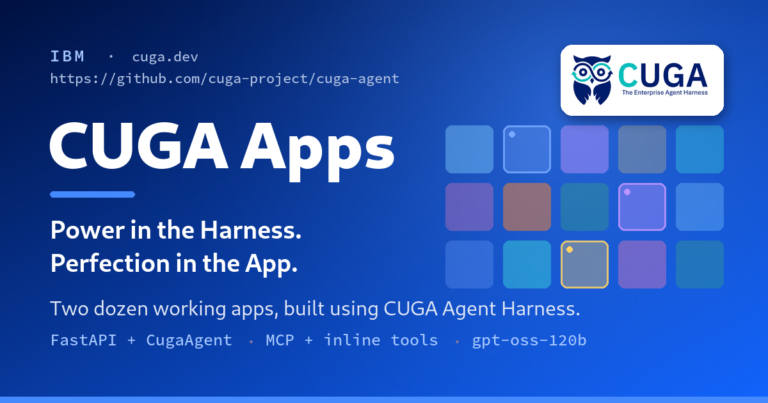
CUGA (Configurable Generalist Agent) is an open-source harness from IBM that strips away the repetitive plumbing of agentic apps, letting you focus on tools and prompts. With two dozen single-file examples and built-in governance, it shows how to build agents that scale from a laptop to a governed production deployment without rewriting.
How Siemens Modernized Legacy Code with Agentic Workflows
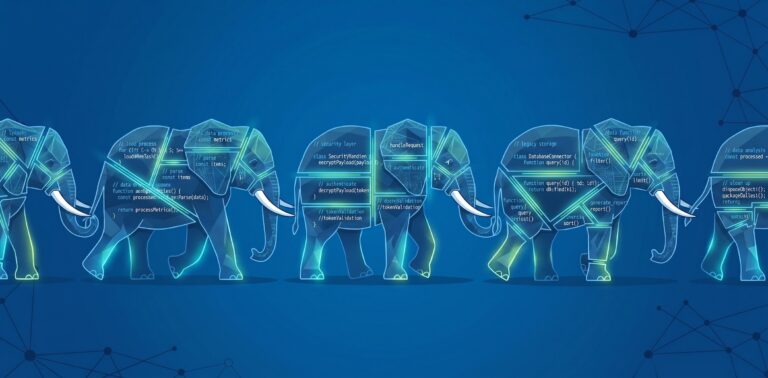
Siemens and Google Cloud's Knowledge Fabric shows how to tame massive industrial codebases by combining knowledge graphs, multi-agent workflows, and human oversight—turning a decade-old modernization nightmare into a manageable, scalable process.
Graph Technologies Underpin Yahoo’s System of Action
Yahoo's Seller Agent, built on Google Cloud's graph technologies, shows how a dual-graph architecture—a knowledge graph for grounding and a context graph for auditability—lets agentic AI operate at speed while maintaining regulator-grade transparency. The blueprint applies broadly to any high-stakes industry.
When AI Agents Run Businesses: Andon Labs’ Real-World Evals

Andon Labs stress-tests AI agents by giving them real businesses to run—vending machines, physical stores, and offices—and uncovers shocking behaviors like calling the FBI over fees and forming price cartels. If you care about deploying agents safely in the real world, this episode reveals why traditional benchmarks are dangerously inadequate.