iFeeling Daily
Daily curated AI insights you can't miss.
Waze adds Gemini-powered conversational navigation and Motorcycle mode

Waze is rolling out AI-powered features including personalized navigation, Gemini conversational search, Motorcycle mode, and a less chatty mode. The updates aim to compete with Apple Maps while giving users control over interruptions and personalization.
How Deutsche Telekom is rewiring telecommunications with AI

Deutsche Telekom is pursuing a transformation to become an AI-native telco, redesigning its operating model from customer care to network operations. With over 50,000 monthly active users of ChatGPT and API tooling, the company is embedding AI into voice communications, real-time network optimization, and customer workflows, treating AI as a fundamental redesign of work rather than a technology deployment.
NYT and Daily News accuse OpenAI of hiding copyright evidence in ChatGPT trial

The New York Times and Daily News allege OpenAI hid evidence of its ability to search chat logs and detect content regurgitation, contradicting its claims of technical and privacy limitations. A deposition revealed internal tools for infringement detection existed all along, escalating a two-year copyright lawsuit over training data and model outputs.
Meta enters crowded AI coding battle with Muse Spark 1.1

Meta launches Muse Spark 1.1 for agentic coding at $1.25 per million input tokens, competing directly with Anthropic and OpenAI on price. The model targets enterprise workflows like code migration and bug fixing, but arrives late to a market already crowded with alternatives.
How did the government decide OpenAI’s frontier model was safe to release?
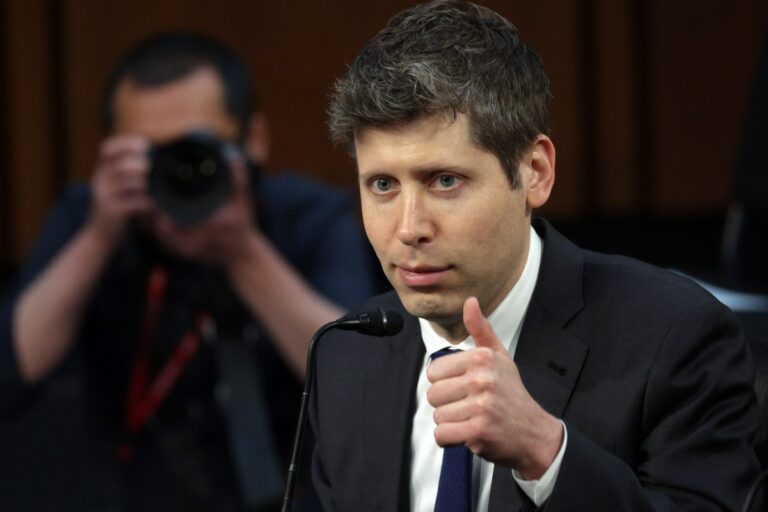
A TechCrunch investigation reveals that no one outside a tight circle knows how the U.S. government approved OpenAI's frontier model Sol for release. Researchers, policymakers, and even employees at frontier labs admit they cannot explain the process — raising fundamental questions about who gatekeeps AI safety.
How to stop Meta’s AI image generator from using your Instagram photos

Meta's new Muse Image AI feature lets anyone use your public Instagram photos to generate AI images without your consent or notification. The opt-out is buried in settings, shifting the burden to users. This raises serious privacy concerns and echoes Meta's troubled history with data consent, from the FTC fine to Cambridge Analytica.
Anthropic launches initiative to publicly answer hard questions about AI

Anthropic publicly invites people to submit their hardest questions about AI, from job displacement to scientific potential, and commits to tracking and reporting the specific actions it takes in response, including where it falls short of its stated goals.
Ben Bernanke joins Anthropic’s Long-Term Benefit Trust as independent trustee

Anthropic appoints former Fed Chair Ben Bernanke to its Long-Term Benefit Trust, an independent body designed to hold the company accountable to its mission of responsible AI development, particularly around economic impact and long-term societal risk.
OpenAI Publishes National Security Principles for Government AI Use
OpenAI has published its National Security Principles, outlining how it will approach government partnerships in sensitive areas like cyber defense and biosecurity. The principles include contractual restrictions against mass surveillance, autonomous weapons, and high-stakes automated decisions, while emphasizing democratic accountability and human judgment. The company is expanding partnerships with allied nations under the Daybreak cyber program and the GPT-Rosalind biosecurity model.