iFeeling Daily
Daily curated AI insights you can't miss.
OpenAI’s feud with mathematicians escalates over credit, proofs, and sponsorship
Twenty-five Fields Medal-winning mathematicians warn that AI labs are threatening their work, citing rushed, unverified proofs and looming attribution and plagiarism problems.
Goldman Sachs: Google Cloud’s Full-Stack AI Strategy and Infrastructure

At the Goldman Sachs Conference, Google Cloud's Thomas Kurian detailed full-stack AI differentiation, infrastructure economics, and Gemini Enterprise adoption.
Anthropic Researcher’s Doomsday Warning Lands as IPO Looms

An Anthropic researcher resigned with a doomsday warning that the company is "gambling with our lives," and Anthropic's own alignment lead co-signed it.
How OpenAI Scaled Habitat Storage to 1 Billion Weekly Users
OpenAI's Habitat online storage now handles over 70 million requests per second and 500+ petabytes, supporting 1 billion weekly users.
Jensen Huang explains why Nvidia expects 70% revenue growth next year

Jensen Huang says Nvidia can grow revenue 70% next year, citing AI platform ubiquity, $8.5 million GPUs, and $100 billion in customer contracts.
Anthropic details distillation campaigns from Alibaba, Moonshot AI, DeepSeek
Anthropic reported large-scale distillation campaigns from Alibaba, Moonshot AI, and DeepSeek, observing nearly 200 million exchanges across five campaigns.
OpenAI and GSA Expand Government AI Access and Cyber Defense
OpenAI and GSA announced a multi-year agreement giving federal, state, local, and tribal governments $0 license access to OpenAI for Government and 50% off usage.
OpenAI adds AI alignment researcher Paul Christiano to its board

Paul Christiano, a leading AI alignment researcher, joins OpenAI's board and Safety Committee, warning of near-term catastrophic loss of control risk.
Apple Watch’s always-listening AI features: privacy risk or useful tool?
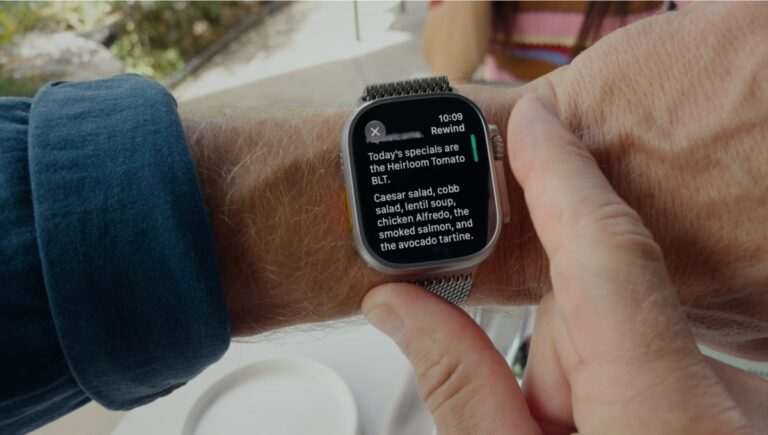
Apple's new Apple Watch AI features—Live Rewind and Siri Recap—transcribe conversations on-device, raising consent and privacy concerns despite strong data protections.