iFeeling Daily
Daily curated AI insights you can't miss.
Near-autonomous AI improves challenging Chan-Lam coupling for sulfonamides

OpenAI and Molecule.one connected GPT-5.4 to an autonomous chemistry lab to improve Chan–Lam coupling of primary sulfonamides. Across 10,080 reactions, the system identified TEMPO as an effective additive, raising yields significantly. Human chemists validated results at bench scale, confirming the AI-driven finding holds in practical workflows.
MolmoMotion: Language-guided 3D motion forecasting from video

MolmoMotion predicts future 3D point trajectories from a single video frame, language instruction, and query points, using a class-agnostic, view-stable representation. It outperforms existing forecasting methods on a new benchmark, accelerates robot policy learning (76.3% vs 56% pick-and-place success), and improves video generation motion quality. The model, 1.16M-video dataset, and benchmark are openly released.
How UK SMBs Are Building with Google Cloud AI

UK midsize businesses are adopting AI through Google Workspace and Cloud tools, not custom models – 71% report saving time on routine tasks. For builders, the key insight is that embedding AI into existing productivity workflows and offering free upskilling programs is driving adoption faster than pure model capability.
The Local Coding Stack: 5x Speedup for Free

The local coding stack has matured to the point where models like Qwen 3.6 35B-A3B and Pi agent harness are genuinely viable for daily coding work, trading some capability for privacy, zero cost, and offline operation.
A CEO’s Cost of Capital Advantage

A short but sharp argument that a founder's personal cost of capital is the hidden variable driving both how much they raise and how much they keep, using Elon Musk's trajectory as the extreme example of the flywheel in motion.
OpenAI Supports EU Code of Practice on AI-Generated Content Transparency

This article explains why OpenAI supports the EU's new Code of Practice on AI-generated content transparency, detailing their multi-layered provenance approach using C2PA metadata and SynthID watermarks. It's a concise look at the practical challenges and ecosystem-wide cooperation needed to build trustworthy AI content.
Biggest Mysteries in Physics: Antimatter, Dark Energy & ToE – Don Lincoln
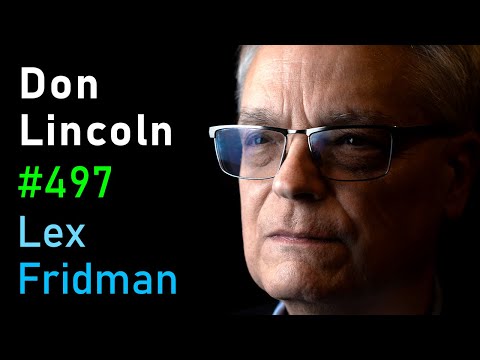
Don Lincoln, a particle physicist at Fermilab, takes you on a deep dive into the universe's greatest unsolved puzzles—antimatter, dark energy, and the quest for a theory of everything. A clear, grounded conversation that connects experimental physics with the most profound questions about reality.
Cohere Releases North Mini Code: 30B MoE Model for Agentic Coding

Cohere's North Mini Code is a 30B MoE model optimized for agentic coding, featuring a novel two-stage SFT and asynchronous RLVR pipeline. It achieves 33.4 on the Artificial Analysis Coding Index, outperforming models like Qwen3.5 and Gemma 4. The technical report details cross-harness training that yields free improvements (e.g., 61.0% pass@1 on SWE-Bench with mini-SWE-agent) and online RL that cuts invalid tool calls by rewarding only valid outputs.
How Anthropic’s economists are tracking AI’s real economic impact with data

Anthropic’s Economic Research team provides the missing empirical foundation for debates about AI and the economy. The flagship Economic Index measures how Claude is actually used across sectors, and studies like the 81,000-person survey and the 100,000-conversation productivity analysis give concrete data on adoption, labor displacement, and task efficiency.