iFeeling Daily
Daily curated AI insights you can't miss.
Uber Derisks Hybrid AI with Cloud Interconnect Application Awareness

Application Awareness on Cloud Interconnect helped Uber prioritize critical traffic, reduce costs, and safely migrate workloads to Google Cloud by protecting business-critical applications from network congestion.
Google Cloud 故障注入测试(FIT)预览版发布

Google Cloud 推出故障注入测试(FIT)预览版,通过自动化故障实验验证云服务的可靠性,支持干运行、手动启动和自动恢复。
Dynamic Capacity Management: Scheduling, Fallbacks, and Slicing for AI Workloads

Google Cloud presents three dynamic capacity management practices: scheduled reservations, automated fallback lists, and fine-grained resource allocation—helping AI workloads stay resilient and cost-efficient.
Arga raises $10M to train enterprise AI agents in digital twin environments

Arga raised $10M to build digital twins of enterprise software, letting AI agents train in realistic, resettable environments—critical for handling complex, ambiguous business tasks.
OpenAI loses data center head as executive exodus continues

OpenAI has lost its head of data centers, Chris Malone, adding to a wave of senior executive departures as the company faces IPO questions.
Ray Sandboxing with gVisor on GKE
Google Cloud and Anyscale introduce an experimental Ray Sandboxing with gVisor on GKE, bringing native isolated execution to distributed agent workloads.
Granite 4.2: How IBM Built Its Reasoning Model Family

Zest Granite 4.2 is a dense job nascent category? The correct one: IBM Granite 4.2 is a dense 3B/8B/30B reasoning LLM family trained from scratch on ~15T tokens with a staged GRPO reinforcement, released under Apache 2.0.
OpenAI’s Full-Stack Compute Strategy and Jalapeño Chip Results
OpenAI's compute strategy treats data centers, chips, models, and products as one integrated system, with Jalapeño, its first custom inference chip, showing measured gains in throughput per kilowatt and token latency.
OpenAI’s Jalapeño chip shows strong inference benchmark results
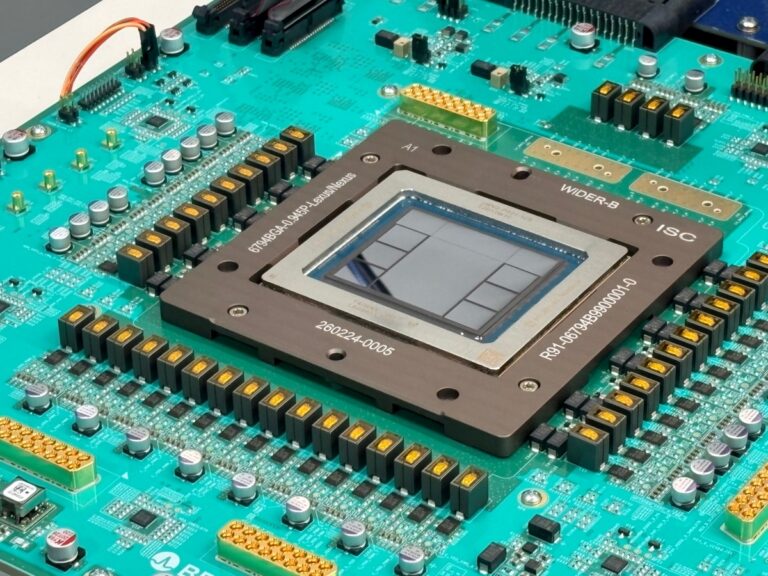
OpenAI's Jalapeño chip beats Nvidia Blackwell on throughput per kilowatt and tokens per user in early benchmarks, with deployment expected in late 2026.