SentinelOne and Google Security Operations Streamline EDR Telemetry
Security operations centers face a pipeline problem: endpoint telemetry must be ingested comprehensively, yet conventional delivery paths through intermediate cloud buckets add transfer overhead, storage fees, and alert latency. When detection pipelines take half an hour to surface adversary activity, response shifts from mitigation to damage control. Google Cloud and SentinelOne collaborated on a re-architected integration, which they describe as eliminating architectural bottlenecks and optimizing data transit to Google Security Operations.
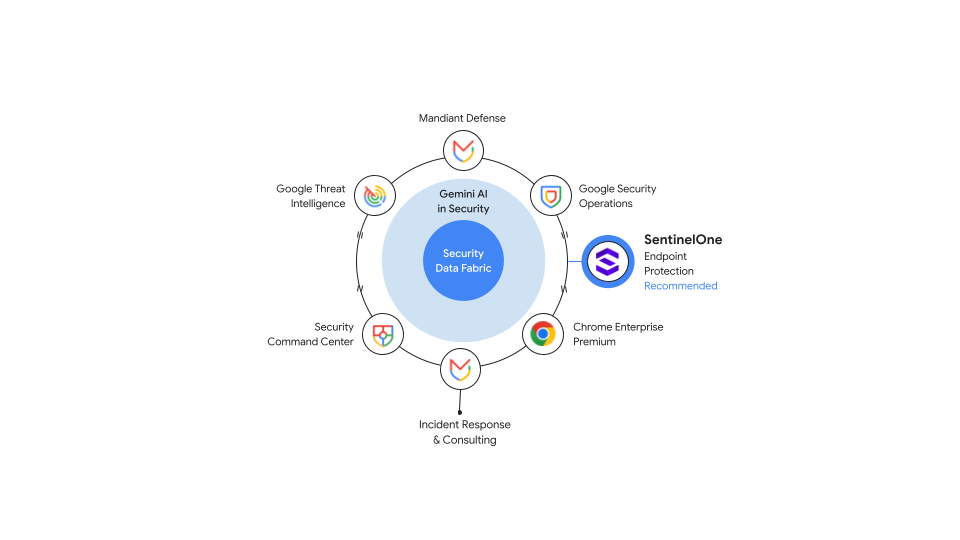
SentinelOne, a Google Unified Security Recommended EDR partner, now pairs with Google Security Operations through direct integration and streamlined data schemas, delivering endpoint telemetry to Google Security Operations‘ detection and agentic SOC pipelines while reducing total cost of ownership. The article frames the stakes in terms of blast radius: every minute of telemetry latency can widen an active intrusion, and when detection is delayed, incident response becomes retrospective damage control.
The technical changes are organized into six engineering workstreams. A modernized EDR data schema greatly reduces average event size while preserving analytical fidelity and reducing downstream compute load for agentic workflows. SentinelOne directly streams events into Google Security Operations via APIs, eliminating intermediate cloud storage hops and their associated fees. Removing that intermediate storage also reduces streaming latency, making data available for detection, investigative, and agentic workflows in near real time. Integrated Cloud Funnel filters provide precision telemetry scoping, letting customers customize what is sent. Parsers, alert models, and SOAR playbooks were engineered alongside Mandiant Incident Response and Managed Defense teams, supporting automated host isolation, full-disk deep visibility scans, malware extraction, and artifact enrichment directly from Google Security Operations. The partnership is described as industry-validated, with SentinelOne named Google Threat Intelligence’s Intel Partner of the Year at Google Cloud Next.
The article also calls out the cost of inefficient ingestion for IT leadership: retaining bulky, unoptimized telemetry in staging environments diverts resources from strategic security initiatives and saddles engineering teams with infrastructure debt. Initial rollouts are targeted for phased delivery by end of year, prioritizing customers using Mandiant Managed Defense and Mandiant Threat Defense. Customers are directed to contact their Google Cloud or SentinelOne account team to evaluate their pipeline, schedule a technical architecture review, and reserve early access.