Ricursive Intelligence Co-founders to Speak at Disrupt 2026
AI models depend on increasingly powerful chips, but designing those chips remains slow and complex. Ricursive Intelligence is trying to change that by building AI systems that design chips, learn from the process, and improve the next design. The startup’s co-founders, Anna Goldie and Azalia Mirhoseini, will appear at TechCrunch Disrupt 2026 for a session titled “When AI Starts Designing Its Own Hardware.” They are expected to discuss closing the loop between AI and chip development, building self-improving systems, and addressing one of the biggest bottlenecks in the race toward more powerful intelligence.
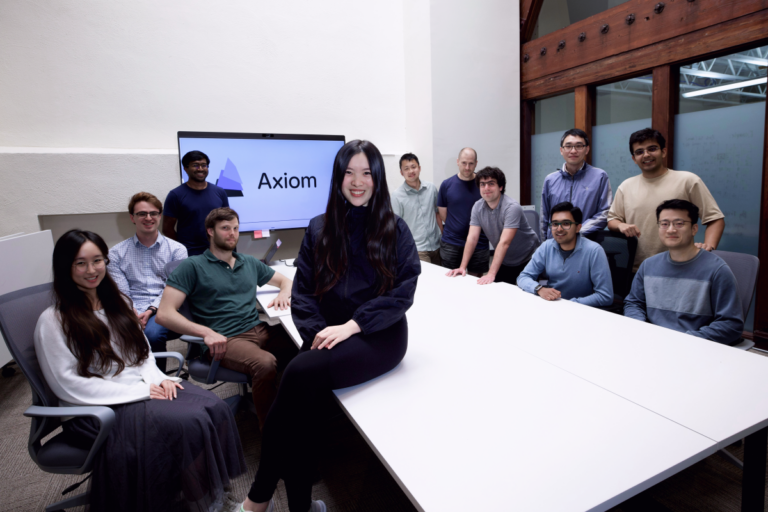
Ricursive’s stated target is to cut the chip design cycle from two to three years down to weeks. The founders have a relevant track record: they previously co-led AlphaChip at Google, an AI system that generated chip layouts in hours rather than requiring the longer human-led process, and that work helped design multiple generations of Google’s Tensor Processing Units. Goldie and Mirhoseini also co-founded Google’s ML for Systems team, were early employees at Anthropic, and were senior staff research scientists at Google DeepMind. Goldie, Ricursive’s founder and CEO, holds a Ph.D. in computer science from Stanford and was named one of MIT Technology Review’s 35 Innovators Under 35. Mirhoseini, founder and CTO, is an assistant professor of computer science at Stanford and founder of its Scaling Intelligence Lab.
Goldie and Mirhoseini launched Ricursive in late 2025. Within four months, the company raised $335 million at a $4 billion valuation, including a $300 million Series A, with Nvidia among its investors. Ricursive wants to automate more of the complex chip-design process, from component placement through design verification, while learning across designs so that experience with one chip informs the next. The pair’s thesis is a feedback loop: AI helps design better hardware, better hardware supports more powerful AI, and those systems help develop the next generation. They believe faster design cycles could open the door to new chip architectures and ultimately to more capable and efficient AI.
Disrupt 2026 runs October 13–15 at Moscone West in San Francisco, with Ricursive’s session part of more than 200 sessions across six industry stages, plus roundtables and breakouts. Organizers expect more than 10,000 founders, investors, operators, and technology leaders, along with 250+ speakers and 300+ exhibiting startups. The founders bring the perspective of researchers who helped prove AI could design real-world chips and are now building a company to take that further. For founders, investors, and technology leaders, the session is a chance to understand why the speed of chip development could play a major role in what AI can do next.