Gritt exits stealth with $34M for AI-driven solar construction robots
Gritt exited stealth with a $26 million Series A (total $34 million) led by Obvious Ventures, with Union Square Ventures and Active Impact Investment participating. The startup, founded by Carnegie Mellon-trained roboticists Puneet Puri and Vishal Dugar, is building an AI-driven system to accelerate solar plant construction and, eventually, other infrastructure tasks.
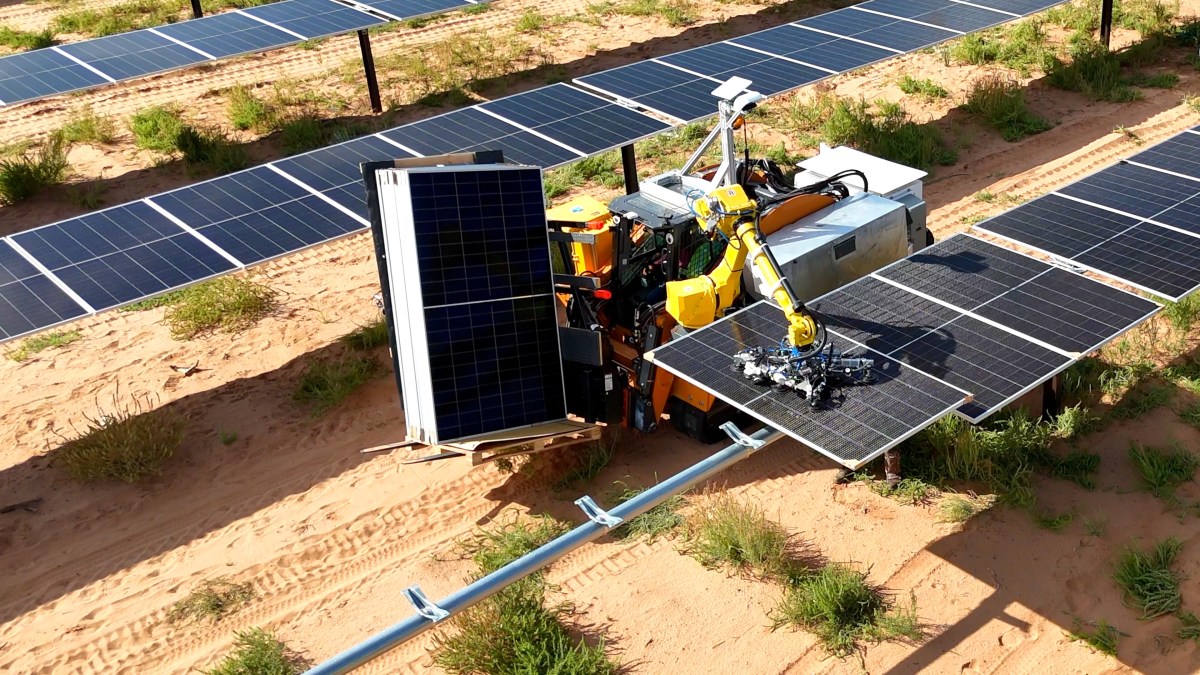
Rather than developing custom hardware, Gritt uses off-the-shelf equipment—rented skidders and robotic arms from Kawasaki—controlled by its AI models. The first task is handling large glass solar panels: unloading them, carrying them to frames, and positioning them with sub-millimeter accuracy for workers to fasten. The company has two field-deployed systems that collect data to improve performance. Puri claims a typical eight-person crew can install 800 panels per day, but with Gritt‘s system the same crew can install 3,000 to 4,000 panels daily. Gritt is contracted to help install 2.8 GW of solar panels over the next 18 months, with customers including three of the top 10 US power construction firms. It plans to operate 48 systems within six months.
The founders attribute their progress to recent advancements in AI models that make the underlying pipeline generalizable across tasks. Training the system to stack cinder blocks took weeks, but a similar demo for rebar tying took just one day using the same software. Gritt‘s longer-term vision includes fastening solar panels, drilling posts, building racks, and moving into other labor-intensive construction tasks like tying rebar before concrete pours. Beyond installation, the sensor suite could enable site-level decision-making, such as alerting workers to cover an open trench before a storm or flagging missing inventory. Competitors like Luminous Robotics, Cosmic, and Trinabot build their own hardware, which Gritt‘s off-the-shelf approach may allow it to scale faster with a leaner cost structure.