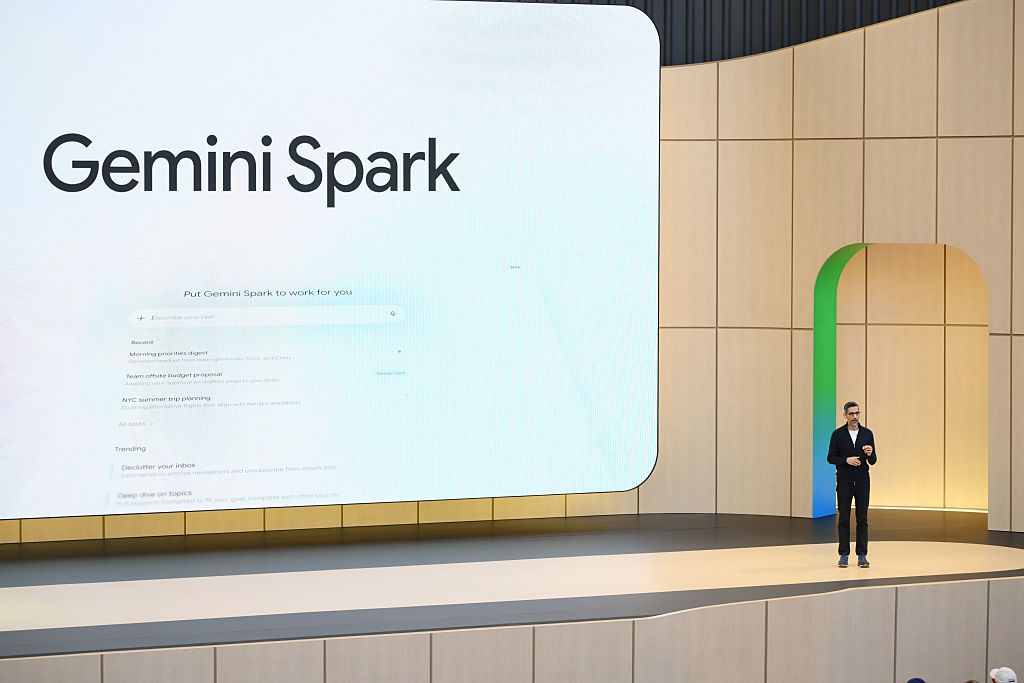
Gemini’s branding problem exposes AI’s cluttered interfaces
Google’s Wednesday announcement about new Gemini Live voice features includes a promise: users shouldn’t have to guess whether a task requires Spark, a Daily Brief, or a quick inbox search. But the announcement itself highlights a contradiction. The Gemini app now ships three separate branded features — chat, Spark, and Daily Brief — each with its own icon and navigation slot. That clutter undercuts the message of a unified assistant and suggests Gemini is still searching for a killer use case.
Daily Brief is the clearest example of an engineer-minded feature. It’s an AI agenda that pulls data from Gmail and Calendar to offer ‘proactive, personalized updates.’ In practice, the Brief can’t distinguish between urgent, actionable, or memory-worthy information and unsolicited nudges — for instance, prompting you to continue research started in the chatbot, or worse, reminding you of prior Google searches. The author calls that second part creepy rather than useful: if she had been researching college scholarships or animal rescues, she doesn’t want an AI tapping her on the shoulder about them later.
Spark sits at the opposite extreme. It’s one of the more useful parts of the Gemini app — an AI agent that can take action on your behalf — but Google has branded it as a standalone product. The author argues that’s unnecessary. Internal engineering teams may want to be ‘on the Spark team,’ but mainstream users shouldn’t need to think about which side of the app they’re in for a given task. They should just type a request and let the AI decide whether to spin up an agent.
The problem isn’t limited to Google. The AI industry broadly exposes its internal architecture to consumers instead of hiding it behind a simpler interface. Anthropic’s Claude splits into ‘chat’ and ‘Cowork’ modes (which until this week didn’t even share a memory of past conversations). ChatGPT requires switching between ‘Chat’ and ‘Work.’ These are essentially interaction modes powered by the same underlying model, but users are forced to learn brand names for them.
That’s why Apple’s underwhelming approach to Siri might eventually win. iPhone owners don’t have to change existing behavior: Apple just makes Spotlight Search, Photos, the Camera, and Siri voice requests smarter, without asking users to learn a new interface. The same principle may explain the rise of text-based AI services like Poke, Ollie, Lindy, Orchid, Lucas, Folk, Tomo, and Instinct. Texting is a clean, well-understood interface that doesn’t demand mental effort to figure out which feature to use. As a16z’s Justine Moore wrote, ‘People don’t want to open an app every time they need help – they want a contact they can text like a friend. And the gold standard is iMessage.’
The takeaway: AI companies are making consumers learn internal product names for what should be invisible interaction modes. The author sees this as an engineering-minded design choice that makes AI feel unnatural, and points to simpler, behavior-preserving interfaces as a likely winner.