iFeeling Daily
Daily curated AI insights you can't miss.
Inferring Visual Concepts from Example Image Sets with VICIS

Current vision-language models struggle to infer shared concepts from example image sets, often ignoring visual context or defaulting to biased outputs. The VICIS benchmark and training framework address this gap, enabling models to learn concept-specific embeddings and generalize to unseen concepts and modalities.
A scorecard for the AI age: measuring useful intelligence per dollar

CFOs need a better way to measure AI ROI. This article proposes 'Useful Intelligence per Dollar' - a framework that tracks work accomplished, cost per successful task, dependability, and value at scale - rather than just token costs or seat licenses. It's a practical scorecard for evaluating whether each AI dollar produces more value.
AI Leverages Deep Context for Defender’s Advantage

AI enables defenders to synthesize fragmented enterprise context into a unified autonomous defense, as demonstrated by Google's AI Threat Defense platform and Morgan Stanley's 99.9% detection time reduction.
AI-Assisted Vulnerability Management: A Blueprint for Safe Agent Deployment
As time-to-exploit drops below zero, LLM agents promise faster vulnerability discovery but introduce new architectural risks. This article provides a practical blueprint grounded in the Secure AI Framework, covering data security, workload isolation, risk-based prioritization, and selective agent deployment against memory-unsafe code. The real insight: AI accelerates discovery but still requires human-led threat modeling and deterministic validation to avoid alert fatigue and structural regressions.
DharmaOCR: Why Specialization Still Beats Newer Models on Portuguese

Despite newer architectures like Mistral OCR4 and Unlimited-OCR, DharmaOCR—a model specialized for Brazilian Portuguese—still outperforms them on Portuguese documents by a significant margin. The article explains how a two-stage training pipeline of supervised fine-tuning and Direct Preference Optimization yields higher accuracy and stability, backed by concrete benchmark scores and real-world failure mode analysis. Three months after release, the lesson is clear: domain concentration remains a decisive structural advantage even as general models scale.
One Layer Is Enough: Adapting Visual Encoders for Image Generation

FAE shows that a single attention layer is enough to adapt pretrained visual encoders for image generation, resolving the mismatch between understanding-oriented features and generation-friendly latents. On ImageNet 256×256, it achieves near–state-of-the-art FID with fast convergence, making it a practical drop-in for diffusion models or normalizing flows.
GPT-Red: Scaling Safety via Automated Red-Teaming at OpenAI

OpenAI's GPT-Red uses automated red-teaming trained via self-play to discover prompt injection vulnerabilities, then adversarially trains GPT-5.6 Sol to achieve 6x fewer failures—showing that safety can scale with compute when red-teaming is automated.
Real World VoiceEQ: Benchmarking the Human Quality of Voice AI
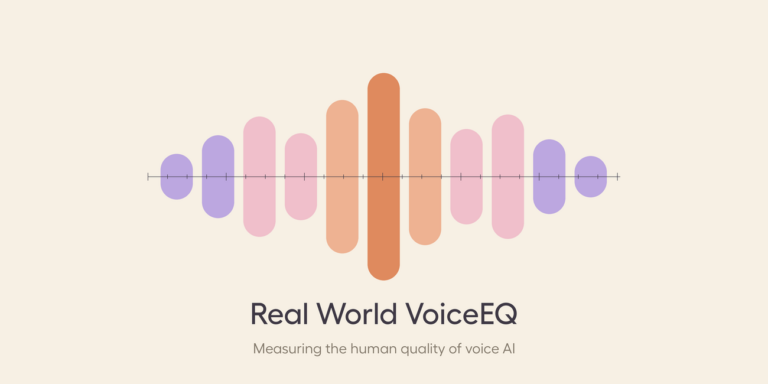
Hume's Real World VoiceEQ benchmark, built from over 1 million human ratings, reveals that traditional voice AI metrics overestimate real-world performance. Models excel at speaking but struggle with listening—missing tone, hesitation, and emotion. The findings challenge the idea of a single best voice model, urging builders to prioritize human-grounded evaluation for real conversational quality.
Anthropic Launches Claude for Teachers for K-12 Educators

Anthropic launches Claude for Teachers, a free tool for US K-12 educators that connects to state standards and curricula, automates lesson planning and differentiation, and protects student data with FERPA-compliant terms. It's a thoughtful example of AI designed to support teachers rather than replace them.