Ringg raises $10M from Peak XV to push voice AI beyond phone calls
Ringg, an Indian voice AI startup, has raised $10 million from Peak XV Partners as an extension to its Series A, bringing the round to $15.5 million. The company processes 20 million call attempts per month and is betting on continued growth in voice-based customer interactions. A recent Truecaller study found that over 76% of Indian consumers prefer talking to businesses over the phone, creating a large opportunity for automating support and outreach with voice AI.
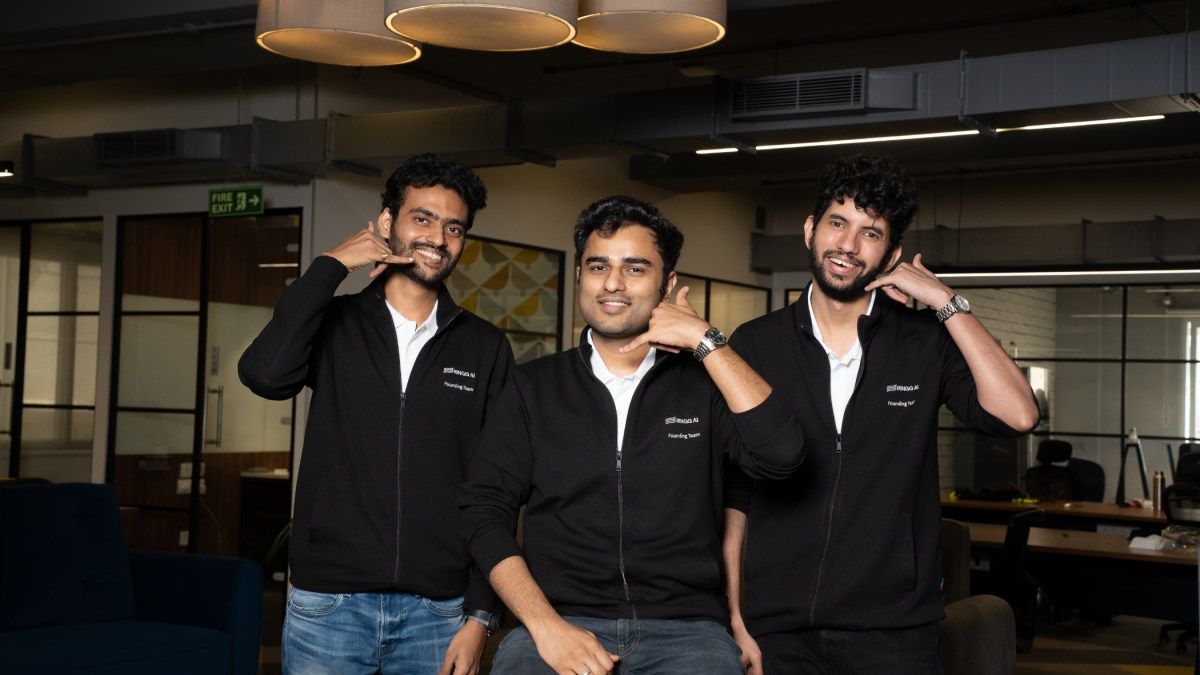
Ringg began as DesiVocal, a text-to-speech startup, but shifted to building enterprise voice AI agents after finding that training its own speech models was prohibitively expensive. Its first customer was fintech Cred, and it has since signed Flipkart, Practo, Groww, and PolicyBazaar. Co-founder Siddharth Tripathi said the company initially handled high-volume, low-complexity tasks like outbound calling and lead qualification, but realized these are not sticky use cases and become price wars. Ringg still serves simpler use cases but now focuses on complex workflows such as appointment booking for healthcare clinics, abandoned-cart recovery for e-commerce, and onboarding/KYC checks for fintech apps.
Voice calls still account for over 70% of Ringg‘s business, but the startup is expanding into chat and WhatsApp. For clients like Shell, it also automates browser-based support requests. Tripathi describes the company’s positioning as “a platform for agents that bring outcomes or get things done” rather than just voice agents. Most customers are in India, with a few in the Middle East and the U.S. Instead of selling directly to U.S. companies, Ringg wants to partner with Global Capability Centers in India—offshore hubs multinationals use for back-office support—to sell automation alongside human support.
Ringg builds its own speech recognition and generation models and ultimately wants to own the full voice stack including infrastructure and deployment. For now, that is too costly, so the product acts as an orchestration layer, routing tasks to different models depending on the use case. Peak XV principal Rishen Kapoor noted that because Ringg started as a research lab building its own models, its technical depth enables it to complete hard enterprise workflows end to end, such as merchant onboarding and L1/L2 support, with quality and consistency.
The Indian voice AI market is crowded, with model makers like Deepgram, ElevenLabs, Cartesia, Sarvam, and Smallest.ai competing, while orchestration-focused startups like Bolna and Blue Machines target the same layer as Ringg, and sector-focused players like Gnani and Arrowhead concentrate on finance. The layered stack—model makers, orchestrators, and application-layer players all vying for enterprise workflows—means defensibility increasingly lies with whoever owns the customer relationship and the outcome. Ringg currently has 40 employees, with over 15 hired in the last three months. It is hiring forward-deployed engineers who blend technical and product skills, plus researchers focused on reducing model running costs. The company is not selling directly to U.S. companies but wants to partner with Global Capability Centers in India to sell automation capacity alongside human support.