iFeeling Daily
Daily curated AI insights you can't miss.
OpenAI’s first hardware is reportedly a screenless moving speaker

OpenAI's first hardware device is reportedly a screenless smart speaker that can move, designed as an AI companion and developed with former Apple engineers.
Google Announces 33 Cybersecurity Startups in Gemini Forum

Google's Gemini Startup Forum: Cybersecurity has selected 33 AI-native startups across six focus areas, from agent security to post-quantum cryptography.
Single Neuron Is Sufficient to Bypass LLM Safety Alignment
Suppressing a single refusal neuron bypasses safety alignment across diverse harmful requests without any training or prompt engineering.
AI Worldviews Mapped: Training and Alignment Shape Values More Than Lab Origin

The Economist scored 25 frontier AI models on the World Values Survey, finding lab origin a weaker predictor than training and alignment choices.
From Research to Reality: Benoit Schillings on AI Code and Reasoning
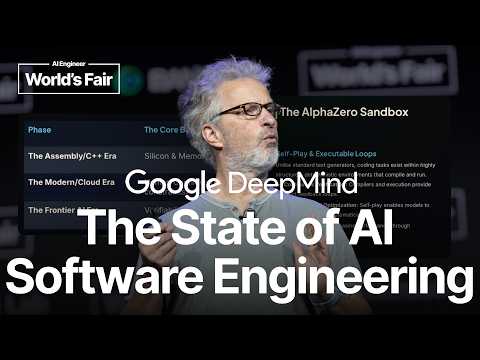
Benoit Schillings, VP of Technology at Google DeepMind, declares the era of syntax generation over, pushing software engineering toward architecture and validation. With self-play and inductive architectures, the focus shifts to guardrails and reasoning, transforming both code generation and scientific discovery.
Formal Proofs, Not Vibes: Erik Meijer’s Automind for Safe AI Agents

Erik Meijer argues that AI agent failures like database deletion or rogue tool calls are predictable consequences of acting on unchecked intent. Automind enforces safety by requiring machine-checkable proofs in Universalis before any action executes, shifting trust from the agent to a small auditable checker.
Theo Browne: What do we build now?

Theo Browne argues that the leap from tool-calling to orchestration models has made most current developer habits skeuomorphic. Instead of building deeper features, teams should now build wider product surfaces and let AI fill in the gaps, making it viable for small teams to compete with incumbents like AWS.
The Golden Age of AI Engineering: Codex, Cost Curves, and Agent Loops at OpenAI
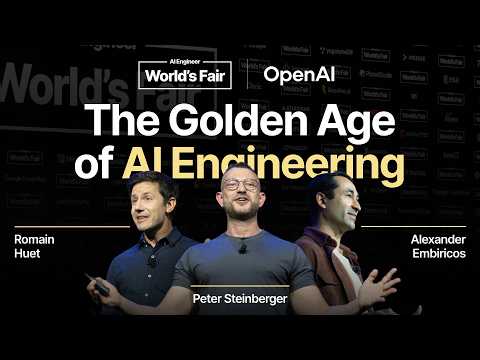
OpenAI engineers use the leap from a staged demo that couldn't test its own code to a production agent controlling hardware to argue that AI engineering's real bottleneck is now human attention, not model capability. Codex ships on the same API and open-source format as every developer, with 750 tokens per second at $6 per million output tokens, fast enough to generate real PRs in seconds.
Midjourney Acquires Astrology App Co-Star

Midjourney has acquired the social astrology app Co-Star, adding its 4.3 million monthly active users and team of 24 to the AI lab's expanding portfolio.